8 Property Description Sample Ideas That Convert
The strongest property description sample isn't built around the longest list of amenities. It's built around a specific guest decision, such as whether the apartment feels worth its rate, whether the location suits a short city break, or whether the workspace can support a real working day. That matters because 71% of hotel guests in one hospitality survey considered written accommodation descriptions important or very important, compared with 69% for visual content and 64% for still photographs (hospitality-industry survey).
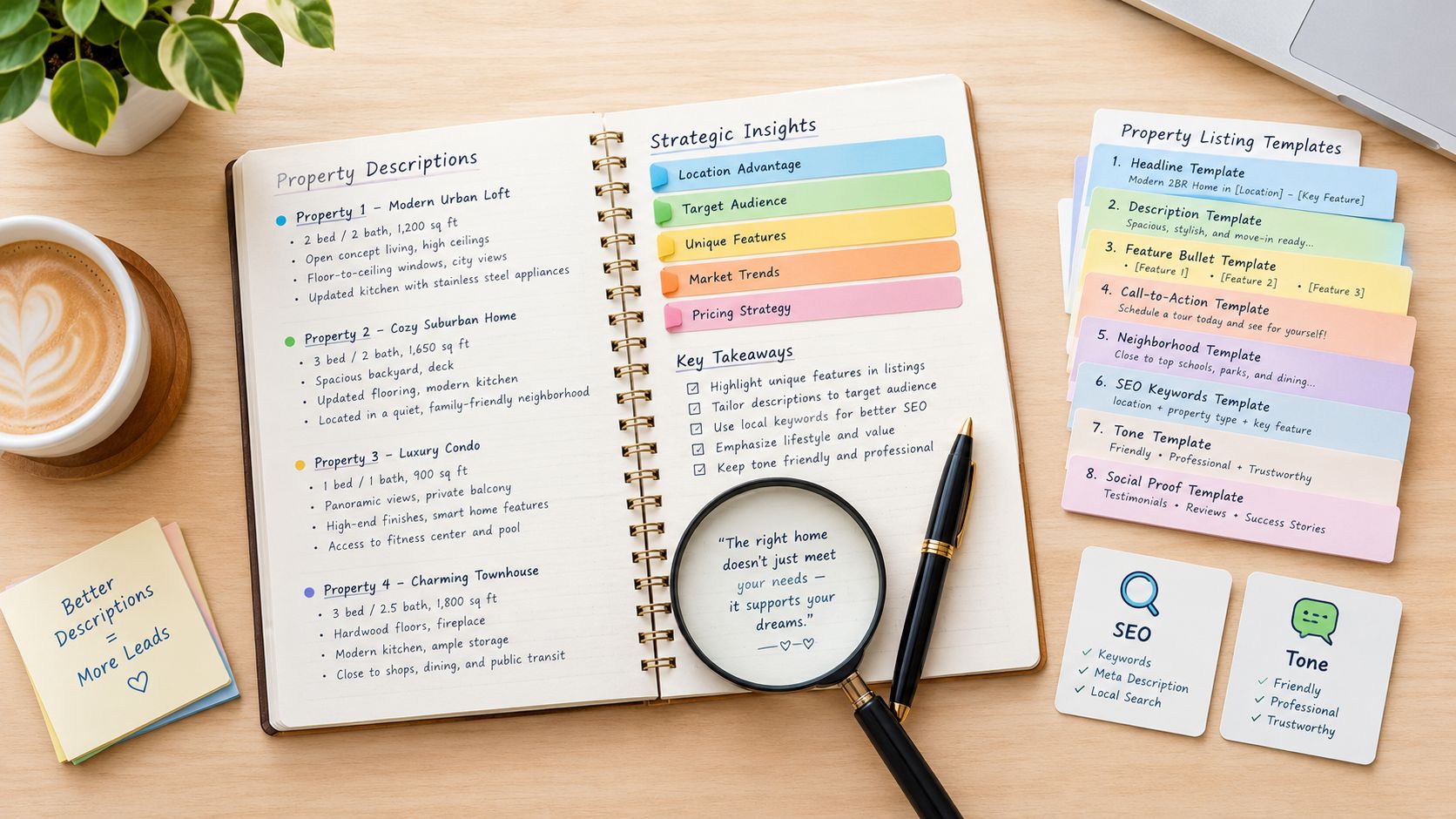
The eight approaches below treat a description as a positioning template, not merely a writing style. You'll find models for premium amenities, local experience, families, photography-led listings, transparent pricing, remote work, sustainability, and emotional storytelling. Each approach works best when its tone, detail, and length match the property and the guest you want to attract.
Planning rule: Separate supplied sample language from reusable templates. Verify every amenity, distance, policy, and price before publication, then adapt the copy to your branded direct-booking page.
Table of Contents
- 1. Luxury Amenities-Focused Description
- 2. Location and Local Experience Description
- 3. Family-Focused and Safety-Conscious Description
- 4. Photography-Rich Visual Description
- 5. Transparent Pricing and Clarity-Focused Description
- 6. Digital Nomad and Remote-Work Description
- 7. Eco-Friendly and Sustainability-Focused Description
- 8. Storytelling and Emotional Connection Description
- 8-Style Property Description Comparison
- Turn One Sample Into a Reusable Listing System
1. Luxury Amenities-Focused Description
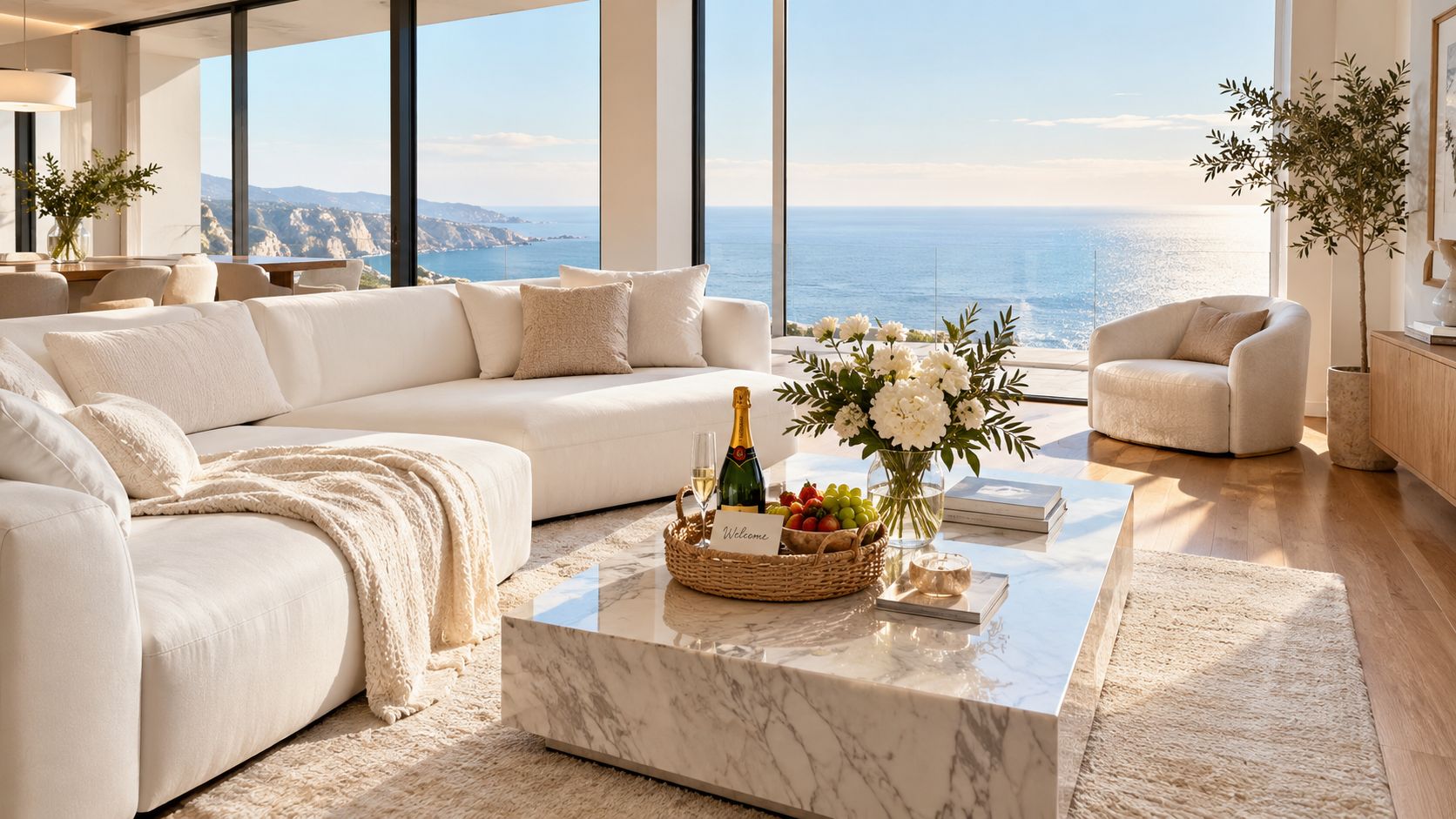
A premium property description should justify its position through proof, not repeated uses of “luxury.” Affluent guests want to understand what makes the accommodation distinct, so lead with the amenity that competitors can't easily replicate. A private Adriatic view, a spa suite, a designer kitchen, or a carefully specified entertainment system gives the reader a reason to continue.
Sample language:
Wake to uninterrupted Adriatic views from this boutique villa near the Croatian coast. The open living space pairs designer furnishings with floor-to-ceiling glazing, while the kitchen includes a Nespresso machine, induction cooktop, dishwasher, and wine refrigerator. After a day by the water, return to the heated pool, private terrace, and premium linen in every bedroom.
The sample works because it connects specific features to a guest experience. “High-end appliances” is weak. A named appliance or clearly described feature gives the claim substance. If you're describing a mountain lodge, replace the coastal view with the wood-fired sauna, gourmet kitchen, or boot room. If you're writing for an urban apartment, specify the smart-lock system, mattress type, streaming setup, or sound insulation only when those details are accurate.
Where premium positioning fails
Luxury copy fails when the property offers ordinary facilities dressed in grand language. It also fails when the owner names brands that guests won't find on arrival, or when a seasonal amenity is described as permanently available. A heated pool, outdoor dining area, or fireplace may need different wording in winter and summer.
Use a short scan-friendly fact block after the opening paragraph:
- Signature feature: State the view, spa, terrace, architecture, or service that leads the decision.
- Verified equipment: Name the appliance, system, material, or facility guests can use.
- Service boundaries: Explain whether cleaning, transfers, breakfast, or concierge assistance is included.
- Seasonal availability: Update the copy when an amenity operates only during particular periods.
Pair the page with amenity icons or tags in Rentabble, but don't let icons replace the explanation. A guest still needs to know what the amenity is, where it is located, and whether restrictions apply. For more positioning ideas, see this guide to luxury short-term rentals.
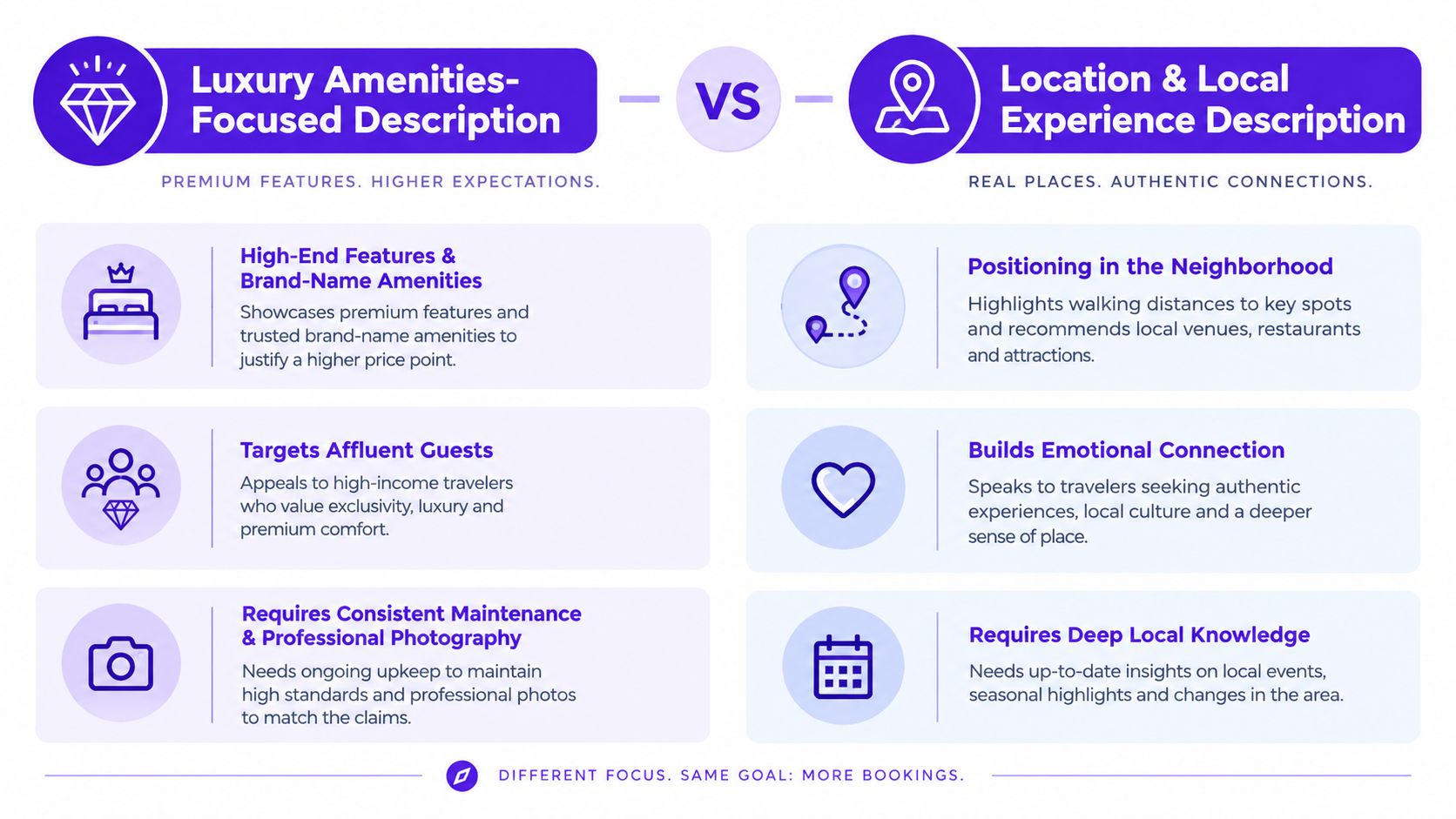
2. Location and Local Experience Description
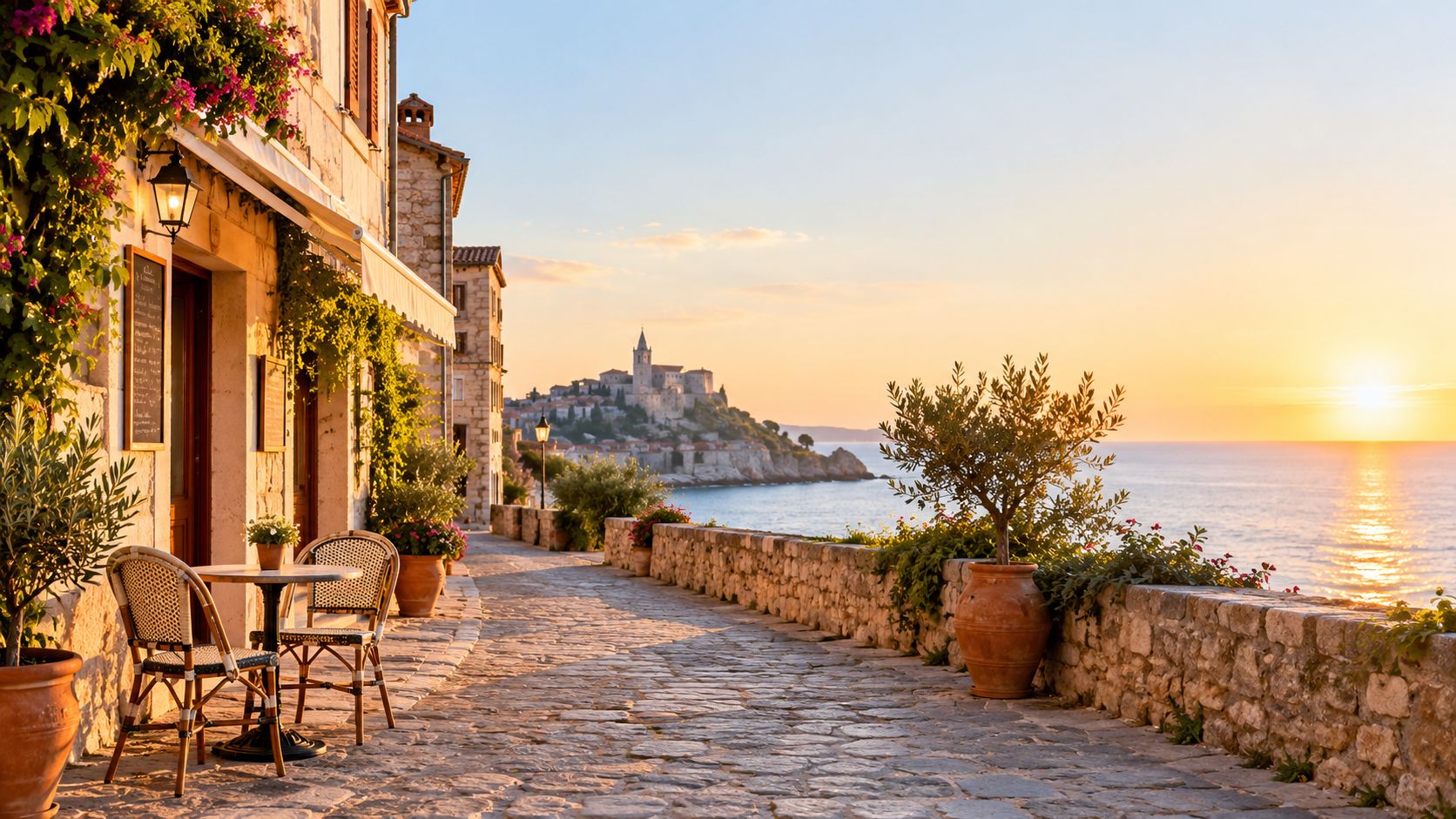
Some properties compete less on their interiors than on what guests can do after leaving the front door. A location-led description turns the rental into a base for a particular destination experience. It suits a Split apartment near Diocletian's Palace, a Zagreb unit close to galleries and restaurants, or a coastal home within easy reach of a beach and fishing harbor.
Sample language:
Stay in the heart of Split, with Diocletian's Palace a short walk from the apartment and neighborhood konoba restaurants close by. Start the morning with coffee in the old town, return for a quiet break in the air-conditioned living room, then follow the waterfront promenade toward dinner. The apartment sleeps four and includes a fully equipped kitchen, Wi-Fi, and a balcony overlooking the surrounding streets.
The opening gives the guest a daily rhythm, then adds the concrete facts needed to evaluate the stay. Replace vague phrases such as “near the attractions” with an approximate walking time or measured distance. Explain how you calculated it, especially when a route includes stairs, a steep road, or a longer pedestrian entrance.
Sell the neighborhood without overpromising
Local recommendations can differentiate a direct-booking page, but they become a liability when they're outdated. Restaurants close, seasonal venues change hours, and event calendars move. Review the recommendations regularly and separate permanent landmarks from suggestions that need confirmation.
A useful location block might include:
- Primary landmark: State the approximate distance and travel method.
- Daily essentials: Mention groceries, pharmacies, public transport, or parking.
- Local character: Describe the street, harbor, market, or dining culture without inventing atmosphere.
- Owner recommendations: Offer two or three genuine suggestions, clearly presented as recommendations rather than guarantees.
A link to a local tourism organization can add context, while a separate area guide can capture broader searches. Keep the property page focused on the guest's decision, and use the blog for longer cultural or seasonal advice. Natural location language also supports vacation-rental SEO because it gives search systems and guests meaningful context.
3. Family-Focused and Safety-Conscious Description
Family travelers don't need a listing to declare that it's “family-friendly.” They need to know how the space works with children, what equipment is supplied, and which limitations could affect their stay. A family-focused description wins by removing uncertainty before a parent sends a request.
Sample language:
This three-bedroom villa gives families room to spread out, with one queen bedroom, one room with two single beds, and a third bedroom with a bunk bed. The enclosed yard includes a shaded seating area, while the house provides a travel cot, high chair, stair gate, and child-safe dishware. The upper floor is reached by an open staircase, and the nearest family beach is reached by car rather than on foot.
The last sentence may reduce some inquiries, but it improves expectation alignment. Don't call a property accessible or child-safe unless you can support that claim. Describe stairs, balconies, pool barriers, water depth, road access, noise, and bedroom locations in plain terms.
Give parents decision-ready detail
A dedicated family information section works better than scattering child-related details across a long paragraph. Organize it around the questions parents ask before booking:
- Sleeping arrangements: Identify every bed, cot, bunk, and bedroom location.
- Safety features: State which gates, barriers, alarms, or enclosed areas are present.
- Provided equipment: List the exact baby and child items, including anything guests must request in advance.
- Practical logistics: Explain parking, grocery access, laundry, beach travel, stairs, and check-in.
- Local activities: Mention nearby beaches, parks, museums, or rainy-day options only when the information is current.
Photos should verify safety-related features rather than merely repeat the hero image. Show the cot, stair gate, pool barrier, yard entrance, and the actual bedroom layout. Parent reviews can reinforce the positioning, but don't cherry-pick or paraphrase them in a way that changes their meaning.
A “What to pack” note can also prevent confusion. For example, state whether guests need to bring cot linen, pool towels, beach equipment, or children's toiletries. Families appreciate the honesty, and owners spend less time answering questions that a precise description could resolve.
4. Photography-Rich Visual Description
A photography-led listing uses words to guide the guest through the gallery. The text shouldn't compete with the images or describe every decorative object. It should explain what the camera shows, identify details that photos can't establish, and follow the same order as the guest's decision path.
Sample language:
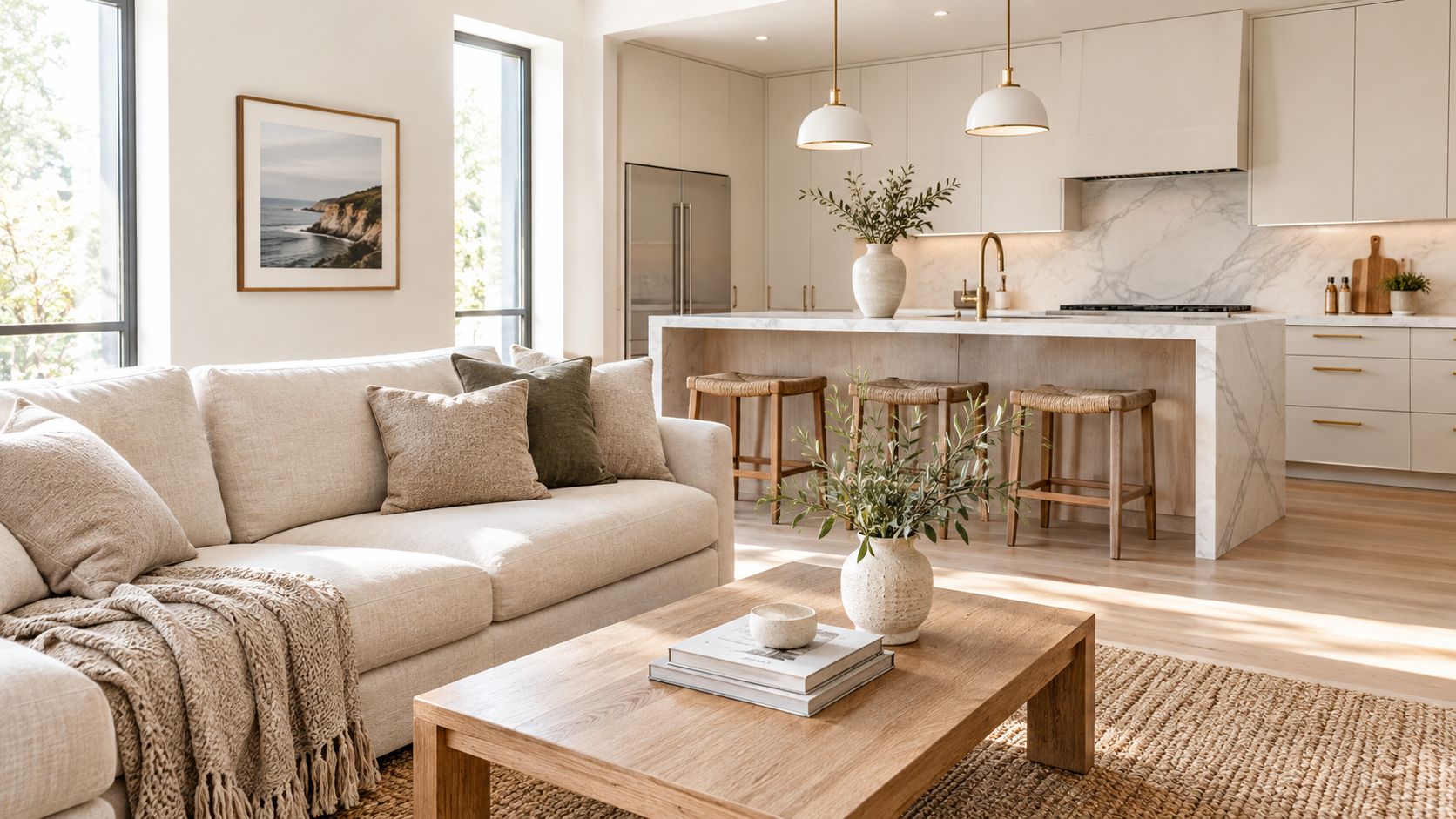
Enter through the private courtyard into an open living and kitchen area filled with natural light. The beige sofa faces the dining table and marble island, creating one connected space for meals and conversation. The main bedroom opens toward the terrace, while the bathroom includes a walk-in shower with a fixed glass panel. Continue through the gallery to see the second bedroom, entrance, laundry area, and outdoor seating.
The present tense makes the copy feel like a guided visit. It also helps owners identify missing evidence. If the description mentions a workspace, guests should see the desk. If it promises a terrace view, the gallery should show the view from the terrace, not only a distant scene.
Match the gallery to the decision path
Booking.com experiments cited in the supplied guidance found that showing approximately 24 property-level photos, with about four photos per room type and at least one bathroom image, positively affected conversion (Booking.com partner guidance). Treat that as a practical benchmark, not a universal formula. A small studio may need fewer images, while a multi-room villa needs enough coverage to make every sellable space verifiable.
Write captions and alt text that identify the subject accurately. “Bright room” is less useful than “Open-plan kitchen and living room with marble island.” Don't use sensory language to conceal a limitation, and don't digitally alter perspective in a way that makes the room appear larger.
The video belongs later in the journey, after guests understand the layout. A short walkthrough can show circulation, ceiling height, stairs, and the relationship between rooms.
Update the copy after renovations, furniture changes, or seasonal decoration. A photography-rich page works only when the text and media still describe the same property. For an example of how distinctive architecture can shape the narrative, compare the approach used for a loft garage house.
5. Transparent Pricing and Clarity-Focused Description
Price-sensitive guests don't necessarily need the cheapest property. They need to understand what they're paying for and what they'll receive. A clarity-focused description communicates value through inclusions, exclusions, trade-offs, and seasonal context rather than discount language.
Sample language:
This one-bedroom apartment includes Wi-Fi, utilities, bed linen, towels, and one parking space in the displayed nightly rate. A final cleaning fee is shown before you submit a request. The apartment is on the third floor with no elevator, and the old town is about a 12-minute walk away. Winter dates offer a quieter stay, while summer availability is limited and priced separately in the calendar.
That copy does more than state a rate. It answers whether the total feels predictable, whether the location suits the guest, and whether the stairs are acceptable. Don't hide a mandatory fee in a separate message, and don't describe free parking when it's only available on nearby public streets.
Make value visible
A transparent pricing block should align with the actual booking flow:
- Included items: List Wi-Fi, utilities, parking, cleaning, linen, taxes, or other components only when they're included.
- Additional costs: State pet fees, tourist taxes, extra cleaning, transfers, or optional services clearly.
- Rate conditions: Explain minimum stays, seasonal periods, discounts, and whether the displayed price changes by date.
- Refund rules: Distinguish refundable and non-refundable amounts, along with the relevant cancellation conditions.
This approach is particularly useful when guests are balancing higher budgets with greater price sensitivity. In supplied traveler research, 51% expected to increase their travel budget, while 58% expected to become more price-conscious, and 44% identified inflation as their largest travel-planning concern (traveler research summary). The figures point to a practical lesson: clear total-cost cues can matter more than polished adjectives.
Update the description whenever rates, promotions, minimum stays, or included services change. Rentabble's pricing and availability display can support this positioning, but the written copy still needs to explain the conditions in human language.
6. Digital Nomad and Remote-Work Description
A remote worker books a temporary workplace as much as accommodation. The description should therefore sell a reliable working routine, not just a desk and “fast Wi-Fi.” State where guests can work, how calls may sound, what daily tasks the property supports, and how connection problems are handled.
Set up at the dedicated desk beside the living-room window, with a supportive chair, nearby power outlet, and space for a laptop and monitor. The apartment sits in a quiet residential building, and the bedroom is positioned away from the street. Wi-Fi is tested before arrival, while the owner can provide local SIM guidance for guests who need a backup connection. A full kitchen, washing machine, and monthly availability support longer working stays.
This sample positions the apartment for guests who value routine and practical support. The desk location and equipment provide proof, the quiet building addresses calls, and the kitchen and laundry facilities support an extended booking. The monthly availability also signals who the property is intended to attract.
Describe the working day
Organize the copy around the guest's actual schedule:
- Workspace: Identify the desk location, chair, lighting, outlets, and whether the area can be closed off.
- Connectivity: State the provider or connection type when relevant, explain testing practices, and mention any available backup.
- Noise conditions: Describe street exposure, shared walls, neighbors, construction risk, and quiet hours accurately.
- Long-stay logistics: Cover laundry, cooking, storage, heating or cooling, cleaning frequency, and support response.
- Local work options: Mention a nearby café or coworking space only after confirming that it is open and suitable.
Only publish connection details you have tested. Performance can vary by room, device, time of day, and provider. If you include a speed, specify where and how it was measured, and avoid promising uninterrupted service.
This audience may stay longer, but it will also judge the property against work failures. Test the desk, lighting, outlets, and connection yourself before publishing. A failed video call can outweigh an attractive living room.
Keep the stated monthly rate and terms consistent with the booking system. Rentabble can display pricing and availability, but the description still needs to explain the conditions in plain language.
7. Eco-Friendly and Sustainability-Focused Description
Sustainability becomes persuasive when guests can see how it changes the stay. Replace broad labels such as eco-friendly villa with operating details, then show which choices belong to the owner and which come from a verified certification.
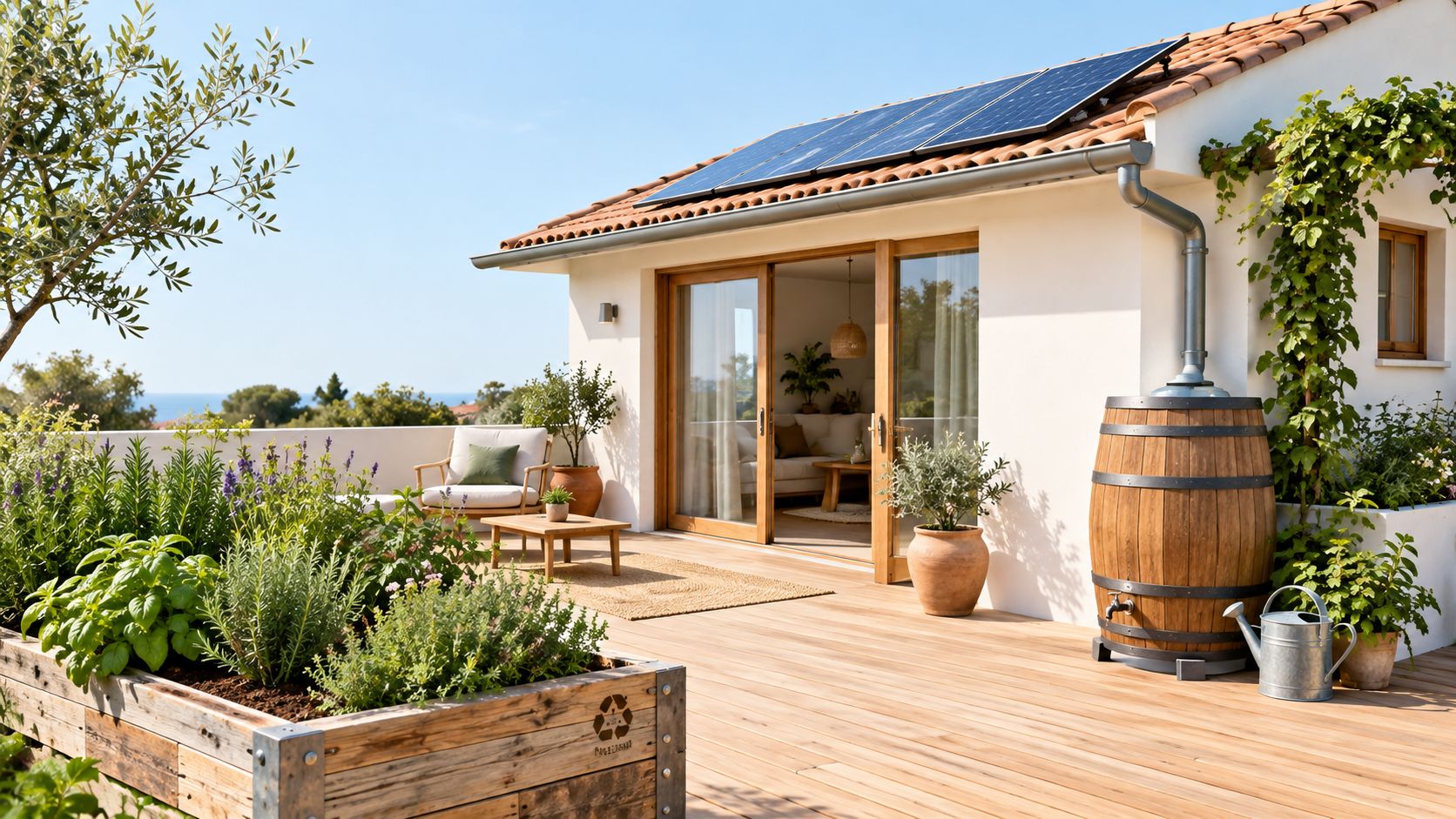
This coastal home uses solar water heating, refillable bathroom dispensers, separated recycling, and an organic herb garden for guest cooking. A rain barrel supplies the garden, while local suppliers provide selected breakfast ingredients. Adjustable heating controls let guests manage energy use, and the house guidelines explain recycling and water-saving practices without making comfort an afterthought.
That sample positions the property for environmentally conscious guests while still selling practical benefits. It gives direct-booking visitors evidence they can evaluate, rather than asking them to trust a label. If the home holds Green Key, EU Ecolabel, or another certification, name it only when the certification is current. Without third-party approval, describe the documented practice instead.
Sustainability also creates guest-facing trade-offs. The listing should state whether visitors separate waste, accept less frequent towel changes, or use heating and cooling within reasonable settings. Clear conditions reduce surprise at arrival and help owners attract guests who accept the operating model.
Build the description around proof:
- Energy features: Specify solar heating, insulation, efficient appliances, or renewable energy arrangements.
- Water practices: Explain low-flow fixtures, rainwater use, or linen policies.
- Purchasing choices: Identify local, organic, refillable, or low-waste supplies, and describe their role without overstating their effect.
- Guest participation: State whether visitors sort recycling or reduce unnecessary air-conditioning.
- Certification status: Mention the relevant certification only if the property holds it, and link to its information when appropriate.
Avoid invented impact figures or percentage reductions without a reliable baseline and source. “Solar panels are installed on the roof” gives guests usable information. A vague carbon-saving promise does not. The strongest sustainability copy connects each claim to a visible feature, a guest instruction, or a booking decision.
8. Storytelling and Emotional Connection Description
A story can position a distinctive property more effectively than a list of features, provided every emotional detail leads to a verifiable guest experience. Historic stone apartments, family-operated houses, and artist retreats have useful narrative material. The strategic question is which audience will value that character, and whether the home delivers the comfort, access, and amenities that audience expects.
Sample language:
Built from local stone and shaped by generations of coastal life, this apartment gives you a quiet place to return to after a day by the sea. Original walls frame a modern kitchen and comfortable bedroom, while the small terrace catches the evening air. You'll wake near the old town, prepare breakfast at home, and step into the same streets that have connected the harbor with the neighborhood for generations.
The sample uses atmosphere to attract guests seeking a slower coastal stay, while grounding the promise in visible features, a terrace, a kitchen, a bedroom, and proximity to the old town. It avoids presenting unverified history as fact. Owners should include documented details, and describe an owner's account as family history rather than established cultural history.
Let emotion serve expectation
The narrative earns attention, but practical facts close the booking. Put sleeping capacity, bed configuration, access arrangements, noise conditions, restrictions, and included amenities in a scannable block beneath the opening. This structure supports direct bookings because guests can connect with the property first, then confirm whether it fits their trip.
Use story elements selectively:
- Origin: State when, why, or by whom the property was built only when records support the claim.
- Guest ritual: Describe a real routine, such as coffee on the terrace or dinner in the courtyard.
- Distinctive detail: Choose one or two physical features, such as original beams, a restored fireplace, or a family-made table.
- Current experience: Show how historic character works alongside heating, Wi-Fi, bathrooms, and modern access.
- Invitation: Finish with a direct action, such as checking availability or sending a booking request.
Testimonials can strengthen this positioning when guests gave permission and their words remain accurate. Do not attach praise to claims the guest never made. Specific memories create stronger trust than generic romance, while honest limitations protect the promise from disappointment.
8-Style Property Description Comparison
| Approach | Complexity 🔄 | Resource Requirements ⚡ | Expected Outcomes 📊 | Ideal Use Cases 💡 | Key Advantages ⭐ |
|---|---|---|---|---|---|
| Luxury Amenities-Focused Description | Medium–High, needs professional copy & consistent upkeep | High, pro photography, premium furnishings, staffing (concierge/cleaning) | High revenue uplift; attracts affluent guests; reduces price-shopping | Boutique villas, luxury urban apartments, spa lodges | Justifies premium pricing; builds brand prestige; higher ADR |
| Location & Local Experience Description | Medium, requires deep local knowledge and updates | Moderate, research, seasonal updates, local partnerships | Strong emotional connection; better conversion for walkable listings | City-center flats, heritage neighborhoods, coastal towns | Differentiates by neighborhood; drives repeat bookings from local fans |
| Family-Focused & Safety-Conscious Description | Medium, documentation and liability attention required | High, child-safety gear, clear photos, ongoing maintenance | Fewer cancellations; higher lifetime value from family repeaters | Suburban multi-bedroom homes, family beaches, enclosed yards | Lowers mismatch risk; commands premium for family convenience |
| Photography-Rich Visual Description | Medium, coordination between photog and copy | High, professional photography budget; frequent updates after changes | Higher booking confidence; converts visual browsers into bookers | Design-forward properties, renovated homes, waterfronts | Maximizes photo ROI; sets clear visual expectations |
| Transparent Pricing & Clarity-Focused Description | Low–Medium, discipline to keep rates current | Low, time to maintain pricing copy and calendars | Fewer pricing inquiries; faster bookings; lower cancellations | Any listing competing on trust and clarity | Builds trust; reduces friction and inquiry volume |
| Digital Nomad & Remote-Work Description | Medium, tech validation and amenity setup | Moderate–High, fast WiFi, ergonomic furniture, backup power | Longer stays; 10–20% higher nightly for monthly bookings | Urban apartments, quiet homes near co-working hubs | Captures long-term bookings; steadier occupancy off-season |
| Eco-Friendly & Sustainability-Focused Description | Medium, requires verified claims & certifications | High, green retrofits, certifications, documentation | Premium bookings from eco travelers; lower OpEx long-term | Properties with solar, local sourcing, rural eco-retreats | Appeals to ESG-minded guests; reduces operating costs |
| Storytelling & Emotional Connection Description | Medium, strong copywriting and ongoing refreshes | Low–Moderate, writer fees, time for authentic stories | Higher guest loyalty and social sharing; premium justification | Historic homes, family-run properties, artist retreats | Creates memorable differentiation; drives word-of-mouth |
| Photography + Visual Tour (combined) | See Photography-Rich | See Photography-Rich | See Photography-Rich | See Photography-Rich | See Photography-Rich |
Turn One Sample Into a Reusable Listing System
A property description sample becomes useful only after you turn it into a repeatable publishing system. Start with one primary guest segment, then choose the positioning angle that best matches the property's strongest differentiator. A villa with a private spa may lead with amenities, while a modest apartment beside a historic center may win through location and daily convenience.
Support every promise with a concrete detail. “Comfortable” needs a bed configuration or seating description. “Centrally located” needs a landmark and approximate distance. “Well equipped” needs a list of the facilities guests can use. The 2019 accommodation-booking study supplied in the brief found a positive relationship between the perceived credibility of accommodation information and travelers' trusting intentions among surveyed people who had booked through booking websites (academic accommodation-information study). That supports a practical standard: write for verification, not applause.
State limitations early enough to affect the booking decision. A third-floor apartment without a lift, a beach that requires a car, a shared entrance, street noise, or a seasonal pool shouldn't be buried below promotional language. Clear limits may filter out some guests, but they also improve fit and reduce repetitive questions.
Use the chosen template as a framework, not a script. Adapt the tone to the property, the guest, and the direct-booking objective. Then review the page against this implementation checklist:
- Audience and tone: Name the primary guest decision and use language that suits it.
- Description length: Keep the opening concise, then add structured detail rather than one dense block.
- Photo alignment: Put the gallery in the same order as the written walkthrough, and show every sellable space.
- Amenity verification: Confirm beds, equipment, access, Wi-Fi, parking, views, and seasonal features before publishing.
- Pricing updates: Match written inclusions, fees, discounts, minimum stays, and cancellation conditions to the live booking flow.
- Internal links: Link to a relevant area guide, SEO resource, or property story without distracting guests from availability.
- Search language: Place the property type, destination, strongest benefit, and meaningful location terms naturally in the opening and subheadings.
- Direct-booking path: Make availability, total price, request steps, and contact options easy to find.
Rentabble provides hosted property pages where owners can publish descriptions, photos, facilities, and distance information, then manage pricing, availability, calendar synchronization, and booking requests from the same platform. Its branded direct-booking website can help owners turn a carefully written description into an owned booking channel rather than leaving the copy only on a marketplace.
Review the page after real guest questions arrive. If several people ask about the same missing detail, add the answer to the description. If guests repeatedly misunderstand a limitation, rewrite it more plainly. That feedback loop turns a one-time property description sample into a listing system that keeps improving.
Rentabble gives vacation-rental owners a branded direct-booking website with property descriptions, photos, availability, transparent totals, seasonal pricing, and request management. Use it to publish a guest-specific description, keep the page aligned with live booking details, and invite direct requests through Rentabble.