7 Cottage for Rent on Lake Erie Ideas
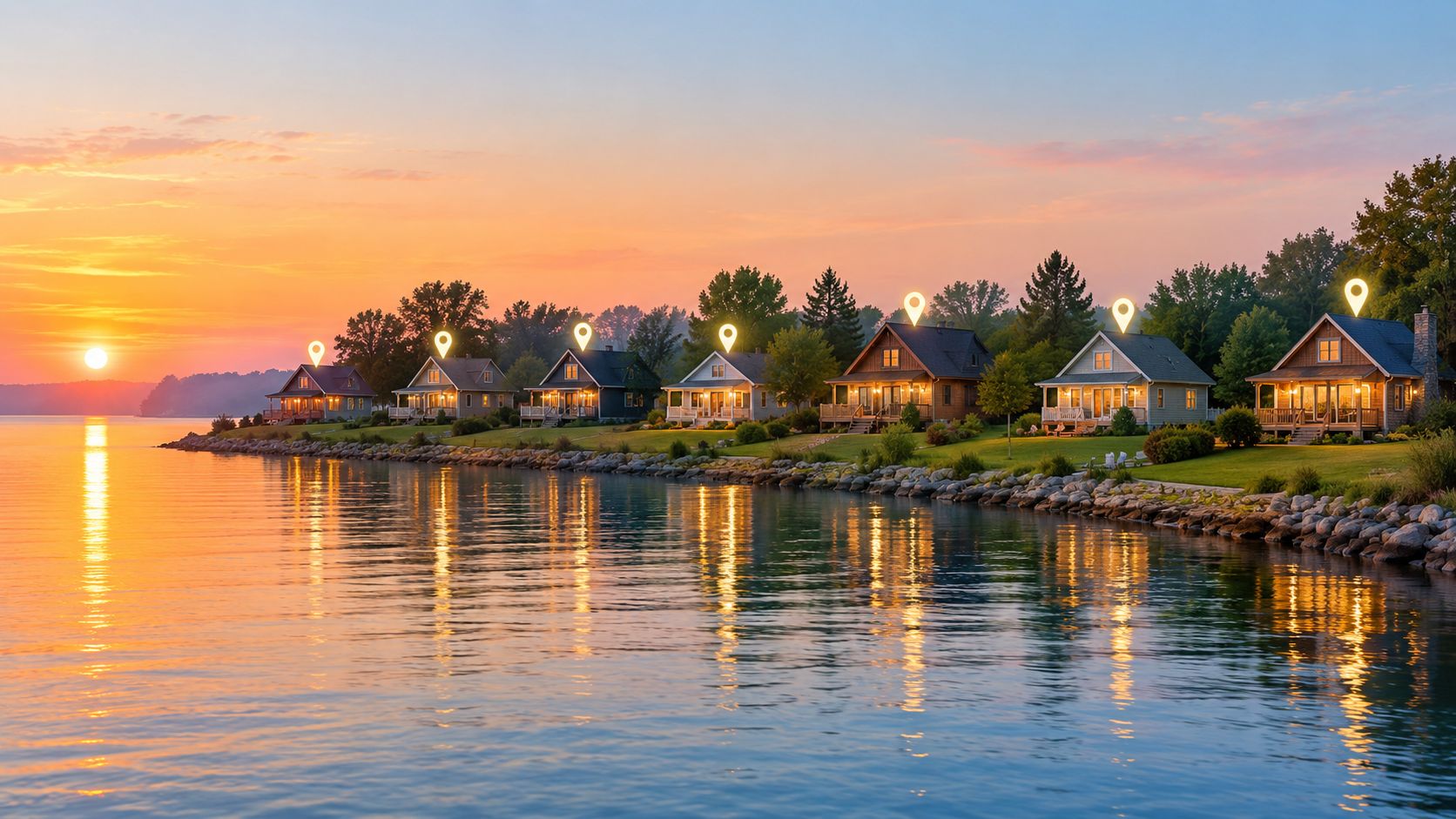
You're comparing more than a view. One Lake Erie cottage may put you beside the water with a private dock, while another gives your family more bedrooms, a fenced yard for the dog, or a reliable workspace for a longer stay. The right choice depends on the experience you want and the operating details you're willing to accept.
This roundup covers seven distinct cottage models, not verified live vacancies. Use it to compare access, amenities, pet rules, design, service, seasonal availability, minimum stays, total pricing, and calendar accuracy. Lake Erie's demand base is substantial. Visitors to Ohio's eight Lake Erie-bordering counties generated $20 billion in tourism-related economic impact in 2023, according to the Lake Erie tourism economic impact update.
For owners, a hosted direct-booking option such as Rentabble can bring together branded property pages, booking requests, seasonal settings, and two-way iCal synchronization. For travelers, those tools matter because an attractive cottage is only useful if its listed price, rules, and availability are accurate.
Table of Contents
- 1. Waterfront Cottage with Direct Lake Access and Private Dock
- 2. Restored Historic Stone or Log Cottage with Modern Amenities
- 3. Family-Friendly Multi-Bedroom Cottage with Shared Beach Access Community
- 4. Pet-Friendly Cottage with Enclosed Yards and Doggy Amenities
- 5. Modern Minimalist Cottage with Smart Home Features and Sleek Design
- 6. Eco-Friendly Sustainable Cottage with Off-Grid or Net-Zero Features
- 7. Luxury Short-Term Rental with Concierge Services and Premium Hospitality
- Lake Erie Cottage Rentals, 7-Type Comparison
- Turn Cottage Research Into a Confident Booking
1. Waterfront Cottage with Direct Lake Access and Private Dock
A waterfront cottage with direct lake access sells an experience that inland proximity can't fully reproduce. Guests may be choosing between a private shoreline, a dock for boating, unobstructed sunset views, or the convenience of stepping outside for swimming and fishing. Properties around Kelleys Island, Put-in-Bay, Marblehead, and other shoreline communities can appeal to guests who care more about water access than interior style.
The trade-off is operational complexity. Waterfront conditions can affect outdoor furniture, decks, docks, shoreline paths, and guest safety. A listing should explain exactly what “lake access” means. Is there a private beach, a shared shoreline, a dock, a launch area, or just a view? Photos should show the route from the cottage to the water, not just a distant horizon.
Match rates and stays to the water season
Summer is Lake Erie's busiest travel period. Shoulder demand commonly falls in May, early June, September, and early October, while lakefront properties often use higher rates and minimum stays during the June through August peak, as described in Lake Erie seasonal travel guidance. Owners should build separate rate periods rather than applying one price across the entire calendar.
A practical setup might use shorter stays in the shoulder season, longer peak-season reservations, and more flexible arrival days when demand softens. Travelers should check whether the advertised rate applies to their exact dates and whether dock access is included or subject to weather, maintenance, or local rules.
Practical rule: Never use “waterfront” as a substitute for an access description. State the distance, surface, stairs, shoreline type, dock availability, and any seasonal limitations.
A direct-booking site should also keep every channel aligned. Owners can use the rental availability calendar to review open dates, manual blocks, and incoming requests. Rentabble's two-way iCal synchronization can help coordinate listings across external platforms, but owners still need to confirm that imported calendars and booking rules reflect the same minimum stay and check-in settings.
For guests, the best waterfront cottage is the one whose access matches the trip. A boater needs dock information. A family with young children needs shoreline and safety details. A couple seeking sunsets may care more about the deck orientation and view than the ability to launch a boat.
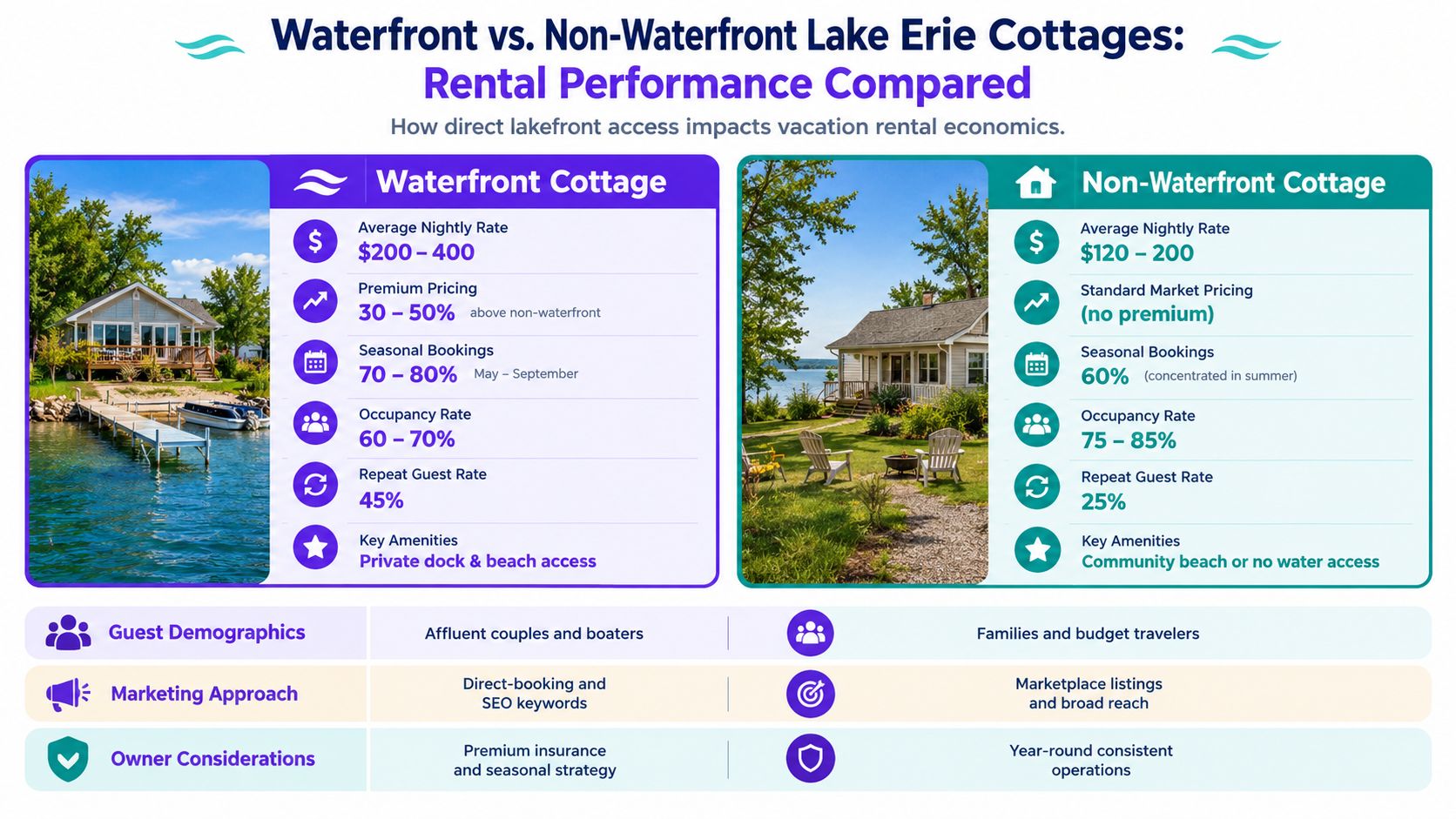
A short visual tour can clarify the difference between a lake view and direct access.
2. Restored Historic Stone or Log Cottage with Modern Amenities
A restored stone or log cottage attracts guests who want a sense of place. Original beams, masonry, fireplaces, hardwood, or period details can make the stay memorable in a way that a generic renovation may not. Examples might include a heritage cottage near Lakeside, a log cabin around Geneva-on-the-Lake, or a character property near Port Dover or Marblehead.
Character creates a different set of expectations. Guests may accept uneven floors or smaller rooms when the listing presents them accurately, but they won't appreciate discovering poor insulation, unreliable heating, outdated plumbing, or weak internet after arrival. Historic appeal works best when the owner pairs it with modern essentials, including a comfortable bed, dependable appliances, clear instructions, and accurate accessibility information.
Sell the story without hiding the constraints
The property page should explain what was preserved and what was upgraded. Mention the building's known history, restoration work, fireplace operation, heating system, kitchen equipment, bathroom layout, and ceiling heights where relevant. Avoid inventing a construction date or architectural significance. If the history hasn't been documented, describe the visible features instead.
Owners can also publish supporting content about local heritage, historic sites, and cultural activities. A blog or guide can attract guests who are searching for more than a summer swimming trip. The log cabin rental guidance offers a related example of how owners can frame a distinctive cabin experience around its setting and character.
A historic cottage may suit a longer, slower stay better than a quick turnover model. Owners can use a meaningful minimum stay during popular periods to reduce cleaning pressure and attract guests who value the property's story. Travelers should check whether a quoted total includes cleaning, taxes, service charges, firewood, or any special-use fee.
What works well:
- Specific restoration details: Explain which original elements remain and which systems were modernized.
- Comfort-first photography: Show the bedrooms, bathrooms, kitchen, heating controls, and workspace as well as the fireplace.
- Clear limitations: Disclose stairs, low doorways, uneven paths, limited parking, or weak mobile coverage before the request stage.
- Relevant reviews: Highlight comments about charm, comfort, cleanliness, and authenticity rather than relying only on a star rating.
The strongest listing doesn't pretend that an old cottage behaves like a new build. It shows how the property's character and practical comforts fit together.
3. Family-Friendly Multi-Bedroom Cottage with Shared Beach Access Community
A family cottage succeeds through usable space and predictable logistics. Three or four bedrooms, a full kitchen, outdoor seating, games, parking, and access to a shared beach can matter more to a multi-generational group than a polished design concept. Communities near Lakeside, Port Clinton, Geneva-on-the-Lake, and Marblehead often appeal to families who want a common base for meals, beach time, and local activities.
Shared access changes the booking decision. Travelers need to know whether the beach is private to the community, open to the public, gated, walkable, or subject to seasonal rules. The listing should explain what the cottage includes and what belongs to the wider development. A photo of a beach without that context can create the wrong expectation.
The Lake Erie Shores & Islands region gives owners a substantial overnight market to address. The region recorded about 11 million annual visits before COVID, and its accommodation supply includes more than 2,000 vacation rental units, alongside hotel and bed-and-breakfast inventory, according to the Lake Erie Shores & Islands economic impact overview. The same overview reports $3.1 billion in tourism sales in the two-county area in the 2023 study, with lodging representing about 13% of direct sales spending. Those figures reinforce why clear lodging information matters, but they don't guarantee demand for any individual address.
Build the calendar around family turnover
Family guests often book around school, work, and weekend travel patterns. Owners should define peak and shoulder periods in advance, then set allowed arrival days that match cleaning capacity. A Friday or Saturday arrival pattern may simplify turnover during busy periods, while flexible arrivals can help fill less popular dates.
Minimum stays need a similar balance. A two-night weekend may suit a short family break, but a longer shoulder-season minimum can reduce repeated cleaning and restocking. Travelers should compare the complete total, not only the nightly rate, especially when a larger cottage carries a cleaning fee or other fixed charges.
A shared beach is an amenity only when guests can understand how to use it. State the access route, parking arrangement, operating dates, restrictions, and distance from the cottage.
The large family house planning guide is relevant to owners positioning space for groups. On a direct-booking page, show the sleeping arrangement room by room. “Sleeps eight” isn't enough. Guests need to know whether that means four private bedrooms, bunk beds, a sofa bed, or a combination that won't suit older adults.
4. Pet-Friendly Cottage with Enclosed Yards and Doggy Amenities
A pet-friendly cottage needs more than a checkbox. Guests traveling with dogs want to know whether the yard is fully enclosed, whether the fence has gaps, what surfaces surround the property, and whether pets can reach the lake safely. Useful amenities can include washable bedding, bowls, waste bags, an outdoor rinse point, and clear information about nearby dog-friendly areas.
A fenced yard changes the property's maintenance routine. Owners need durable outdoor furniture, cleaning procedures for hair and odors, and rules that distinguish ordinary pet use from damage. The listing should state the number and type of pets allowed, whether cats are accepted, whether pets can be left alone, and whether a pet fee or deposit applies.
Make pet rules easy to verify
Pet owners will often reject a property quickly if the rules are vague. Put the requirements near the amenities and pricing rather than burying them in a long house-rules page. If the yard is only partially fenced, say so. If a beach permits dogs only during certain periods, link to the current local guidance or tell guests to verify before arrival.
A pet-friendly cottage can also attract repeat travelers because changing accommodation is inconvenient when a dog is involved. That loyalty depends on consistency. A clean property, a secure yard, and accurate expectations matter more than a generic statement that pets are welcome.
The listing should answer four questions clearly:
- Where can the pet go: Identify the enclosed areas, nearby walking routes, and any prohibited spaces.
- What does the fee cover: Separate a pet fee, refundable deposit, or cleaning charge and include each in the visible total.
- What must the guest bring: State whether bowls, bedding, crates, towels, and waste supplies are provided.
- What happens after checkout: Explain the cleaning and inspection process without making the guest feel unwelcome.
For owners, a direct booking page can present these details alongside photos of the fence, entry gates, outdoor rinse area, and pet supplies. For travelers, the safest choice is the property that describes its pet setup with the same precision it uses for beds and bathrooms.
5. Modern Minimalist Cottage with Smart Home Features and Sleek Design
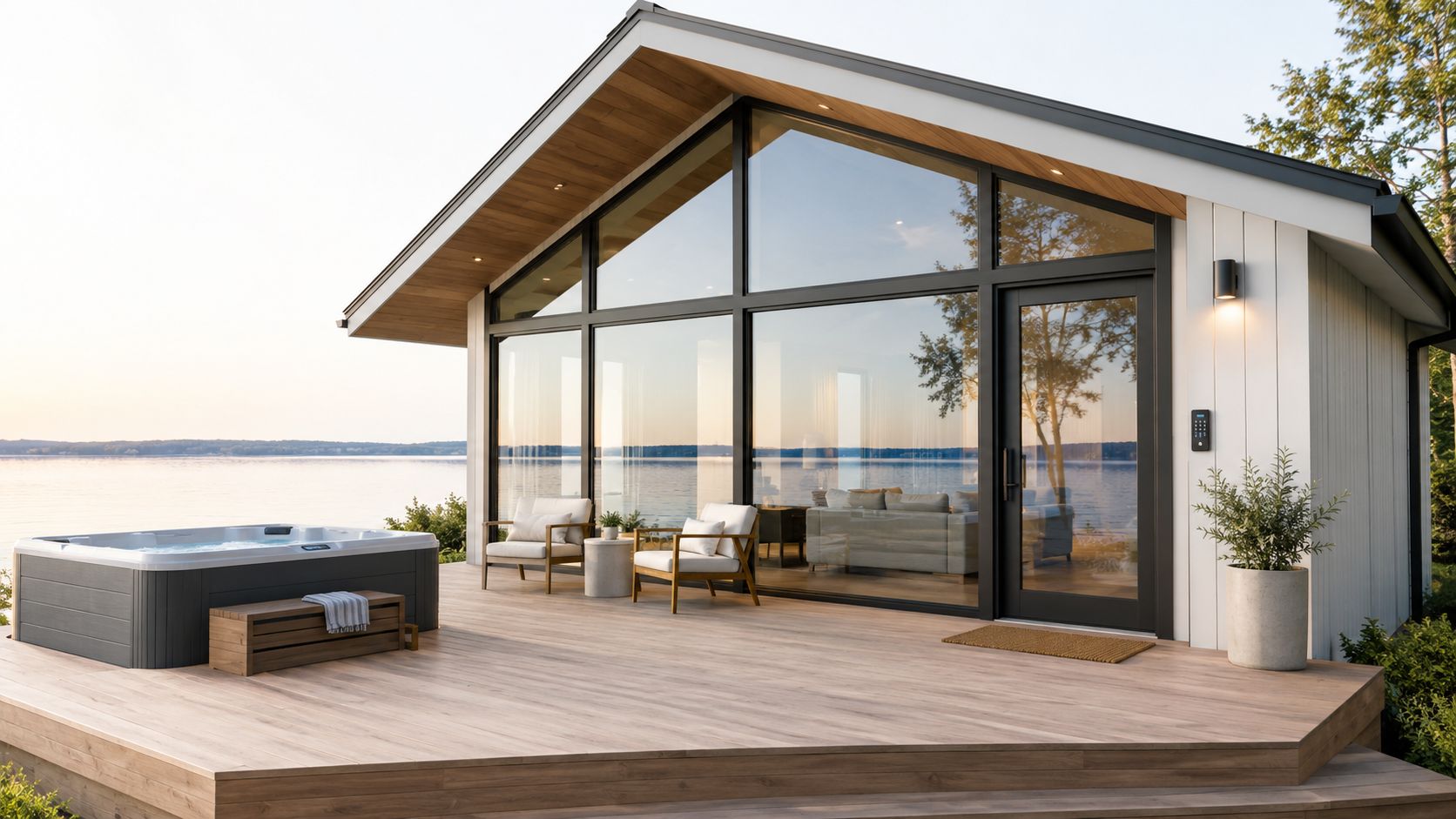
A modern minimalist cottage appeals to guests who want clean lines, natural light, comfortable technology, and a polished retreat. A renovated property in Marblehead, Geneva-on-the-Lake, or Port Clinton may attract remote workers, couples, and travelers who care about design as much as the shoreline.
Minimalism raises the standard for presentation. Clutter, worn furniture, tangled cables, or inconsistent lighting undermine the promise immediately. Professional photos should show the open plan, sleeping areas, workspace, outdoor setting, and storage. A lifestyle image can help, but it shouldn't replace practical evidence.
Put technology in operational terms
"Smart home" is too broad to guide a booking decision. State whether guests receive a keyless entry code, whether the thermostat is adjustable, whether streaming services require their own accounts, and where the router is located. If reliable internet matters for work, describe the tested service plainly and explain what happens during an outage. Don't promise uninterrupted connectivity if the property depends on local infrastructure.
The same principle applies to premium pricing. Show the nightly rate, cleaning charge, optional amenities, and other required costs before the guest submits a request. A technology or amenity fee needs a plain-language explanation. Guests are more likely to accept a higher total when they can see what they're paying for and decide whether those features matter to them.
Owners should set a minimum stay that protects the design and reduces frequent turnover. A longer off-season stay can suit remote workers, while peak-season arrivals may need fixed days to coordinate cleaners and maintenance. Calendar rules should match the actual service schedule, not an idealized one.
A smart lock is useful only when the access instructions are reliable. Test codes, explain backup entry, and give guests a contact path before they arrive.
The best modern cottage listing balances aspiration with evidence. Show the desk, outlets, lighting, kitchen storage, heating controls, and outdoor space. A guest booking for a work retreat needs different proof from a guest booking a design-focused weekend.
6. Eco-Friendly Sustainable Cottage with Off-Grid or Net-Zero Features
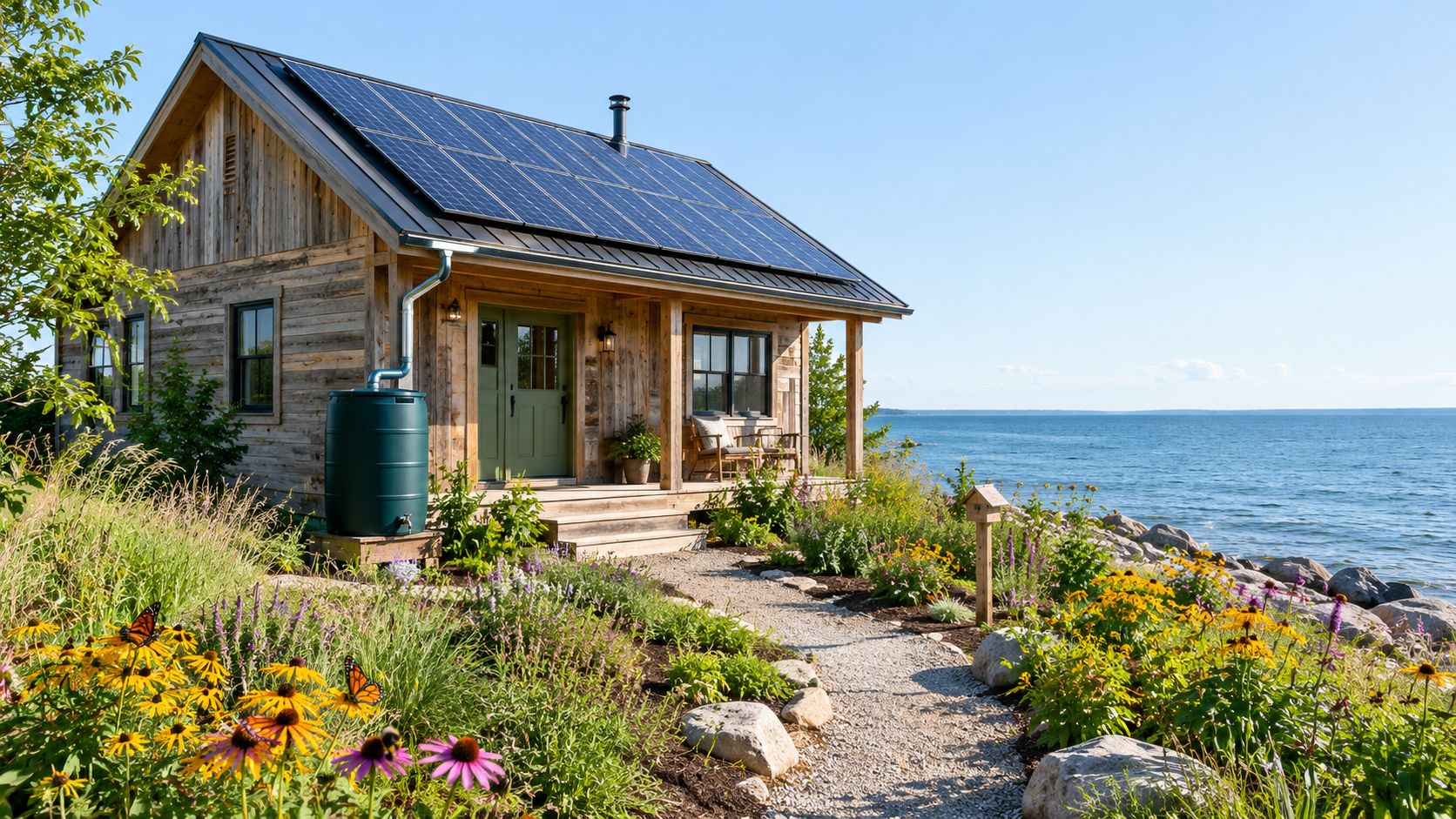
An eco-friendly cottage attracts guests who want their accommodation to reflect their environmental values. Solar power, reclaimed materials, rainwater collection, efficient heating, composting systems, and reduced-waste practices can all contribute to that experience. The important distinction is between a genuine operating model and vague green language.
Owners should describe what the systems do in everyday guest terms. Explain how to use a composting toilet, where drinking water comes from, whether power use is limited, how waste is separated, and what happens during low-sun or severe-weather conditions. These instructions shouldn't read like a list of punishments. They should help guests participate confidently.
Prove the promise without overclaiming
Use third-party certification only when the property holds it and the credential can be verified. Otherwise, describe the features you can document. Don't claim a percentage reduction in energy or water use without a measured basis. A photograph of solar panels isn't proof that the cottage is net-zero.
The calendar can support the experience. A longer minimum stay gives guests time to understand the systems and enjoy nearby natural areas without treating the cottage as a quick overnight stop. Owners may also want to avoid same-day turnovers when the property requires careful waste handling, water checks, or battery monitoring.
A useful sustainability page might cover:
- Energy: Explain generation, backup systems, heating, and any appliances guests should use thoughtfully.
- Water: Identify potable water, filtration, conservation steps, and whether showers or laundry have limitations.
- Waste: Give simple sorting instructions and identify what guests should take with them.
- Local setting: Describe access to wetlands, bird habitats, preserves, shoreline areas, or other low-impact activities without implying an endorsement that hasn't been documented.
This cottage model can work well for travelers who value quiet, nature, and responsible operations more than maximum convenience. It won't suit every guest, especially someone expecting unrestricted utility use or hotel-style service. The listing should make that fit clear before the booking request.
7. Luxury Short-Term Rental with Concierge Services and Premium Hospitality
A luxury cottage is defined by service as much as by architecture. Guests booking for an anniversary, proposal, executive retreat, or special gathering may expect curated arrival amenities, activity coordination, restaurant assistance, housekeeping options, or an in-home dining experience. A large waterfront home in Marblehead or Kelleys Island can offer that positioning, but only if the service promise is operationally real.
Luxury guests notice response time, tone, and follow-through. A listing should state what the concierge handles, what requires advance notice, which services cost extra, and whether availability depends on local suppliers. “Concierge service available” tells a guest very little. “We can coordinate restaurant reservations, boat activities, or a private chef request” is clearer, provided the owner can deliver it.
Price the experience in visible layers
A premium booking request should show the required accommodation total separately from optional services. Guests may want housekeeping but not a chef. They may choose a welcome basket while declining activity planning. Itemized options let them build the stay they want without making every inquiry a custom quotation exercise.
Minimum stays and arrival days should protect the service model. A short booking may not cover preparation for a highly personalized arrival, while a longer stay can make housekeeping and local coordination easier to schedule. Owners should leave enough calendar space for maintenance, supplier access, and quality checks between guests.
Luxury doesn't mean promising everything. It means defining the service clearly, delivering it consistently, and communicating quickly when a request needs local confirmation.
Detailed testimonials can help more than generic praise. Ask guests to describe the arrival, communication, cleanliness, local recommendations, and any service they used. Owners should obtain permission before publishing identifiable details, particularly when the stay involved a private celebration.
Travelers should compare the hospitality model with their actual needs. If they want a private, self-contained cottage and don't need assistance, a concierge property may add cost without adding value. If they're coordinating a special event or unfamiliar destination, reliable local support may justify the premium.
Lake Erie Cottage Rentals, 7-Type Comparison
| Property Type | Implementation Complexity 🔄 | Resource Requirements ⚡ | Expected Outcomes ⭐📊 | Ideal Use Cases 💡 | Key Advantages ⭐ |
|---|---|---|---|---|---|
| Waterfront Cottage with Direct Lake Access and Private Dock | High 🔄, regulatory permits, seasonal wear | High ⚡, dock upkeep, specialized insurance, seasonal staff | High ⭐, premium nightly rates ($200–400+), strong repeat guests; seasonal occupancy spike 📊 | Boating/water-recreation guests; premium direct-booking strategy 💡 | Premium pricing, SEO strength, low acquisition cost ⭐ |
| Restored Historic Stone or Log Cottage with Modern Amenities | High 🔄, restoration, preservation compliance | High ⚡, specialist contractors, ongoing repairs, pro photography | High ⭐, premium rates ($180–350), strong UGC & longer stays 📊 | Heritage tourism, Instagram-driven bookings, cultural stays 💡 | Unique scarcity, strong narrative marketing, loyal guests ⭐ |
| Family-Friendly Multi-Bedroom Cottage with Shared Beach Access Community | Medium 🔄, HOA rules, community coordination | Medium ⚡, routine maintenance, community fees, standard staffing | Medium ⭐, predictable occupancy (70–85%), high booking volume 📊 | Multi-generational families, reunions, mass-market rentals 💡 | High utilization, lower ops burden, forgiving guest base ⭐ |
| Pet-Friendly Cottage with Enclosed Yards and Doggy Amenities | Medium 🔄, pet policies, cleaning protocols | Medium ⚡, pet supplies, deeper cleaning, damage coverage | Good ⭐, +10–15% nightly premium, higher repeat rates 📊 | Pet-owning travelers, off-season pet trips, niche marketing 💡 | Higher LTV, loyal guests, ability to charge pet fees ⭐ |
| Modern Minimalist Cottage with Smart Home Features and Sleek Design | Medium–High 🔄, tech integration, design upkeep | High ⚡, renovation costs, smart-systems, high-speed internet | High ⭐, premium rates ($180–350+), strong social/remote-worker appeal 📊 | Remote workers, design-focused guests, wellness retreats 💡 | High revenue per night, social media appeal, tech-enabled convenience ⭐ |
| Eco-Friendly Sustainable Cottage with Off-Grid or Net-Zero Features | High 🔄, system integration, permitting, guest education | High ⚡, solar/geothermal capital, certification, specialized maintenance | Good–High ⭐, 15–25% premium, strong brand differentiation and earned media 📊 | Eco-conscious travelers, sustainability retreats, values-driven bookings 💡 | Differentiation, long-term savings, credibility with certifications ⭐ |
| Luxury Short-Term Rental with Concierge Services and Premium Hospitality | Very High 🔄, full-service ops, staffing, regulatory complexity | Very High ⚡, luxury fit-out, concierge, daily housekeeping, marketing | Very High ⭐, highest nightly revenue ($300–600+), high LTV but lower volume 📊 | Special occasions, executive retreats, affluent clientele 💡 | Top revenue potential, ancillary service revenue, low price sensitivity ⭐ |
Turn Cottage Research Into a Confident Booking
Start with the trip, not the property title. A family reunion may need bedrooms, parking, a kitchen, and shared beach access. A boating weekend needs a real dock description and a plan for gear. A pet trip depends on fencing and local rules. A quiet retreat may be better served by a historic, modern, or eco-focused cottage than by the most expensive waterfront listing.
Next, verify the exact access and amenities. Ask whether “lakefront” means direct shoreline access, a private dock, a shared beach, or a view from the house. Confirm the number of private bedrooms, bed types, bathrooms, parking spaces, stairs, heating, internet, pet arrangements, and outdoor features. Owners should publish these details in the property page rather than relying on attractive but ambiguous language.
Then review the calendar and the complete price for the exact dates. Lake Erie demand is seasonal, with summer acting as the busiest period and shoulder periods offering a different balance of availability and value. The Lake Erie cottage market overview also points to a sharp seasonal contrast, with June through August among the hardest months to book and October, January, and November among the easier periods in broader listing summaries. That pattern doesn't guarantee a particular cottage's rate or availability, so travelers still need a current quote.
Owners should set rate periods, minimum stays, discounts, and allowed check-in days before advertising. A peak-season waterfront cottage may need different rules from an off-season historic cabin. A family property may benefit from weekend arrivals, while a concierge rental needs enough preparation time for personalized service. Every rule should support the actual cleaning, maintenance, and guest communication workload.
Calendar accuracy matters across every cottage model. A direct-booking system with a central calendar, manual blocks, overlap prevention, and two-way iCal synchronization can reduce conflicting availability when an owner also lists on Booking.com, Airbnb, Expedia, or Vrbo. It doesn't replace owner oversight, but it gives the booking process a dependable operational base.
Finally, match the service level to the trip. The best cottage for rent on Lake Erie isn't automatically the one with the biggest view, the newest kitchen, or the longest amenity list. It's the property whose location, access, guest rules, seasonal price, minimum stay, service expectations, and live calendar fit what the traveler needs.
Rentabble gives cottage owners a hosted direct-booking website with branded property pages, seasonal pricing, booking requests, reviews, and calendar synchronization. If you're ready to present a Lake Erie cottage more clearly and manage availability across channels, visit Rentabble to explore the platform.