10 Small Landlord Software Options for 2026
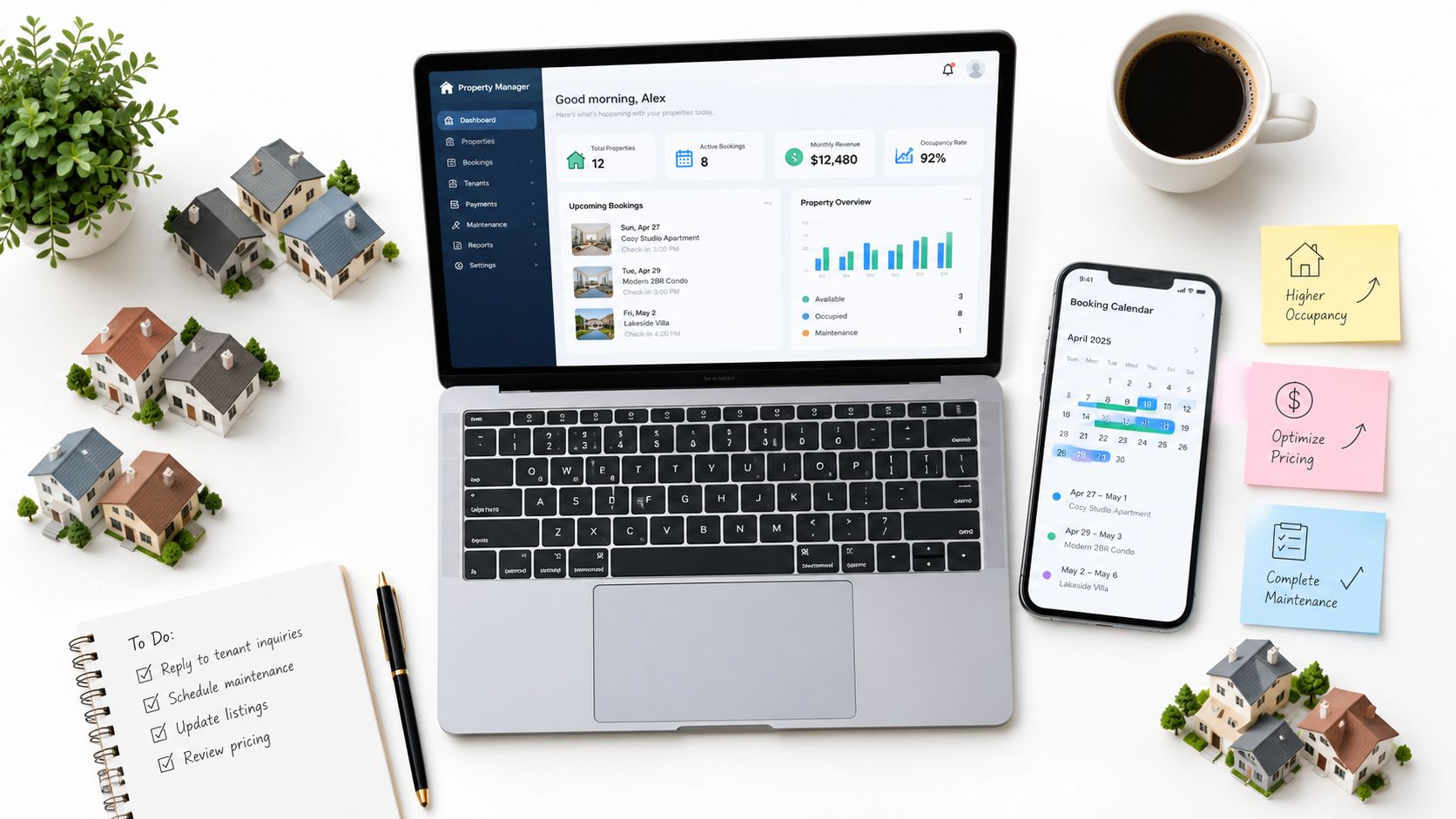
A single rental can create a surprisingly large admin burden. You may be answering listing enquiries, checking availability, collecting payments, coordinating repairs, updating prices, and keeping records, often from different tools. The right priorities change sharply depending on whether you rent long term to tenants or operate furnished vacation units across Airbnb, Booking.com, Vrbo, and a direct website.
This comparison evaluates 10 small landlord software options for 2026 by rental type, operating style, pricing approach, setup effort, and practical limitations. The list starts with vacation-rental tools because direct bookings, OTA synchronization, and guest communication follow a different workflow from leasing, rent collection, and maintenance.
Use a simple decision path. First identify the rental model. Then decide whether marketplace synchronization and guest acquisition matter more than tenant operations. Finally, compare the shortlist against your unit count, payment preferences, tolerance for setup work, and need for accounting depth.
Rentabble is especially relevant to owners of small vacation portfolios who want a branded direct-booking channel without custom development. The other vacation-rental entries range from broad PMS platforms to channel-management and automation tools, while the final three focus on long-term leasing workflows.
Table of Contents
- 1. Rentabble
- 2. Lodgify
- 3. OwnerRez
- 4. Hospitable
- 5. Uplisting
- 6. Smoobu
- 7. Hosthub
- 8. TurboTenant
- 9. Innago
- 10. RentRedi
- Top 10 Small Landlord Software, Feature & Pricing Comparison
- Match the Tool to the Work You Actually Do
1. Rentabble
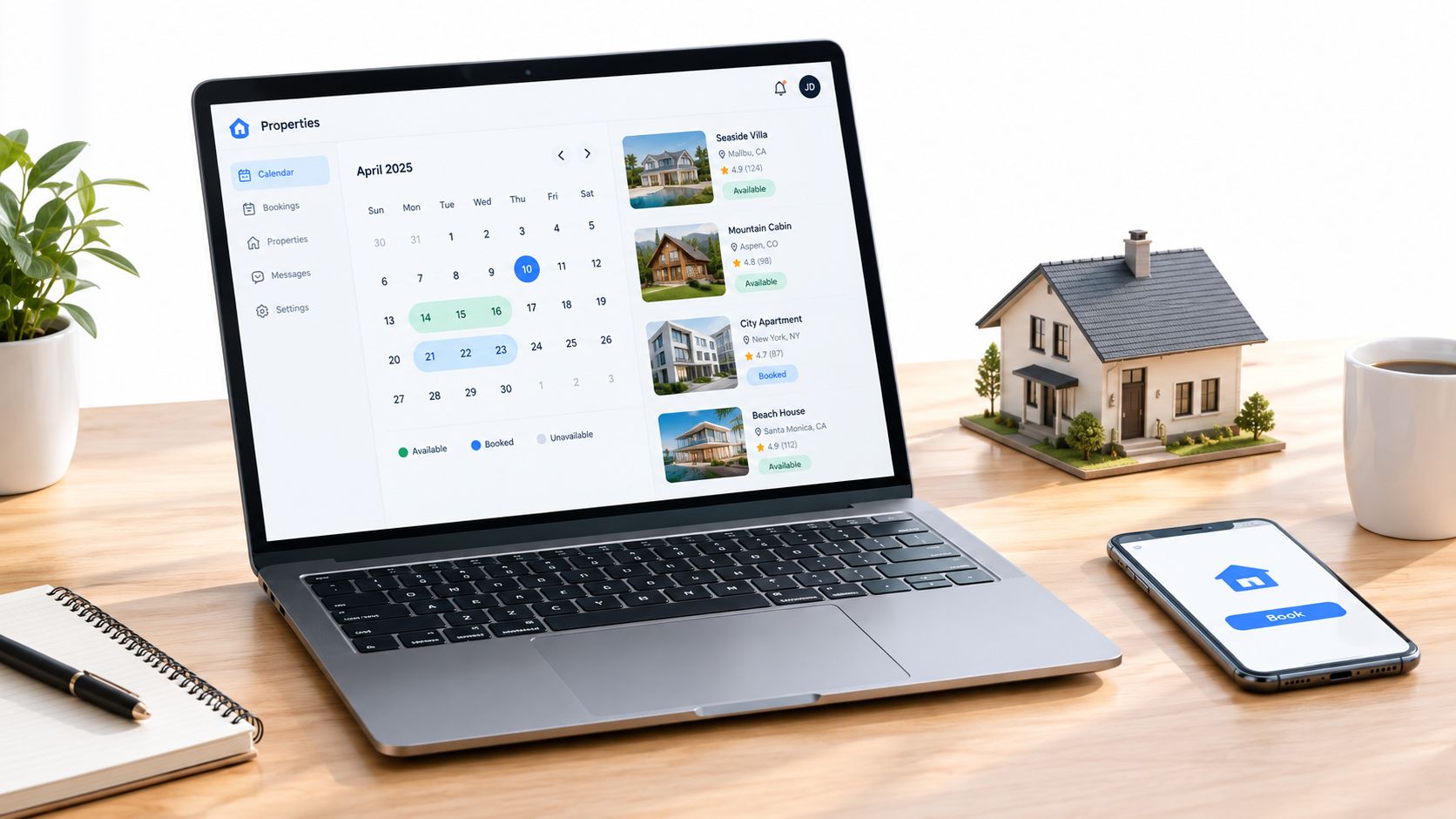
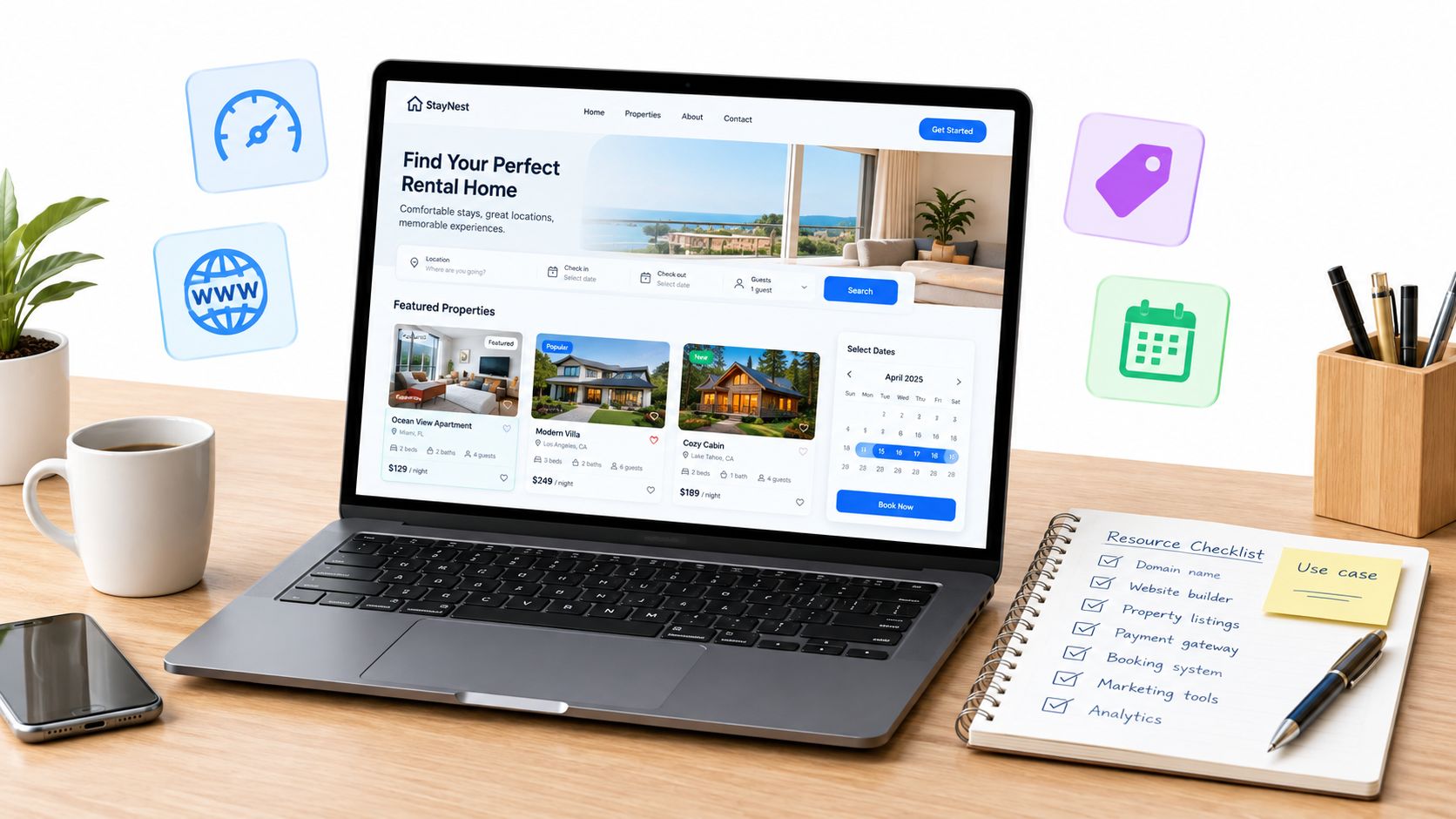
Rentabble addresses a narrow but common problem for a small vacation-rental owner, owning the booking path without hiring a developer or adopting a heavy enterprise PMS. The hosted platform gives each account a public website with custom branding, property pages, galleries, amenity details, live availability, and an automatically calculated total price.
That setup suits an apartment owner who already gets demand from Airbnb or Booking.com but wants repeat guests to book through a direct channel. Guests can submit booking requests through the owner's site, while the owner manages apartments, prices, availability, bookings, and reviews from one dashboard. The platform does not charge a commission on direct booking requests, so the core cost is easier to forecast than a marketplace percentage.
Where Rentabble fits best
Rentabble is strongest for direct booking alongside OTAs, not for replacing every operational system a larger manager may use. Two-way iCal synchronization connects the owner's calendar with Booking.com, Airbnb, Expedia, VRBO, and other platforms. The central calendar also supports manual blocks and overlap prevention once a booking is confirmed, which reduces the risk created by multiple booking channels.
Its pricing tools cover rate periods, minimum stays, allowed check-in days, and configurable discounts. Owners can publish SEO-ready pages, use multilingual website support in English and Croatian, and manage guest reviews without handling separate hosting, security, and backup tasks.
Practical rule: Choose Rentabble when the main bottleneck is getting and handling direct booking requests, not building a larger back-office operation.
The pricing is deliberately oriented toward smaller portfolios. Basic costs €9 per month or €99 per year for up to 3 units, while Pro costs €19 per month or €199 per year for up to 6 units. A 7-day free trial and 14-day money-back guarantee reduce setup risk, although details should be confirmed on the Rentabble pricing page, because product terms can change.
Trade-offs for small owners
Rentabble can go live in hours, which matters if you do not have a developer or web designer. The limitation is payment method coverage. Guests currently pay by bank transfer or cash on arrival, while online card payments are planned but not yet available. Owners who need integrated card processing today should compare the payment workflows of the other vacation-rental platforms below.
Rentabble also is not meant to replace a large enterprise PMS with extensive owner accounting, advanced channel controls, or complex team permissions. For an independent owner managing one to six vacation units, that narrower scope is a benefit. It keeps the setup surface small while combining branded pages, pricing, availability, calendar synchronization, and booking-request management.
2. Lodgify
Lodgify suits a host who wants a polished direct-booking website and broad marketplace connectivity in the same system. Its no-code website builder, booking widget, payment tools, and channel integrations let an owner create an independent booking path without hiring a developer.
The platform connects with Airbnb, Vrbo, Booking.com, and Google Vacation Rentals. That combination is useful for a small landlord who still depends on OTA discovery but wants guests to book through an owned website when possible. Automatic calendar blocking helps keep reservations aligned across connected channels.
Website first, operations second
Lodgify offers more than a standalone brochure site. Owners can create a bookable website, embed the booking engine into an existing site, process direct and manual bookings, and handle payments and invoices. A WordPress plugin is available for owners who already have a content site and don't want to migrate their entire web presence.
The trade-off is commercial complexity. Pricing and fee treatment vary by plan, and owners should check whether their selected tier introduces booking, dynamic-pricing, processor, or other usage costs. A low subscription price isn't necessarily the lowest total cost if a small portfolio generates regular direct reservations.
For owners comparing website approaches, this guide to a vacation-rental website builder helps frame the decision around ownership, setup, and booking workflow rather than visual design alone.
Who should choose Lodgify
Choose Lodgify if website flexibility and distribution are equally important. It's a better match than a narrow direct-booking tool when you want payment and invoicing functions integrated into the same environment. It may be more than you need if your only goal is a fast branded site with basic availability synchronization.
Before subscribing, test the guest booking path on mobile, inspect the exact plan's fee rules, and confirm that every OTA connection you rely on uses the synchronization method you expect.
3. OwnerRez
OwnerRez is the power-user option in this list. It combines hosted direct-booking websites, WordPress widgets, guest and owner communications, and direct API connections to Airbnb, Vrbo, Booking.com, and Google Vacation Rentals.
The important distinction is configurability. OwnerRez can support a small portfolio, but its value appears when the owner wants detailed control over rates, rules, communications, integrations, and booking behavior. The system is designed to accommodate more complicated operating preferences instead of forcing every host into a simplified workflow.
Control has a learning cost
OwnerRez uses per-property pricing with optional add-ons for functions such as websites, QuickBooks, SMS, and an AI assistant. That modular structure can be efficient because you don't have to buy every feature. It also means the advertised base cost isn't the complete decision. Calculate the recurring total after selecting the website, accounting, communication, and automation modules you need.
“More control” is useful only when the owner has time to configure and maintain it.
The same breadth that makes OwnerRez powerful can make onboarding more demanding than a lightweight platform. A single-unit host who wants to publish a site quickly may find the settings excessive. An owner with several units, multiple booking rules, and a clear need for direct API connections may appreciate the ability to shape the system around the business.
See this overview of vacation-rental booking software when comparing a configurable PMS with a simpler direct-booking platform.
Best operating profile
OwnerRez is a strong choice for an owner who expects the portfolio or workflow to become more complex. It can reduce the need to change systems later, but only if the owner is prepared to learn the platform now. Review the add-on menu before signing up, then build one complete test reservation, including pricing, availability, guest communication, and payment-related steps.
4. Hospitable
Hospitable is particularly well suited to hosts who experience messaging volume as the main operational burden. Its automation tools cover guest communication, calendar synchronization, and routine operations, while its direct-booking system adds a hosted site, embeddable widgets, guest portals, and quote or booking links.
That combination creates a useful workflow for hosts who receive enquiries through several channels. Instead of manually writing every response or sending a separate quote, the owner can use automated messaging and direct-booking links to move a prospect toward a reservation.
Automation plus an owned channel
Hospitable supports hosted and self-hosted direct-booking options. Owners can place a booking widget on their own domain, keep OTA calendars synchronized, and use direct-booking workflows alongside dynamic-pricing tools. The result is broader than a website builder, but less dependent on manual guest handling than a simple calendar system.
The main limitation is plan dependence. Direct-booking capabilities, pricing tiers, and possible fees differ by subscription level, so owners need to inspect the selected plan rather than assume every feature is included. The same applies to automation depth and other operational tools.
Hospitable makes sense for a self-managing host who wants to reduce repetitive communication without abandoning OTA distribution. It may be a poor fit for someone who doesn't receive enough enquiries to benefit from automation or who wants the simplest possible dashboard.
Setup questions to ask
Start by mapping your current guest messages. Identify which replies are repetitive, which require personal judgment, and which should never be automated. Then test whether Hospitable's templates, booking links, and guest portal preserve the tone and information your guests need.
For a portfolio of one to six units, automation should save attention, not create another system to supervise. Review how the platform handles exceptions, cancellations, altered dates, and direct requests before moving live bookings into it.
5. Uplisting
Uplisting targets owners who prefer a premium, low-maintenance operating setup. It combines OTA synchronization with automated messaging, cleaning and operational workflows, and a direct-booking site available on eligible plans or as an add-on.
Its appeal is packaging. Owners who dislike assembling a stack of separate tools may prefer an approach that groups the main short-term-rental functions inside one subscription. Security deposits and guest-vetting tools, including Uplisting Protect, add controls for owners who want more than calendar and message management.
A managed-feeling experience
Uplisting is a practical choice when reliability and reduced supervision matter more than the lowest entry price. Automated operations can help coordinate messages and cleaning tasks, while OTA synchronization keeps the reservation calendar connected to marketplace demand.
The trade-off is cost discipline. The platform is positioned above entry-level tools, so a small landlord should verify the per-property cost rather than assume the packaging will be economical for a very small portfolio. Direct-booking availability may also depend on the chosen plan or add-on.
Budget test: Compare the complete monthly cost for your actual unit count, not the headline plan and not the feature list.
Uplisting works best for an owner who has enough reservation activity to justify more automation and who values a polished system over granular do-it-yourself assembly. It may be excessive for an owner with one apartment and limited channel activity.
What to confirm before subscribing
Check whether the direct-booking site is included in the plan you need. Confirm how security deposits, guest screening, cleaning assignments, and OTA connections work in the exact workflow you use. Also determine whether the system gives you enough control over branding and guest ownership, since a premium operational tool isn't automatically a strong customer-acquisition tool.
6. Smoobu
Smoobu is a lightweight vacation-rental PMS and channel manager for owners who want a branded booking option without a large implementation project. It offers three direct-booking routes: a full website builder, an embeddable booking engine, or an availability calendar.
That range is useful because not every small landlord needs a new website. An owner with an existing WordPress, Wix, or Squarespace site can embed the booking function, while someone starting from scratch can use the hosted website option. Direct reservations appear alongside OTA bookings, giving the owner one operating view.
Simple distribution for small portfolios
Smoobu includes OTA synchronization and a Dynamic Pricing module. Its direct-booking payment workflow doesn't add a separate Smoobu fee, although payment processors can still charge their own fees. Owners should therefore separate platform charges from transaction charges when calculating cost.
The product's setup materials also cover embedding on common website platforms, which lowers the technical barrier for an owner who wants to keep an existing site. That can be more valuable than a richer visual builder if the main objective is to make current pages bookable.
The limitation is design depth. Some owners consider the website builder basic, and advanced needs may require workarounds or integrations. If your brand depends on highly customized pages, complex content, or complex marketing journeys, evaluate the builder before committing.
When Smoobu is the better compromise
Smoobu fits a budget-conscious host who wants channel synchronization, a direct-booking option, and a relatively straightforward operating layer. It isn't necessarily the best choice for a host seeking a highly configurable PMS or a distinctive, content-heavy website.
Test the booking engine from the guest side. Check availability, pricing, payment processing, confirmation messages, and how a direct reservation appears beside an OTA booking.
7. Hosthub
Hosthub stands out by combining channel connections with optional help building the direct-booking website. Owners can use API connections to major OTAs, a WordPress booking engine, multilingual site support, or a paid Website Builder service that creates or converts a site.
That structure addresses two different owner profiles. A technically comfortable landlord can use the plugin and handle the site independently. Someone who wants direct bookings but doesn't want to design pages, configure the booking flow, or manage the implementation can pay Hosthub to build the site.
DIY or assisted setup
The API channel connections are relevant to owners who are particularly concerned about double bookings. They can offer a more direct synchronization path than relying only on basic calendar exchange, although the owner should confirm the exact connection and supported functionality for each channel.
The Website Builder service is separate from the base subscription. That makes the cost model different from an all-in-one hosted website where the site is part of the plan. A one-time build cost may be reasonable if it replaces outside development, but it should be compared with the ongoing effort required by a do-it-yourself alternative.
Hosthub is a sensible choice when multilingual publishing, WordPress compatibility, and channel connectivity are central. It may be less attractive if you want the lowest possible setup cost or prefer to control every page without a service engagement.
A useful selection question
Ask whether your constraint is time or control. If time is scarce, the paid build service may remove a real obstacle. If control matters more, inspect the plugin, editing tools, and booking workflow before purchasing assistance.
8. TurboTenant
TurboTenant sits in the long-term rental category, where the workflow begins with marketing a vacant unit and continues through applications, screening, leasing, rent collection, maintenance, and basic bookkeeping.
It uses a freemium model, which lowers the entry cost for a small landlord who wants to replace scattered listings, email threads, and manual payment follow-ups without committing to a full paid system on day one.
A leasing workflow rather than a booking engine
TurboTenant's core workflow includes listings, applications, screening, leases, online rent collection, and maintenance tracking. Its optional Autopilot service adds tenant placement or full management options through a flat-fee model, which can suit an owner who wants software for the core process but occasional help at a later stage.
The free entry point does not mean every useful function is free. Faster ACH, unlimited leases, and some forms may sit behind paid tiers, and pricing or feature access can change over time. Check the current plan details before comparing it with subscription-based alternatives. For owners weighing leasing platforms, this comparison of an online rental management system shows how long-term workflows differ from booking engines.
For long-term landlords, the main advantage is continuity. The same system can move a prospect into an applicant, an applicant into a tenant, and a tenant into a maintenance request without switching tools. It does not serve OTA calendars, vacation guest messaging, or direct-booking websites.
Best fit
Choose TurboTenant if your main tasks are finding tenants, screening applicants, collecting recurring rent, and tracking maintenance. Use a different platform if you need deeper accounting, direct booking, or a mobile-first resident experience.
9. Innago
Innago uses a transaction-based model rather than charging landlords a monthly subscription. The platform covers listings, applications, screening, electronic leases, rent collection, maintenance tickets, and tenant communication, with no per-unit subscription limit for landlords.
That pricing structure is attractive to an owner who wants to avoid fixed software overhead. The economic question shifts from “what is the monthly plan?” to “which transactions will create fees, and who pays them?” Screening and payment processing can carry costs even when the landlord subscription is zero.
Free subscription, not free operations
Innago's rent collection supports configurable ACH and card fee options. Digital lease creation and e-signing keep the leasing workflow in one place, while maintenance ticketing gives tenants a structured way to report problems instead of relying on scattered texts and email.
The platform is straightforward to onboard and offers a tenant-friendly payment experience. Its limitation is reporting and accounting depth. Owners who need advanced financial controls, extensive reconciliation, or a broader investment-analysis layer may outgrow the basic operational model.
Innago fits long-term owners who prioritize low recurring cost and core tenant workflows. It isn't a substitute for vacation-rental software because it doesn't solve OTA distribution, guest calendars, or direct-booking acquisition.
The right cost comparison
Before choosing a free platform, list expected screening, payment, and add-on activity. A transaction-based model can be cheaper for a quiet portfolio, but a subscription may be easier to forecast when recurring usage is high. Compare both against the value of automated rent collection and maintenance records, not against the subscription line alone.
10. RentRedi
RentRedi takes a mobile-first approach to long-term property management. One subscription covers unlimited properties or units, online rent collection, maintenance requests, applications, screening integrations, and apps for landlords and renters.
That unlimited structure changes the portfolio-size calculation. A landlord managing one unit pays for a broad capacity, while an owner adding units doesn't face the same per-unit pricing pressure. The model is therefore more compelling for someone who expects the portfolio to expand or who wants predictable software costs.
Built for landlord and tenant phones
RentRedi's landlord and resident apps support rent payments, maintenance ticketing, communications, leasing workflows, and resident uploads. A tenant can submit a maintenance request with supporting information, while the owner can manage the request without relying on a separate messaging thread.
The platform is more efficient than a full property-management suite. It offers fewer full-service add-ons than marketplace-centric PMS products, so owners should verify required integrations before moving their workflow. It may also be less suitable for landlords who need deep accounting, complex owner reporting, or extensive third-party management features.
RentRedi is a strong fit for a self-managing long-term landlord who wants mobile access and a flat subscription. It isn't designed for vacation-rental owners whose core requirement is live OTA availability, guest booking requests, and a branded direct-booking website.
Top 10 Small Landlord Software, Feature & Pricing Comparison
| Platform | Core features | Unique selling points | UX / Quality | Target audience | Pricing / Value |
|---|---|---|---|---|---|
| 🏆 Rentabble | Hosted branded site; property pages; two‑way iCal; seasonal pricing; owner dashboard | ✨ No commission on direct requests; fast setup; multilingual; secure hosting | ★★★★☆ | 👥 Independent hosts & small vacation‑rental operators | 💰 Basic €9/mo (3u); Pro €19/mo (6u); 7‑day trial |
| Lodgify | No‑code site builder; channel manager; payments; WordPress plugin | ✨ Direct API to OTAs; Google Vacations support | ★★★★☆ | 👥 Hosts wanting payments + OTA sync | 💰 Plan‑dependent; processor/plan fees may apply |
| OwnerRez | Hosted sites + WP plugin; direct API; highly configurable | ✨ Granular controls; pay per‑add‑on model | ★★★★☆ | 👥 Growing portfolios & power users | 💰 Per‑property pricing + optional add‑ons |
| Hospitable | Hosted direct site; widgets; message automation; calendar sync | ✨ Strong messaging automation; guest portal & quote links | ★★★★☆ | 👥 Hosts who prioritize automation & ops | 💰 Tiered plans; fees/features vary by plan |
| Uplisting | OTA sync; messaging & ops automation; direct‑booking add‑on | ✨ Premium, low‑maintenance packaged features | ★★★★☆ | 👥 Owners seeking polished, low‑maintenance setup | 💰 Premium pricing; direct‑booking may be add‑on |
| Smoobu | Website builder, embeddable engine, calendar; dynamic pricing | ✨ No Smoobu fee on payments; quick setup | ★★★☆☆ | 👥 Budget‑conscious small hosts | 💰 Budget plans; processor fees still apply |
| Hosthub | API OTA sync; WordPress booking engine; paid site build service | ✨ Option to have Hosthub build multilingual site | ★★★★☆ | 👥 Operators wanting hands‑on/agency help | 💰 Subscription + one‑time website build option |
| TurboTenant | Listings, applications, screening, leases, rent collection | ✨ Freemium core + flat‑fee Autopilot management option | ★★★☆☆ | 👥 Small long‑term landlords | 💰 Freemium; paid Autopilot & transaction fees |
| Innago | Rent collection, e‑leases, screening, maintenance tracking | ✨ $0 subscription for landlords; simple onboarding | ★★★☆☆ | 👥 Budget‑sensitive landlords (1–10 units) | 💰 Free subscription; transactional fees apply |
| RentRedi | Unlimited units; rent collection; maintenance; mobile apps | ✨ Flat subscription that scales with portfolio growth | ★★★☆☆ | 👥 Landlords who want predictable, unlimited pricing | 💰 Flat subscription; check tiers for features |
Match the Tool to the Work You Actually Do
There isn't one universal winner because small landlord software serves two different businesses. A long-term landlord manages applications, leases, recurring rent, maintenance, and tenant communication. A vacation-rental owner manages nightly availability, changing prices, guest messages, OTA synchronization, and direct acquisition. Choosing a tool from the wrong category creates more work even when the feature list looks impressive.
For a self-managing owner with up to 6 vacation-rental units, Rentabble is the clearest fit when the priorities are a branded direct-booking site, predictable subscription pricing, fast setup, and iCal synchronization. Its limitation on online card payments matters, so owners who require integrated card checkout should examine alternatives before launch. Its smaller feature surface is also intentional. It suits an owner who wants an owned booking channel rather than an enterprise PMS.
Choose Lodgify, Smoobu, or Hosthub when website and channel-management choices sit at the center of the decision. Lodgify is useful for a no-code site with payment and distribution tools. Smoobu offers several ways to add direct booking to a new or existing site. Hosthub is worth considering when API channel connections, multilingual support, or an assisted website build are important.
Choose OwnerRez, Hospitable, or Uplisting when the operational layer deserves more attention. OwnerRez favors configurability and detailed control. Hospitable makes message automation and direct-booking links central. Uplisting targets owners who want a more premium, low-maintenance package and are prepared to verify the cost for a small portfolio.
For long-term rentals, TurboTenant, Innago, and RentRedi address the workflow that vacation PMS tools don't. TurboTenant combines listing, application, screening, leasing, rent, and maintenance functions with a freemium entry path. Innago removes the landlord subscription but shifts costs toward transactions and add-ons. RentRedi uses a flat subscription and mobile-first apps, which can make it attractive as the number of units grows.
Before you commit, run the same implementation check for every product:
- Confirm the rental model: Decide whether you need OTA and guest workflows or leasing and tenant workflows.
- Count every cost: Include subscriptions, per-property charges, payment processing, screening, add-ons, and website services.
- Test calendar synchronization: Create a controlled block or test reservation and verify how quickly connected calendars update.
- Verify payment methods: Make sure the platform supports the way your guests or tenants pay.
- Review onboarding effort: A feature-rich PMS can demand more configuration than a small owner wants to maintain.
- Accept the limitations deliberately: Check that missing card payments, basic reporting, limited integrations, or plan restrictions won't disrupt the current portfolio.
The best choice is the one that removes the most repetitive work from your real rental workflow. Start with the task that currently causes missed bookings, delayed payments, duplicated messages, or incomplete records, then select the narrowest platform that solves it without creating a larger administrative burden.
If you manage a small vacation portfolio, Rentabble gives you a branded direct-booking website, live availability, seasonal pricing, booking requests, and two-way iCal synchronization in a hosted setup. Visit Rentabble to see whether its owner-focused workflow fits your units and your path away from marketplace-only bookings.