10 Vacation Rental Website Builder Options
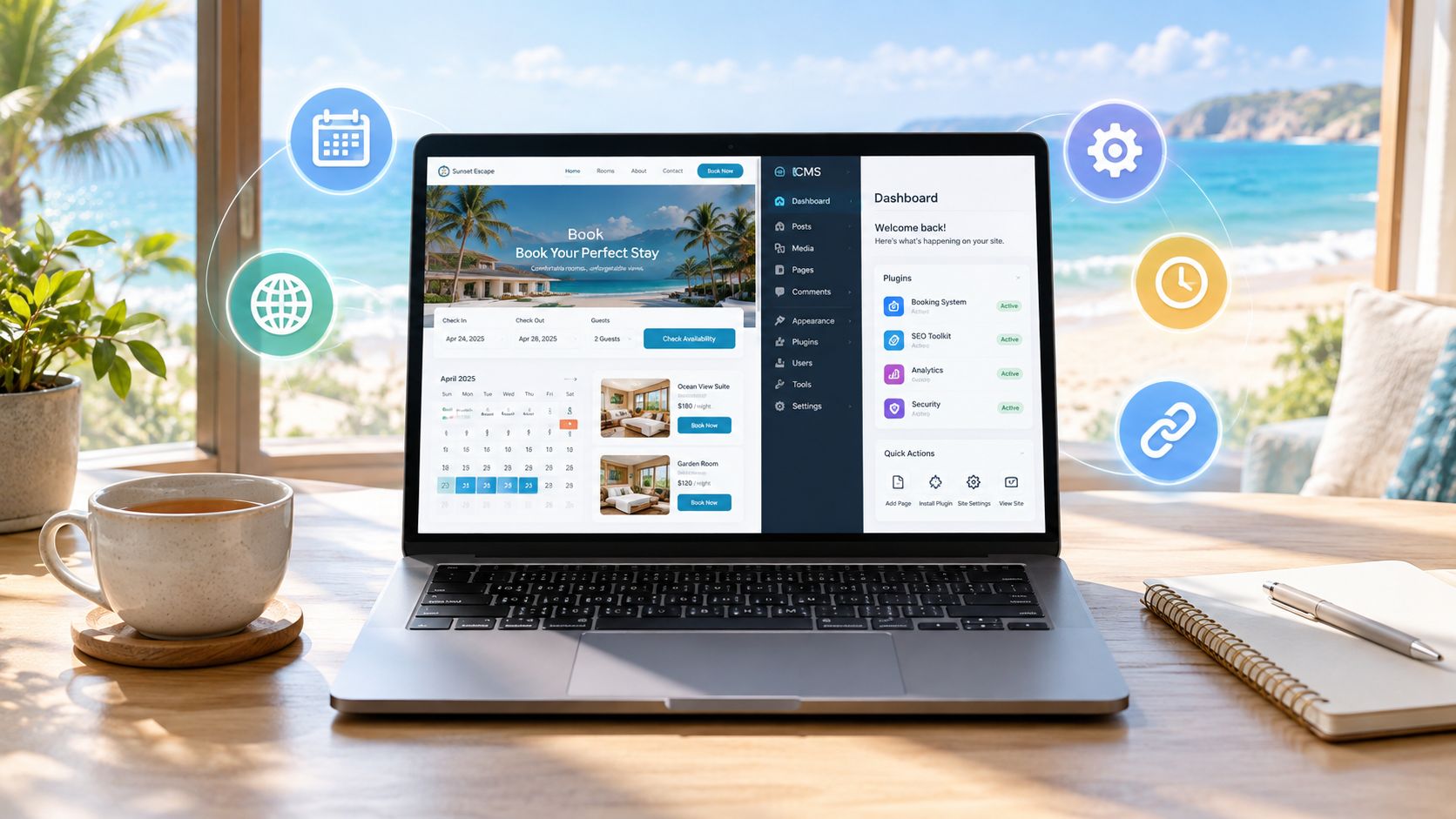
The popular advice says every vacation rental website builder should do the same job, but that's not how operators run bookings. A hosted direct-booking platform helps you launch fast and own the guest relationship. A PMS-connected website gives you tighter calendar, pricing, and payment control. A CMS setup, usually WordPress or a similar site builder connected to rental software, gives you the most design freedom, but it also asks you to manage more moving parts after launch.
That difference matters because direct booking is no longer a side experiment. In a 2025 U.S. industry survey, direct-booking software users split bookings into 47.2% Airbnb, 31.6% direct-booking sites, and 21.2% other channels, and broader summaries put direct bookings closer to 25% overall, with top operators reaching 40 to 50%. The same analysis found direct-booking reservations produced 45.2% longer stays and 51.3% longer booking windows than OTA-originated bookings, which explains why owners keep investing in owned channels instead of relying only on marketplaces like Airbnb or Vrbo (U.S. vacation rental statistics).
Rentabble sits in the hosted-platform camp and gives independent owners a branded route to direct reservations without custom development. That makes it a useful reference point for self-managing operators who want a same-day launch path, clear pricing, and a site that can run bookings instead of just looking polished. The comparison below separates convenience from depth, then shows which implementation model fits each kind of operation.
Table of Contents
- 1. Rentabble
- 2. Lodgify
- 3. OwnerRez
- 4. Smoobu
- 5. Guesty
- 6. Hospitable
- 7. Hostaway
- 8. Uplisting
- 9. Eviivo
- 10. Webready by Tokeet
- Top 10 Vacation Rental Website Builders, Comparison
- Match the Builder to Your Booking Operation
1. Rentabble
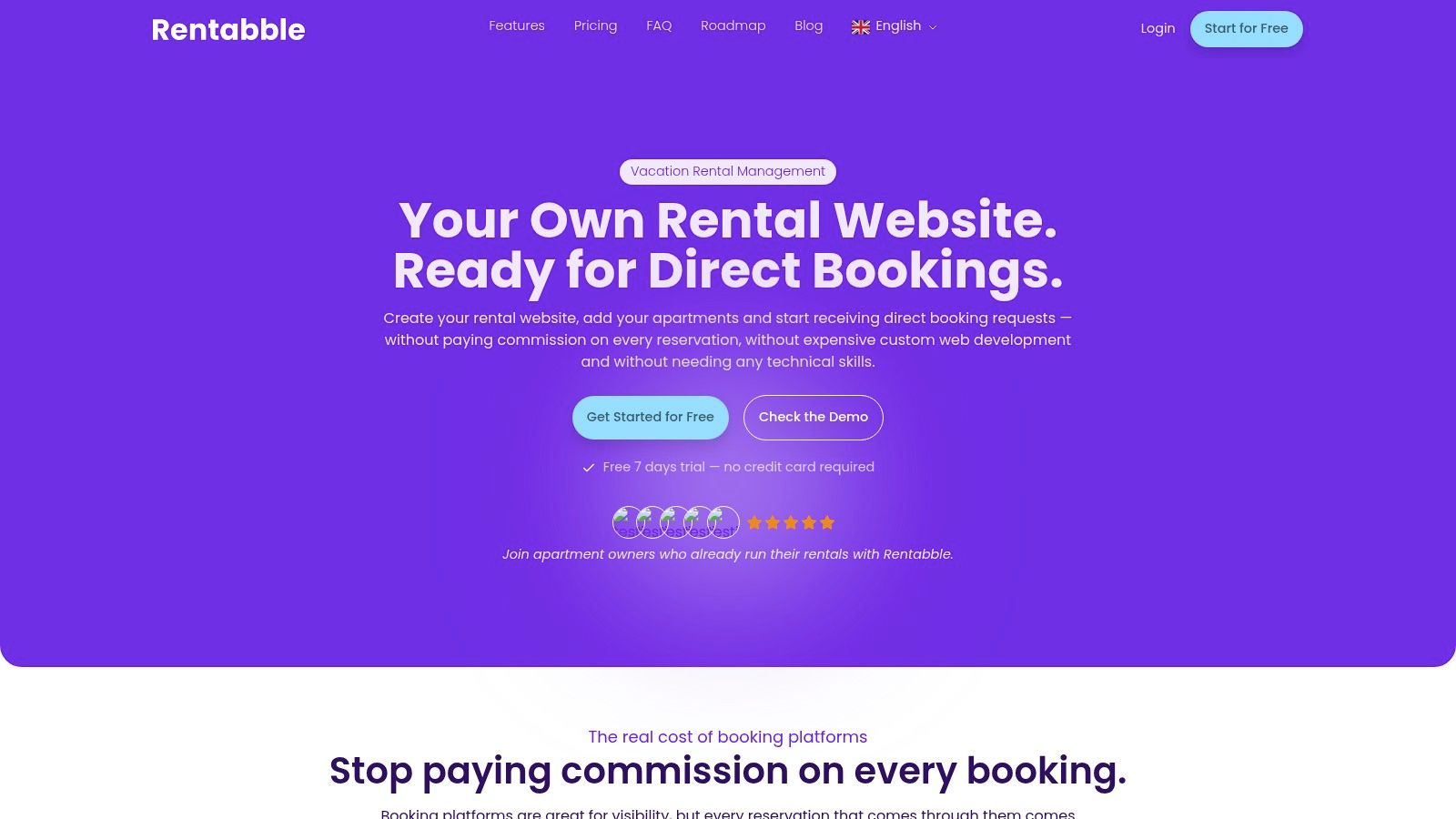
Rentabble is the clearest example of a hosted direct-booking platform built for owners who want speed without giving up branding. Its pitch is simple, a ready-made site, live availability, and a request-based booking flow that lets guests see total pricing before they commit. That matters because direct-booking traffic tends to be more valuable than OTA traffic, and Rentabble's model is built around making that traffic easier to capture.
Why it fits self-managing owners
The strongest case for Rentabble is operational simplicity. Owners can publish property pages with photos, descriptions, amenities, and distance details, then use seasonal pricing tools such as rate periods, minimum stays, and discounts to keep rates current. The platform also includes a central calendar with manual blocks and overlap prevention, so the site does more than display listings, it actively protects availability.
Rentabble's pricing is also unusually transparent for this category. Basic is €9/month or €99/year for up to 3 apartments, while Pro is €19/month or €199/year for up to 6 apartments, and yearly plans save about 9% according to the company's published pricing. It also offers a free 7-day trial, a 14-day refund guarantee, secure hosting, regular backups, email notifications, and support through email and Discord. Support priority goes to Pro users, and the platform currently supports English and Croatian only.
Practical rule: If you want owned-booking infrastructure without a developer, start with a hosted platform that already handles domains, availability, and request management. A prettier site that still depends on manual quoting creates more work, not less.
Where it's limited
Rentabble's main trade-off is that bookings arrive as requests, not as fully integrated card-paid instant reservations. Guests currently pay by bank transfer or cash on arrival, and online card payments are coming soon. That reduces automation, especially for operators who need immediate payment capture or a more frictionless checkout.
The Pro plan adds two-way iCal syncing with channels such as Booking.com and Airbnb, which makes sense for operators who already distribute inventory elsewhere. For a small portfolio, though, the practical appeal is that you can launch fast, keep control of your brand, and avoid custom development while you build a direct channel alongside OTAs.
2. Lodgify
Lodgify is a good fit when you want a launch-ready website plus a booking engine, and you'd rather not assemble separate tools. It sits closer to an all-in-one PMS than a pure website builder, which is why it appeals to owners who want templates, payments, and channel management under one roof. If you already have a site, its embeddable booking widget makes it more flexible than a closed hosted-only product.
The biggest strength here is launch speed. Lodgify's no-code approach works well for small portfolios, and it's especially attractive if you want the site to look conversion-focused without hiring someone to wire up calendars and payment flow from scratch. It also connects to Google Vacation Rentals, which matters for operators trying to build broader direct-booking visibility instead of relying on social traffic alone.
Internal reading for first-time hosts can help here too, especially if you're still planning what belongs on your site and what belongs in your operations stack: first-time apartment essentials.
Trade-offs to watch
Lodgify's convenience comes with less freedom than a CMS-based stack. Once you move beyond the core template system, you're working inside the platform's structure rather than shaping every page yourself. That's fine for many small operators, but it's a real constraint if your business depends on heavy content marketing or highly differentiated branding.
There's also a practical pricing question. Lodgify's plans and add-ons vary by region, and some features can carry extra fees, including dynamic pricing integrations. That means it's best seen as a convenience-first choice, not the cheapest route for every operator.
The right Lodgify customer is usually a host who wants to replace a patchwork of tools with one system, then spend less time on configuration. If you need a fast path to direct bookings, but still want instant booking, payments, and channel sync in one place, it belongs near the top of the shortlist.
3. OwnerRez
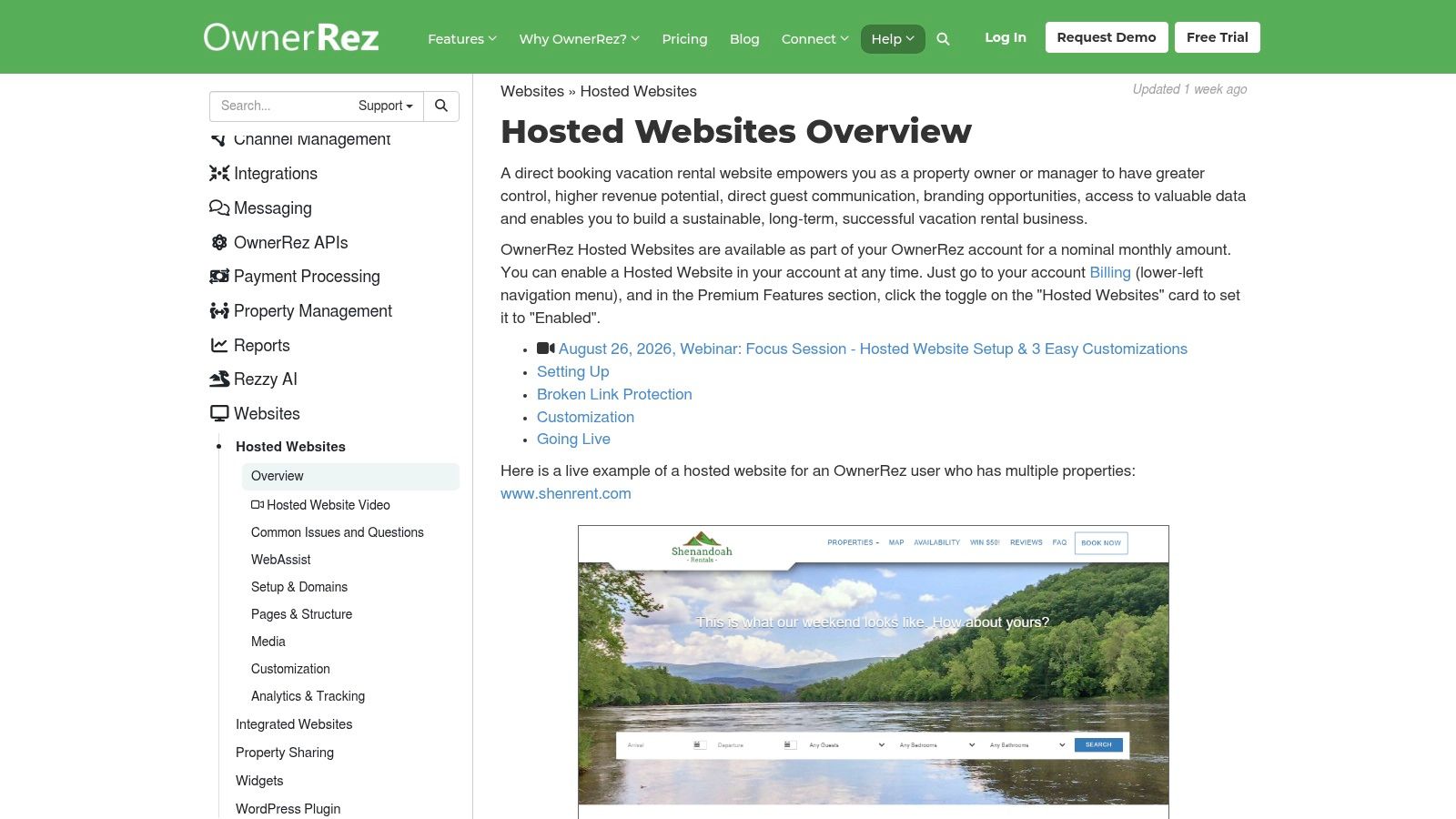
OwnerRez sits at the PMS end of the spectrum, with website tools built around operations rather than presentation. That matters if you want pricing rules, reservations, and distribution logic to stay in one system. The hosted website can pull real-time rates and availability from its pricing engine, while the WordPress plugin gives technical teams a way to build a custom front end without separating it from the booking logic.
Why granular pricing matters
OwnerRez is strongest when the booking flow needs to explain the total price clearly. Its hosted pages can show price breakdowns and quote logic on site, which helps when guests hesitate because they cannot see how the final total is built. That is also a useful fit for operators comparing hosted direct-booking platforms, PMS-connected sites, and CMS-based setups, because it keeps the quote visible without forcing the guest into email back-and-forth.
The platform also fits operators planning to grow beyond a single property or a small fixed portfolio. A site-first builder may work for a simple launch, but OwnerRez gives the website room to follow a larger operating structure instead of being replaced later. For readers mapping the rest of their stack, it sits closer to an online rental management system than to a lightweight brochure-site tool.
Guests often decide faster when the quote is visible. If they need a second message just to understand the total, the site is adding friction.
Where complexity shows up
OwnerRez asks for more setup discipline than beginner-friendly builders. There are more settings to learn, more operational choices to make, and more decisions around add-ons, including the hosted website itself. That is the trade-off for a deeper PMS under the hood.
It also makes sense only if the website should mirror the operations stack closely. If the goal is mainly a branded site with a simple booking path, the system can feel heavier than necessary. If the goal is detailed pricing rules, channel connections, and a structure that can scale without rebuilding the site, it remains one of the stronger options in the category.
4. Smoobu
Smoobu works best for hosts who want a straightforward website builder tied tightly to a lightweight PMS. It doesn't try to impress you with endless design flexibility. Instead, it aims to keep the direct-booking page, channel manager, and automation layer moving together with minimal friction. For many small operators, that's the right trade.
Its appeal is speed and simplicity. A host can get a bookable site live without learning a complicated publishing workflow, and the platform's two-way sync with major channels makes it easier to protect availability across Airbnb, Booking.com, and Vrbo. That makes Smoobu a practical middle ground between a hosted one-off site and a more complex enterprise PMS.
When Smoobu makes sense
Smoobu makes the most sense for operators who value functionality over custom content architecture. The template-driven approach keeps the booking experience clean, and the built-in tools for quotes, availability, and optional dynamic pricing are enough for many small portfolios. If your direct-booking site mainly needs to work reliably and not become a design project, it's a sensible pick.
The pricing model is also easier to understand than some sales-led systems. That matters because a builder that looks cheap up front can become expensive once you stack on the tools needed to make it operational.
The limitation is obvious, though. Advanced customization is more limited than a WordPress-based stack, and if you need a site that acts as a content engine as much as a booking engine, you'll probably outgrow Smoobu's structure sooner than you'd like. For operators who need solid channel connectivity and a fast start, it still does the job well.
5. Guesty
Guesty is the option for operators who already live inside a PMS and want the direct-booking site to be part of that same system. That's the main point. The website isn't an extra marketing toy, it's an extension of the operational stack, and that reduces the chances of pricing or calendar drift between your public site and your managed channels.
The best use case
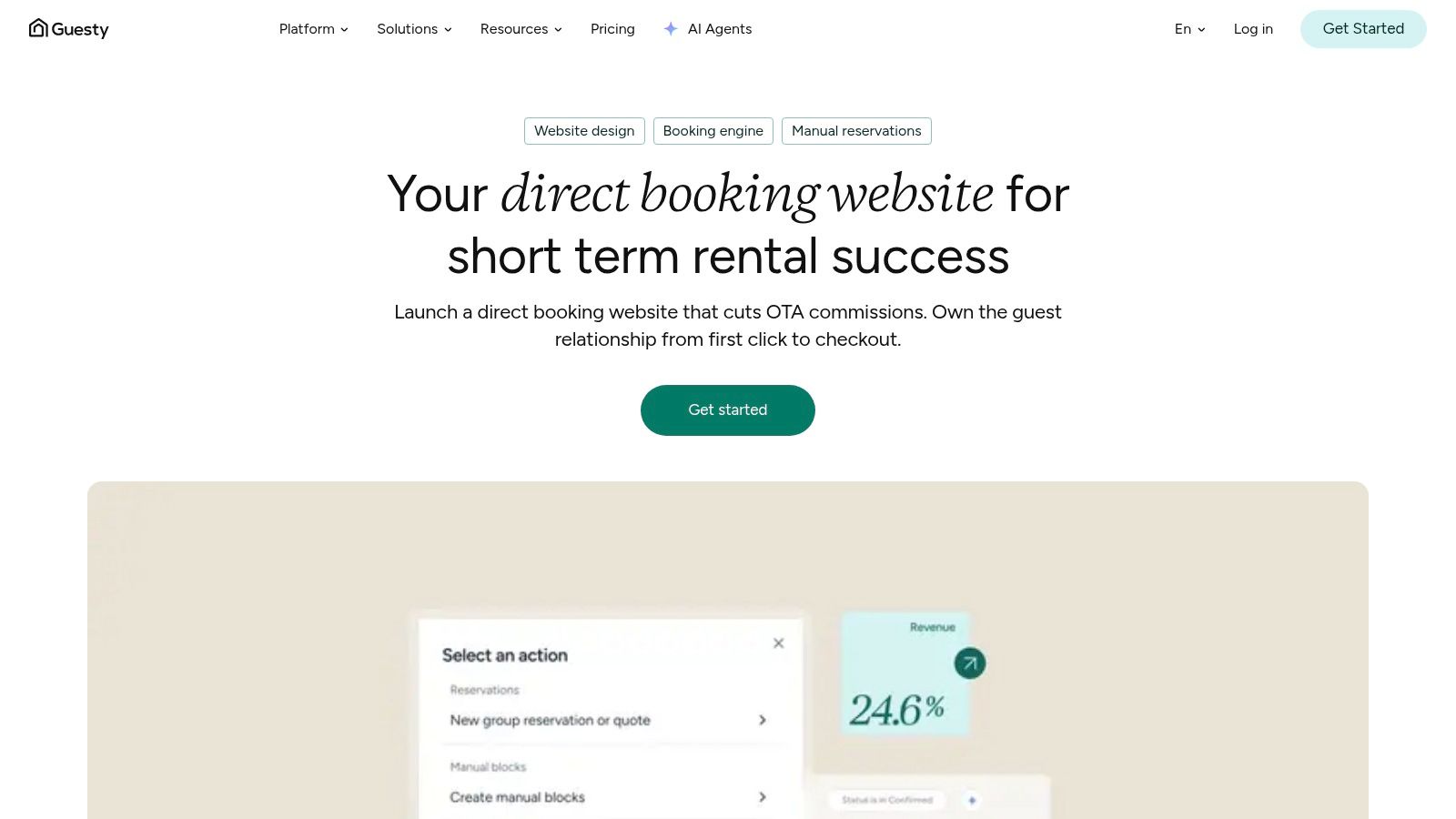
Guesty fits hosts who want real-time rates, availability, and instant booking without leaving the Guesty ecosystem. Its direct-reservation setup is strongest when your team already uses Guesty for calendars, messages, and pricing rules. In that setup, the website becomes a clean front end that inherits the operational logic already in place.
There's also a useful entry point for smaller operators. A basic site on a Guesty subdomain is available without extra cost, which lowers the friction for testing direct booking before you invest in a more customized version. For teams that want to validate the channel before committing to a bigger web project, that's a meaningful advantage.
What to expect
Guesty's design flexibility is narrower than a CMS-based build, and the more advanced site options are priced for professional operators. That's not a flaw so much as a signal about the buyer. Guesty is built for people who want operational coherence, not endless page-level customization.
For owners who are already using Guesty or who plan to scale into a larger portfolio, the website product makes sense because it reduces software sprawl. For a solo owner who just wants a branded site and fewer moving parts, it can be more platform than necessary.
6. Hospitable
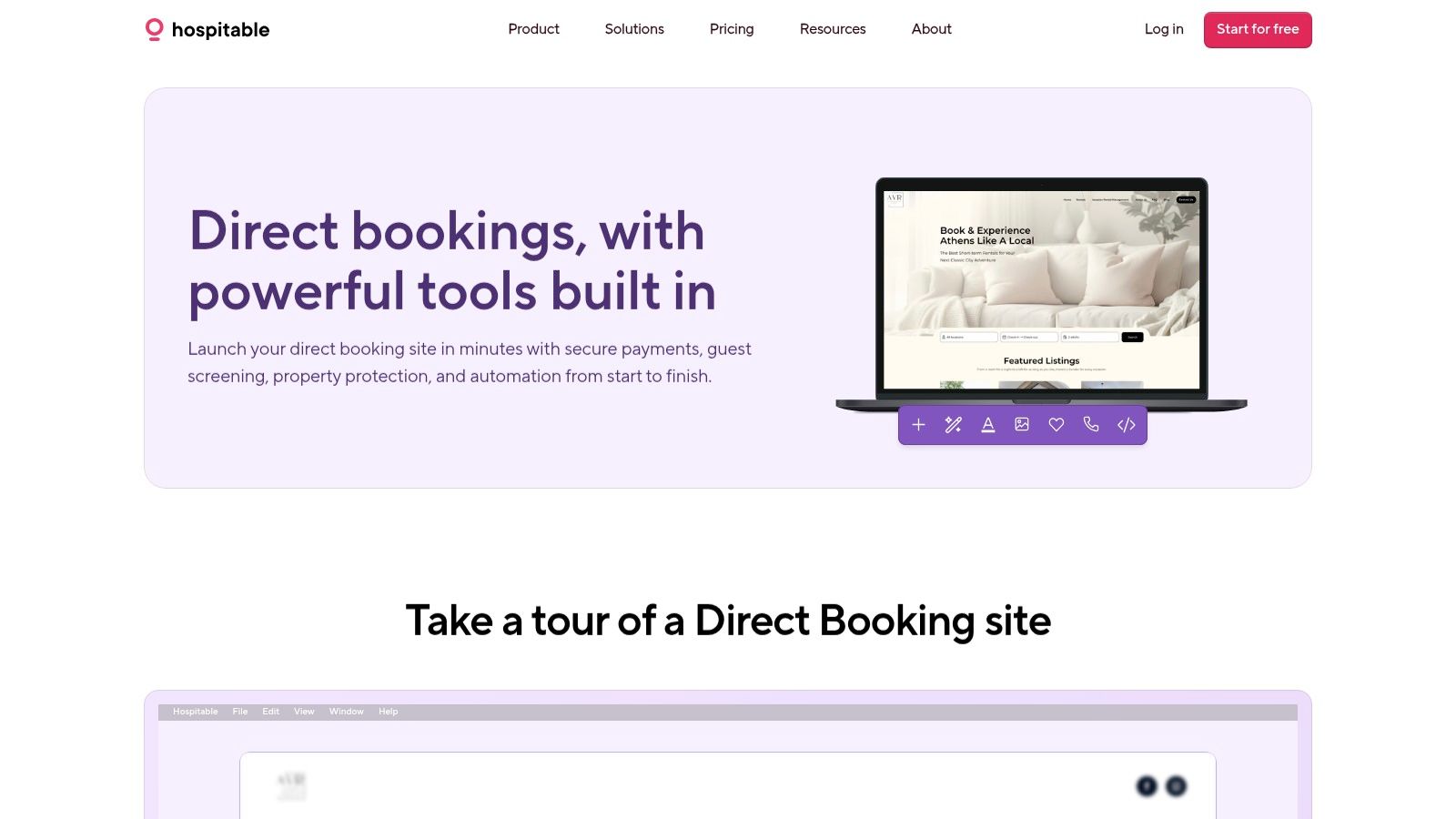
Hospitable is an automation-first choice, and that shows in how its direct-booking site is positioned. The website is there to support the guest journey, but the value sits in the messaging, payment, and operational automations around it. If you already rely on Hospitable for guest communication, the direct-booking site fits neatly into that workflow.
Strong on automation, not design freedom
Hospitable's setup is straightforward, and that's part of its appeal. Hosts can get to a live site quickly, then use the surrounding automation to manage reservation flow, guest vetting, and communication without building custom processes. For people who are already stretched thin across messages, check-ins, and turnover coordination, that can be the difference between a direct-booking channel that helps and one that becomes another inbox.
The platform also includes integrated payments and guest experience tools, which means it leans toward operational consistency rather than visual experimentation. That's a good fit if you want bookings to move through one workflow with fewer manual touchpoints.
The main caution is total cost. Some features are add-ons, and service or processing fees may apply depending on setup. That means it's important to compare what you need against the base offering before assuming the entry price tells the whole story.
Hospitable works best for operators who want a direct-booking site that behaves like part of an automation system. If you need deep design control or a content-heavy marketing site, there are better choices. If you want a clean launch with strong messaging and payment automation, it's a smart contender.
7. Hostaway
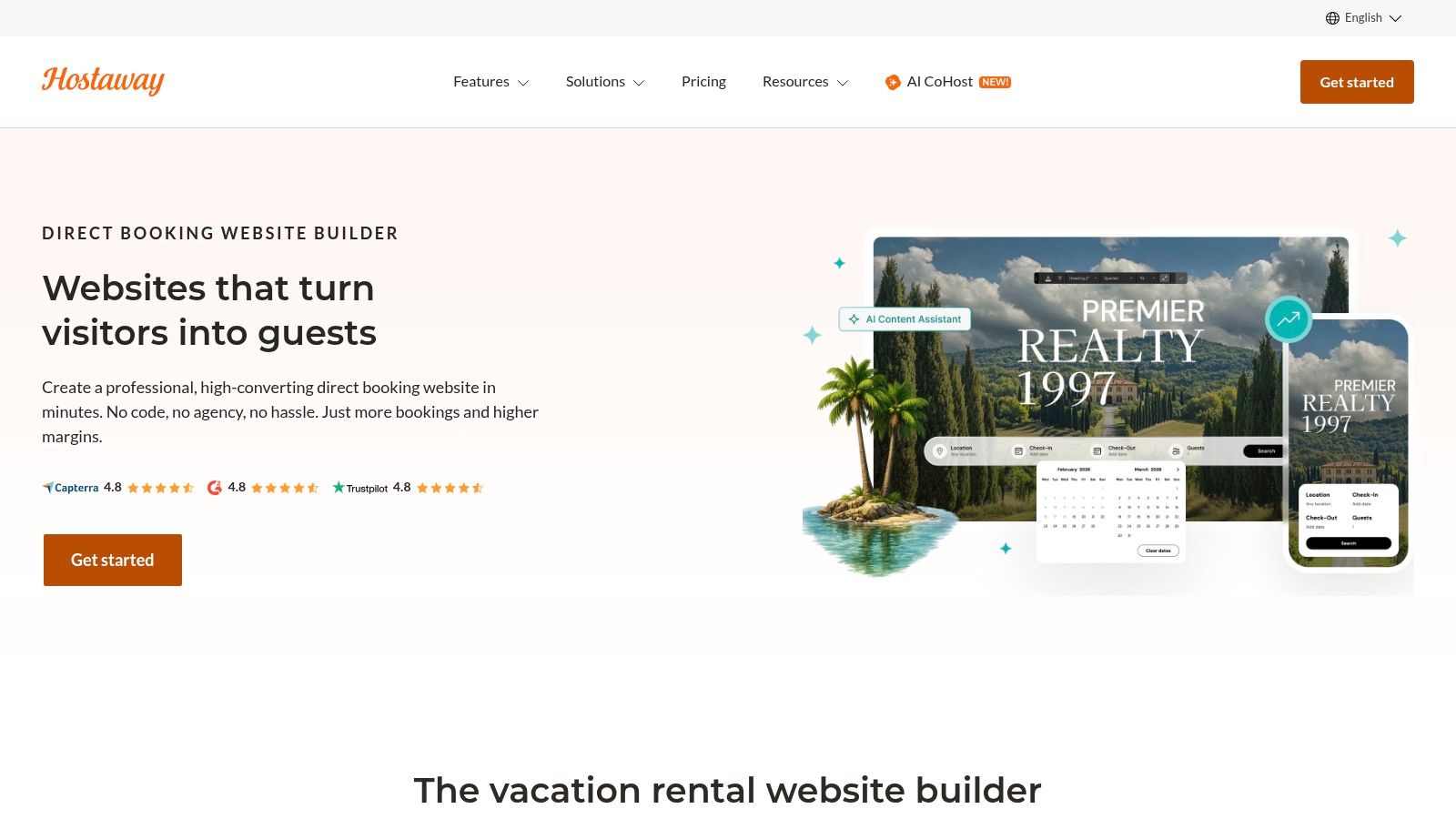
Hostaway is a bundled PMS and channel manager with a direct-booking site included, which makes it easy for managers who want one vendor for the whole stack. The website builder is not the entire product, it's one piece of a broader operational system that includes automation, reporting, and integrations. That structure is useful when your direct-booking site has to fit into a larger business process.
Built for single-vendor simplicity
Hostaway makes the most sense when site, PMS, and channel management need to move together. The bundled website builder lets you publish a direct-booking presence without buying another platform, and that can simplify admin for small teams that don't want to stitch together separate tools.
That said, the product is clearly aimed at operators who care about operations as much as marketing. The site itself is functional, but its real value comes from the way it connects to automation and channel management. If your business is already growing past a single-site mindset, that can be a strong fit.
The trade-off
Pricing is quote-based, and that makes it harder to compare on a clean monthly basis. Some plans may also include extra fees, so the total cost depends on the package and usage structure you choose. That's normal for more professional PMS platforms, but it does mean you need a sales conversation to understand the full financial picture.
Hostaway is strongest for managers who want a professional back end and don't need a highly customized public site. If your main requirement is stable operations with one vendor, it belongs on the shortlist. If your main requirement is a flexible content platform, it doesn't.
8. Uplisting
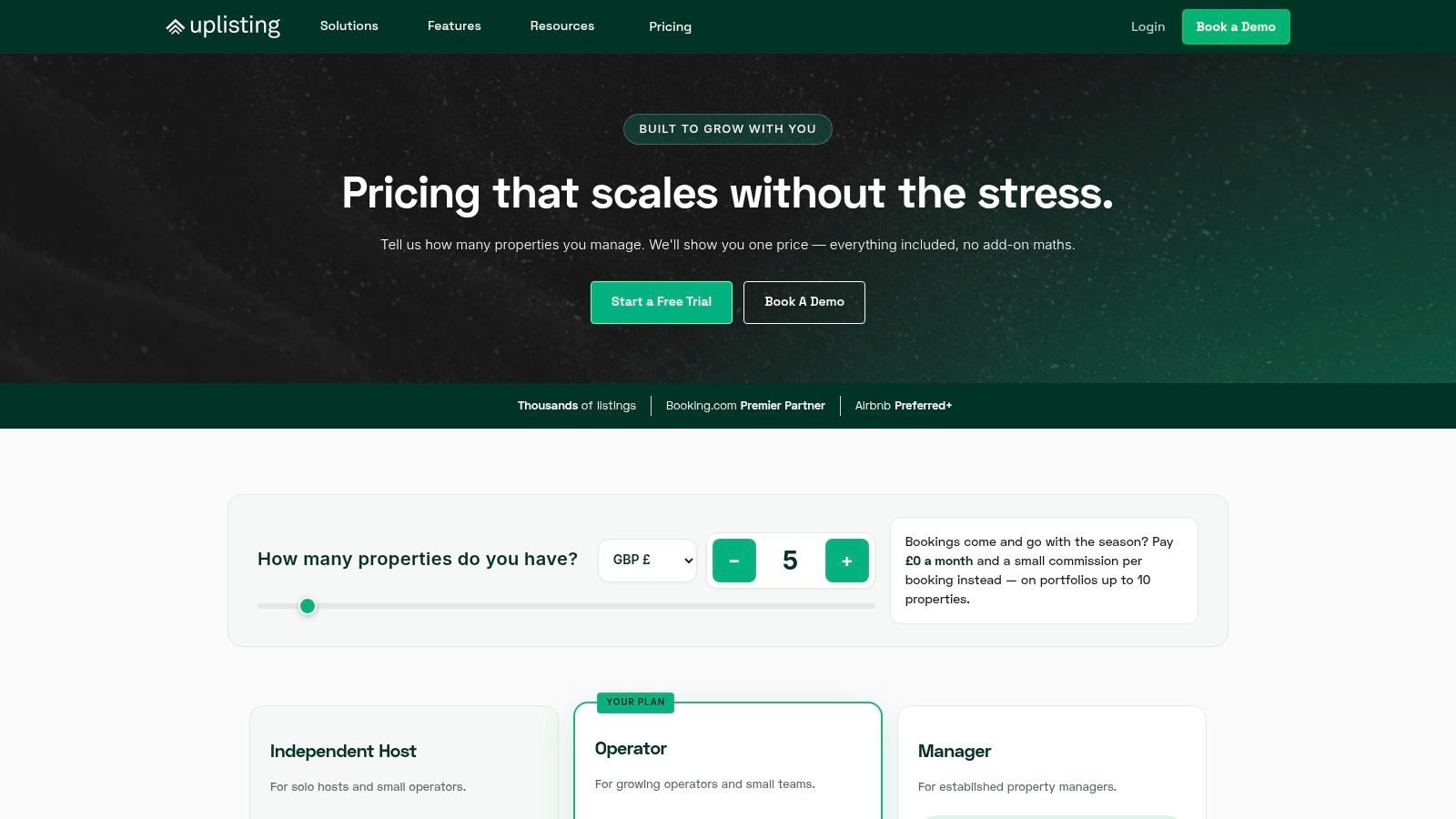
Uplisting is a strong choice when trust and checkout structure matter as much as calendar management. The direct-booking site is part of a broader PMS and channel-manager setup, and the platform puts real emphasis on features that reduce friction at the payment stage. That includes deposits, ID verification, and rental agreements, which are not glamorous features, but they matter when you're trying to convert guests without adding risk.
Why trust features are the story
Uplisting's direct-booking setup is built to make guests feel confident enough to complete a reservation. Security deposits, rental agreements, and ID verification are all part of that trust layer. For operators worried about chargebacks, disputed stays, or weak booking commitment, those features can do a lot of quiet work.
The platform also publishes per-property pricing, which makes it easier to understand the commercial structure without sitting through a long discovery process. That transparency is valuable for smaller operators who want to estimate recurring costs before they commit.
Where it falls short
The design controls are more limited than a custom WordPress stack, and the direct-booking website may be an add-on on some plans. That means Uplisting works best when you care more about operational reliability than about shaping every visual detail.
This is a good fit for managers who need one system to handle reservations, guest identity, and payment trust, while still keeping the front end clean. It's not the best choice if your website is also supposed to be the centerpiece of a brand-heavy content strategy.
9. Eviivo
Eviivo sits in a slightly broader hospitality lane, which is why it's attractive to independent hotels, B&Bs, and vacation rentals that want a mature booking engine and website manager in one suite. The platform emphasizes a polished checkout journey, stable billing, and a predictable processing model for confirmed bookings. That combination is appealing when consistency matters more than visual experimentation.
A mature operational fit
Eviivo's website manager works well when you want instant booking, payments, two-way channel connectivity, invoicing, and communications under the same umbrella. The platform feels built for operators who need dependable guest flow and don't want to assemble separate systems for each step of the reservation process.
The booking experience is one of its stronger points. A polished checkout matters because direct bookings often need more reassurance than OTA bookings, especially when guests are comparing an unfamiliar brand against a familiar marketplace. Eviivo leans into that need for trust.
Internal guidance on designing direct-booking sites is useful here too, especially if you're trying to understand how public pages and booking paths should work together: vacation rental websites.
The main caution
Eviivo's pricing is quote-based, and exact plan details depend on market and setup. That means it's less transparent than the more fixed-price tools on this list. For buyers who want a quick comparison, that can slow down the decision.
This is best for operators who want a mature booking engine and are comfortable working through a sales process. It's less of a fit if you want an easy, self-serve launch with clearly published pricing.
10. Webready by Tokeet
Webready is the best example here of a purpose-built site builder that sits between hosted simplicity and PMS depth. It can run standalone or alongside Tokeet's broader software, and that flexibility makes it useful for owners who want a direct-booking site now with room to expand later. Its templates are clean, its pricing is transparent, and the deployment path is straightforward.
Why standalone matters
A lot of operators don't need a full PMS on day one. They need a branded site, a booking engine, a custom domain, and enough SEO tooling to start building direct traffic. Webready is built around that exact use case, which is why it stands out for one to several properties.
The template approach keeps setup fast, and the built-in booking engine gives the site real utility instead of making it a static brochure. If you want to move quickly without locking yourself into a complex back office, that's a useful balance.
Limits you should expect
The deeper PMS capabilities live in the wider Tokeet ecosystem, not in Webready alone. That means the builder is strongest as a front door into a broader operational stack, not as a fully independent command center. Advanced customization beyond templates may also require developer help.
Webready is a solid pick for owners who care about transparent pricing and fast launch. It's less ideal for teams that want heavy design freedom or a highly bespoke content structure. For a clean, purpose-built direct-booking site, though, it's one of the most practical choices on the list.
Top 10 Vacation Rental Website Builders, Comparison
| Product | Core features | UX & reliability | Value & pricing | Target audience | Unique selling points |
|---|---|---|---|---|---|
| 🏆 Rentabble | ✨ Hosted branded site, property pages, seasonal rates, central calendar, booking-requests, iCal (Pro) | ★★★★☆ • secure hosting, regular backups, email & Discord support | 💰 Basic €9/mo (3) • Pro €19/mo (6) • 7‑day trial • no commission | 👥 Self-managing owners & small operators | ✨ No commission on requests • fast same‑day setup • full branding & domain control |
| Lodgify | ✨ No-code site builder, booking engine, channel manager, embeddable widget | ★★★★☆ • conversion templates, instant booking & payments | 💰 Region-based plans; add-ons (e.g., dynamic pricing) may cost extra | 👥 Owners wanting all‑in‑one, site-first tools (1–10 listings) | ✨ Embeddable widget • Google Vacation Rentals integration |
| OwnerRez | ✨ PMS-first: hosted websites, powerful pricing engine, two-way channel sync | ★★★★☆ • granular pricing/quote logic; steeper learning curve | 💰 Subscription + Hosted Websites add-on (extra cost) | 👥 Power users & portfolios needing detailed pricing control | ✨ Advanced quote/pricing logic surfaced on site |
| Smoobu | ✨ Website builder + booking engine, 2‑way channel sync, payments | ★★★☆☆ • simple templates, very quick setup | 💰 Fixed plans; direct bookings without Smoobu commission | 👥 Hosts who want a simple PMS + site | ✨ Tight channel-manager integration • fast launch |
| Guesty | ✨ Real-time rates/availability, instant booking, embeddable engine | ★★★☆☆ • smooth sync with Guesty PMS; basic site on subdomain free | 💰 Free basic subdomain; customization & higher tiers via sales | 👥 Hosts using or planning to use Guesty operations suite | ✨ Seamless ops & calendar sync when using Guesty PMS |
| Hospitable | ✨ Direct-booking site with live pricing, payments, calendar sync & automation | ★★★★☆ • strong messaging automation & guided onboarding | 💰 Add-ons & processing fees may apply | 👥 Hosts relying on messaging automation & workflows | ✨ Robust automation for guest messaging, vetting & payments |
| Hostaway | ✨ Full PMS + channel manager with bundled website & Stripe integration | ★★★★☆ • scales to multi-property portfolios; single‑vendor setup | 💰 Quote-based pricing; may include booking/processing fees | 👥 Small managers wanting PMS + site + channels from one vendor | ✨ All-in-one PMS + site + channel management bundle |
| Uplisting | ✨ PMS & channel manager, conversion-focused site, deposits, ID verification | ★★★★☆ • clean UI, strong checkout trust features | 💰 Transparent per-property pricing published | 👥 Hosts prioritizing secure payments & trust at checkout | ✨ Built-in deposits, rental agreements & ID checks |
| eviivo | ✨ Website builder, instant booking & payments, channel connectivity, invoicing | ★★★★☆ • polished guest journey, mobile app & reporting | 💰 Quote-based plans; predictable per-booking processing fee model | 👥 Independent hotels, B&Bs & vacation rentals | ✨ Mature platform with optimized checkout UX |
| Webready (Tokeet) | ✨ Templates, SEO tools, SSL, custom domains, built-in booking engine | ★★★☆☆ • clean templates for very fast deployment | 💰 Transparent per-website pricing • free 15‑day trial | 👥 Owners wanting fast, template-driven single/multi-rental sites | ✨ Clear per-site pricing & fast template deployment |
Match the Builder to Your Booking Operation
The right vacation rental website builder depends less on feature count and more on how your business runs. Start with a hosted direct-booking platform when speed, predictable setup, branded pages, and low maintenance matter most. Choose a PMS-connected builder when calendar synchronization, payment handling, automation, and portfolio management are central to the business. Use a CMS integration when you need deeper design control, content flexibility, and SEO structure that goes beyond a standard template.
If you're a self-managing owner with one to six units, the strongest starting point is usually the simplest stack that still supports live availability, domain control, and clear booking flow. That's where Rentabble is especially practical, because it's built for same-day launch, direct booking requests, and owners who want to keep more revenue without custom development. The trade-off is real, though. Rentabble currently supports English and Croatian only, uses a request-based flow instead of instant card checkout, and doesn't yet include integrated card payments.
Before you choose any platform, verify a few things in the product itself, not just in the sales copy. Check whether custom domains are included, how many templates you can use, how long setup takes, whether bookings are approved requests or instant reservations, and how payment handling works in practice. Confirm channel synchronization, especially if you still sell through Airbnb or Booking.com. Look closely at plan-based restrictions, support channels, and the total recurring or per-booking cost after add-ons and processing fees.
The broader market data points in the same direction. Direct bookings already make up a meaningful share of bookings for many operators, and they tend to bring longer stays and longer lead times than OTA bookings (industry statistics). That means the best builder is the one that matches your operational reality and makes it easy for guests to commit without back-and-forth. If your goal is a controlled, branded direct channel, choose the tool that reduces friction for your workflow, not the one with the longest feature list.
Rentabble gives independent owners a hosted, branded way to launch a direct-booking website without custom development. If you want live availability, request-based reservations, and predictable pricing in one place, it's a practical starting point for this exact use case. Visit Rentabble to see how a direct-booking site can fit your rental operation.
Prepared with Outrank