Direct Booking Website Explained and How to Launch One
You're probably living this already. A guest books through an OTA, sends a few friendly messages, loves the stay, then disappears back into the platform's system when they try to rebook next season. You still paid the commission, you still did the work, and the guest relationship never really became yours.
That's why a direct booking website matters now. It's not just a cheaper way to take reservations. It's a way to own the channel, shape who books, and make it easier for the right guests to come back to you without a middleman standing in the doorway.
The market is already showing the split. In a major 2026 European hotel distribution study, 51.3% of bookings were made directly with the property, while OTA dependence rose from 19.7% to 29.9% over the same period, and Booking.com accounted for 66.1% of OTA portal bookings in Europe study summary. That tells owners two things at once, direct channels still matter a lot, and OTA power inside the online channel is still hard to ignore.
For small operators, that doesn't mean fighting every OTA booking. It means building one owned channel that can capture repeat guests, early planners, and higher-trust bookings on your terms. The most practical path is simpler than most owners expect, and you don't need a developer to start.
Table of Contents
- Introduction Why Owning Your Booking Channel Matters Now
- What a Direct Booking Website Is and How It Works
- Direct Booking Website vs OTAs: Where Value Actually Divides
- Essential Features Every Direct Booking Website Needs
- Who Books Direct and How to Win Their Trust
- How to Set Up Your Direct Booking Website in Hours Not Weeks
- Your Next Steps to More Direct Bookings
Introduction Why Owning Your Booking Channel Matters Now
A repeat guest wants to come back, but the easiest path still runs through an OTA. The platform keeps the relationship, the calendar, and the booking history, while you get the reservation and a thinner margin.
A direct booking website changes that setup. It gives guests one place to discover the property, check dates, see the total price, and book without handing the transaction to a marketplace. The site becomes your owned front desk, while the booking engine handles availability, pricing, and checkout.
SiteMinder's hotel booking-trends analysis found hotel websites generated an average of US$516 per booking, compared with US$445 for wholesalers, US$392 for global distribution systems, and US$312 for OTAs SiteMinder hotel booking trends. In a separate summary of the same research, hotel websites produced US$519 per booking, based on more than 125 million reservations SiteMinder hotel booking trends. The pattern is clear, direct websites can bring in more valuable bookings.
Practical rule: Use direct booking to build a second path for guests who already trust you, or who want a clearer booking experience.
Direct bookings can also behave differently from OTA bookings. A 2025 industry summary noted direct bookings were associated with 45.2% longer stays and 51.3% longer booking windows than OTA bookings industry summary. For an operator, that changes planning. Longer lead times can make staffing, turnover, and pricing decisions easier, and longer stays can fit inventory better.
Guest trust also shapes who books direct. U.S. travelers are more willing than the global average to book lodging directly, and older travelers are more direct-oriented than younger ones traveler research. That means the strongest direct booking site does more than collect reservations. It speaks clearly to the guest segments most likely to choose it.
What a Direct Booking Website Is and How It Works
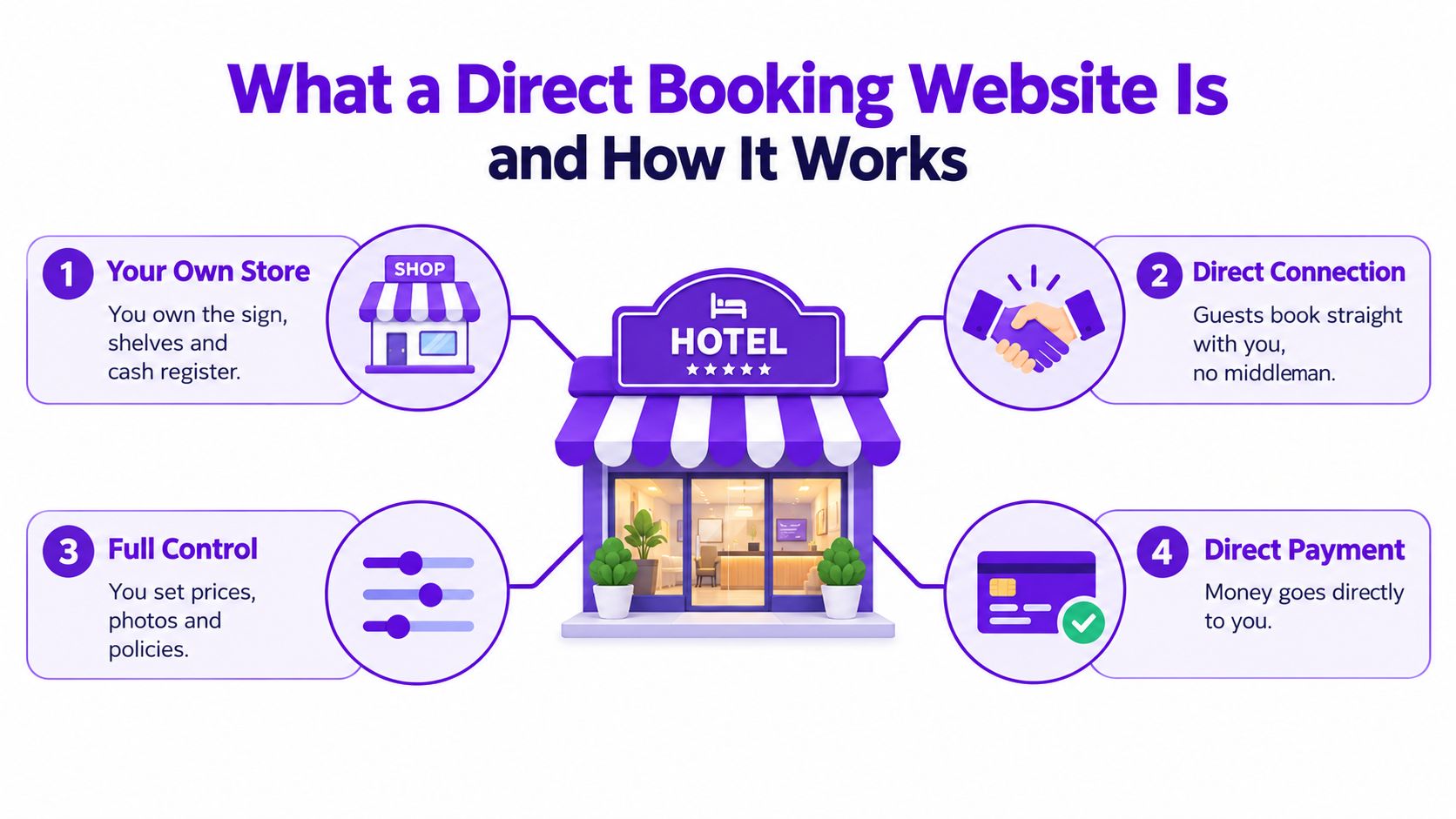
Think of a direct booking website like your own storefront on the main street of the internet. An OTA is more like renting a shelf in someone else's market, your name is there, but the market controls the traffic and some of the rules. With your own site, you control the sign, the display, and the checkout flow.
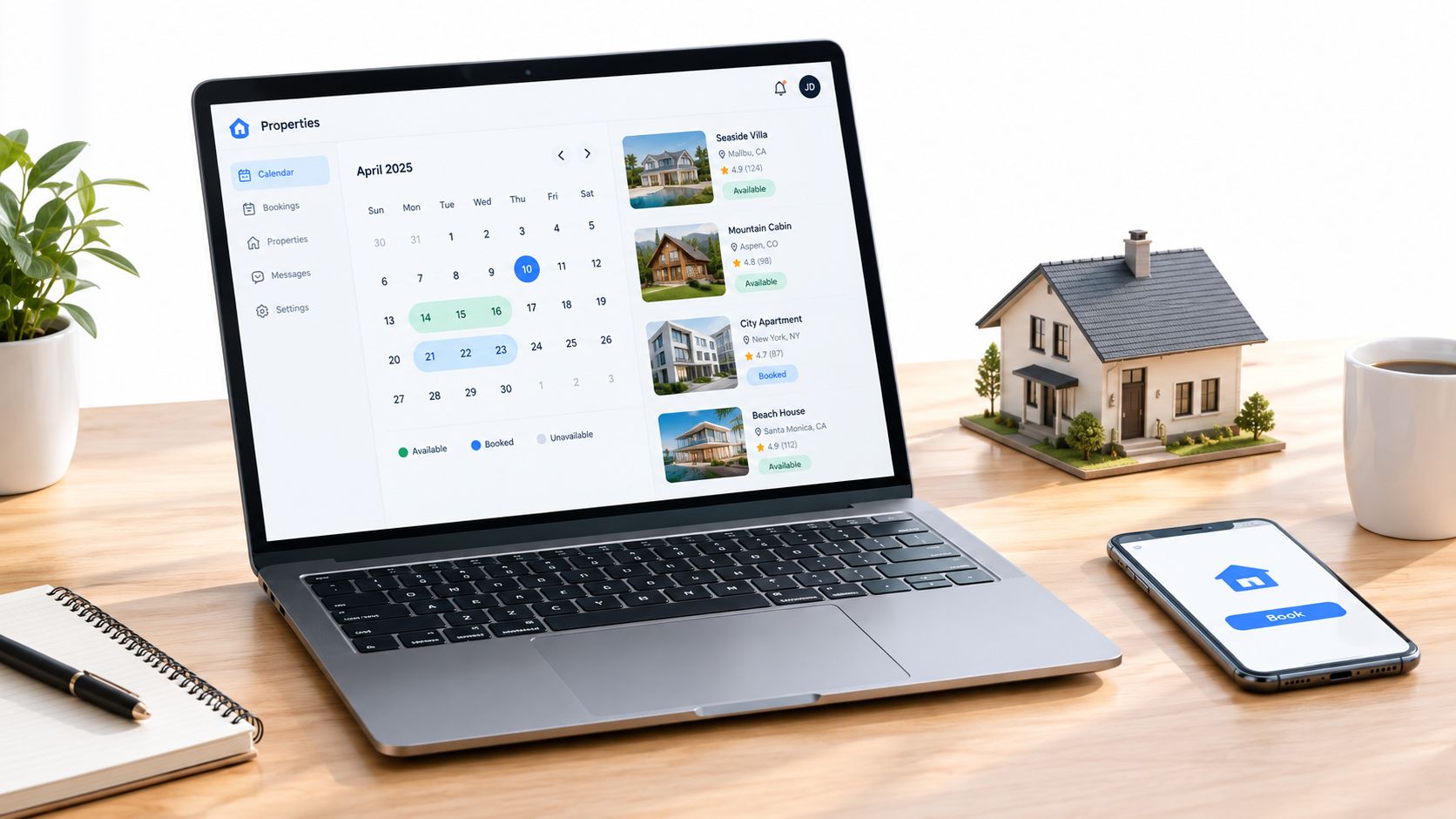
The core idea is straightforward. A guest lands on your branded site, looks at the property, checks availability, sees the price, and sends a booking request or confirms a reservation. The site itself is the public-facing showroom, and the booking engine is the part that handles dates, pricing, and checkout.
Here's the cleanest way to think about it.
Ownership means you control the demand path. Renting demand means the platform controls the relationship.
A brochure site only tells people you exist. A direct booking website goes further, it lets people act immediately. That distinction matters because guests rarely want to research in one place and then start over somewhere else.
For one practical example of how the flow is structured, see the guest-facing booking flow described in Rentabble's vacation-rental booking guide. The important part isn't the brand name, it's the mechanics. Guests need to see live availability, understand what's included, and know the total price before they commit.
The best direct booking sites still work with OTAs rather than against them. Your calendars sync, your prices stay aligned, and your website becomes the place where repeat guests, brand searches, and trust-based bookings land first. That's why this channel is called owned. You're not borrowing visibility forever, you're building a destination people can return to.
The difference shows up in how guests feel while booking. On a marketplace, they compare you against a grid of other listings. On your own site, they compare your property against their own expectations and the trust signals you've chosen to show. That shift sounds small, but it changes conversion.
Direct Booking Website vs OTAs: Where Value Actually Divides
A guest searching on an OTA is usually browsing in a crowded aisle. A guest on your direct booking website is already in your shop. That difference changes what you can control, from the first impression to the final confirmation.
OTAs are strong at discovery. They place your property in front of travelers who do not know your name yet. The trade-off is that the platform sits between you and the guest, so your brand, pricing presentation, and follow-up options are all more limited.
A direct site works differently. It gives you more control over the guest journey and usually a better value per reservation, but you have to earn the traffic and the trust yourself. The strongest operators use both channels with clear roles. OTAs help fill the top of the funnel. Direct booking captures guests who already have intent, including repeat visitors, brand searchers, and people who book earlier because they feel confident in what they see.
| Criteria | Direct Booking Website | OTA Marketplace |
|---|---|---|
| Control | You control the brand, photos, policies, and booking path | The platform sets most of the presentation |
| Cost | No marketplace commission on the reservation itself | Commission and platform fees reduce margin |
| Guest relationship | You own the contact flow and rebooking path | The OTA often owns the guest relationship |
| Discovery | Strong for repeat guests and brand searches | Strong for first-time discovery |
Value is not just lower commission. Direct booking helps shape demand by guest segment. A couple planning ahead, a loyal repeat guest, or a traveler who already trusts your property is more likely to book directly when your site answers their questions clearly and quickly. That also gives you room to present the right message for the right audience, instead of relying on a marketplace grid to do it for you.
Trust matters just as much. On an OTA, guests borrow confidence from the platform. On your own site, that confidence comes from your photos, policies, reviews, and overall clarity. That is why direct booking often works better for properties with a clear niche, a strong location story, or a guest base that returns because they recognize the experience.
The balance also shows up in how people buy. OTAs are often used for quick comparison shopping. Direct sites are better for guests who want to settle on one property, check the details, and book without bouncing between tabs. In practical terms, that makes the direct channel less noisy and more useful for turning interest into commitment.
| Criteria | Direct Booking Website | OTA Marketplace |
|---|---|---|
| Pricing control | You can present exact pricing clearly | Pricing is shown inside the platform's rules |
| Trust building | Reviews, brand, and policies live together | Trust is partly borrowed from the marketplace |
| Repeat business | Easy to invite guests back | Harder to turn a first stay into the next one |
| Best use | Loyalty, direct rebooking, stronger margins | Broad reach and new guest discovery |
Essential Features Every Direct Booking Website Needs
A good direct booking website is not a pile of features. It is one system that answers the guest's three biggest questions quickly, “Is this real?”, “Is the price clear?”, and “Can I trust the booking?” When those answers are obvious, the site feels easy to use.
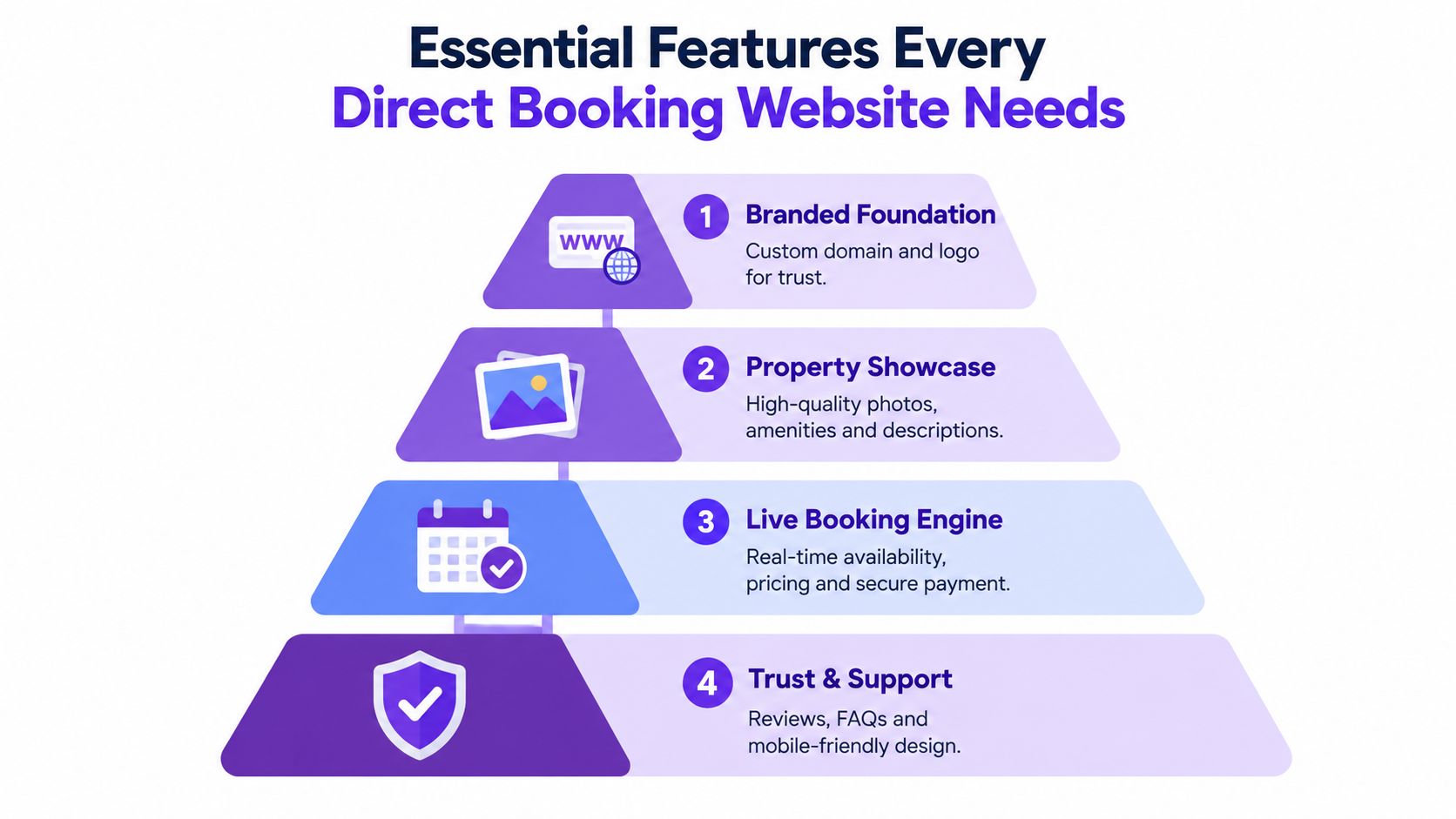
Start with the brand layer
Your site needs a custom domain, logo, and consistent look. That may sound basic, but it is the first trust test. If a guest cannot tell at a glance that the site belongs to your property, they hesitate.
A strong property page does more than list a room name. It shows photos, amenities, location context, and the kind of detail that helps a guest decide without sending five questions first. That matters for small operators, because every unanswered question usually turns into delay.
Make the booking engine do the heavy lifting
The booking flow should show live availability and calculate the total price automatically. That removes the back-and-forth that kills conversion, especially when guests are comparing options on a phone. It also cuts down on manual quote requests, which saves time on both sides.
Seasonal pricing matters too. Rate periods, minimum stays, allowed check-in days, and discounts let you shape demand instead of reacting to it. When your pricing rules are built into the site, you are not rewriting the same answer over email all day.
Owner shortcut: If a guest has to message you just to understand the total price, the site is asking them to do too much work.
Add the trust and operations layer
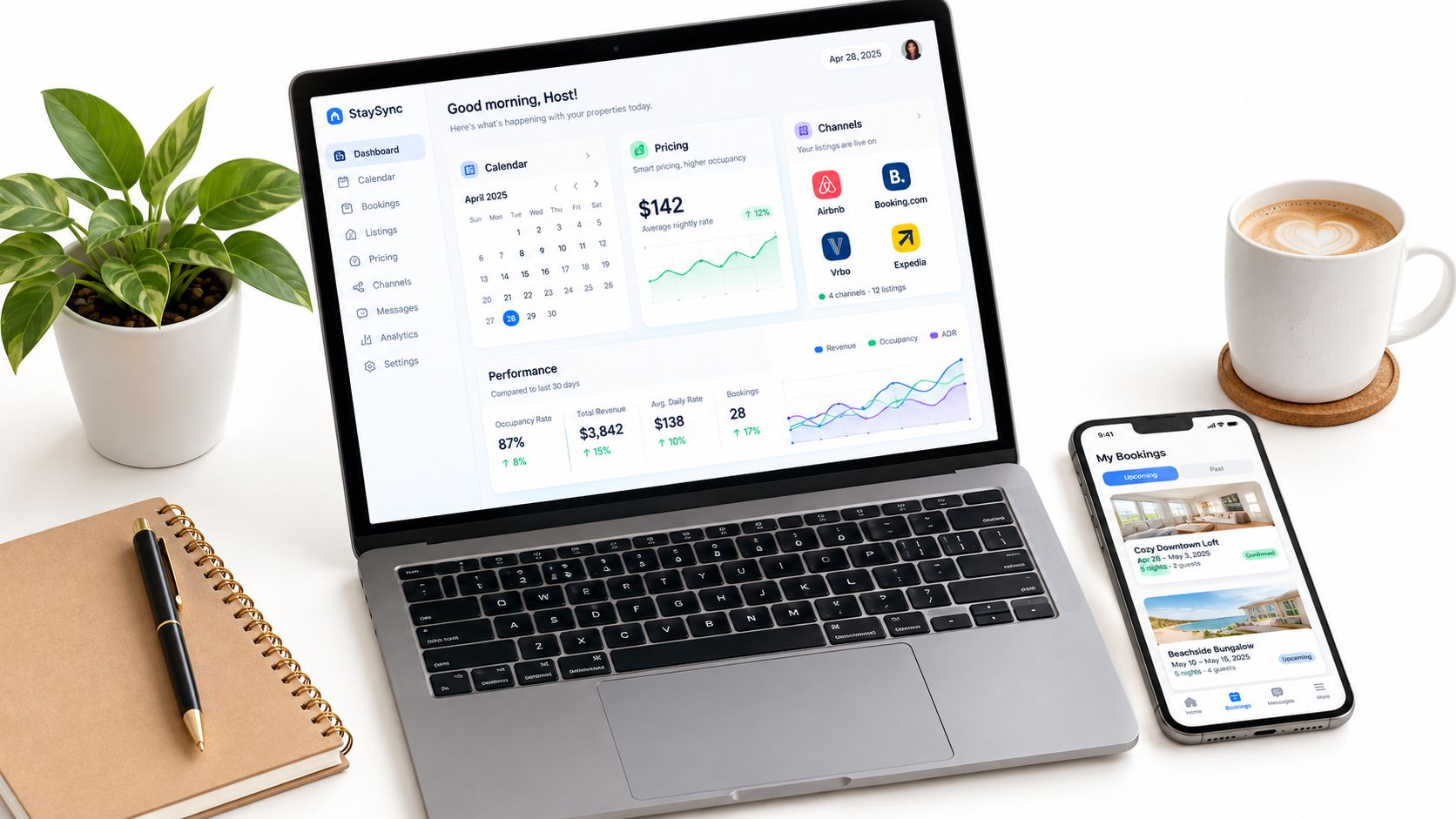
A central calendar with overlap prevention keeps the site from selling the same nights twice. Two-way iCal sync with Booking.com, Airbnb, Expedia, and VRBO keeps external calendars aligned, so you are not manually babysitting dates. That is a small technical detail with a large operational payoff.
The rest of the stack fills in the gaps. Reviews, multilingual support, SEO-ready pages with a sitemap, secure hosting, and regular backups all make the site easier to find and safer to run. A guest does not care how elegant your backend is, but they do care that the site loads, the price is correct, and their reservation feels secure.
For a hosted option built around those mechanics, one route is Rentabble's vacation-rental website builder, described in Rentabble's vacation-rental website builder. The bigger lesson stays the same no matter which platform you choose, the site should reduce friction, prevent double bookings, and make the next step obvious.
Who Books Direct and How to Win Their Trust
A lot of owners assume direct bookers are “more loyal.” That is too broad. The better question is which guests feel safe skipping the marketplace, and what they need to see before they do it.
Direct booking works like a trust test. Some guests pass it quickly because they already know the property. Others need more proof, more clarity, and less effort before they click through.
Younger guests often compare options and cross-check details before booking. Older guests may want more reassurance and simpler wording. Both groups still look for the same basics, exact pricing, clear cancellation terms, and proof that the property is real.
That is why a generic booking form falls short. It asks for trust before it earns it. A stronger site shows the total price up front, keeps branding consistent from page to checkout, and places reviews near the decision point so guests know they are in the right place.
Trust beats cleverness
Different guest segments respond to different signals. Business travelers and repeat leisure guests often want speed. First-time visitors want evidence. Families want clear policies, and international guests may need language support to feel comfortable.
- Show exact totals early. Guests do not want surprise fees, so show the full amount before they commit.
- Make cancellation terms obvious. Plain policy language reduces second-guessing and abandoned bookings.
- Use real photos and reviews together. Visual proof and social proof work better as a pair.
- Keep the booking path short. Long forms feel risky on mobile, especially for guests who are still deciding.
Trust also changes the kind of booking you get. A site that answers questions early can attract guests who book farther ahead and stay a little longer, which gives you more room to plan occupancy and less last-minute scrambling. That is useful if you want to shape demand by guest segment, not just collect reservations.
The main idea is simple. Direct booking is not only a cheaper way to take a reservation. It is a way to show different guests the right signals, at the right moment, so they feel confident enough to book on your site.
How to Set Up Your Direct Booking Website in Hours Not Weeks
Owners often assume setup means waiting on developers. A hosted platform changes that. It handles hosting, security, and updates for you, so you can focus on the parts guests see.
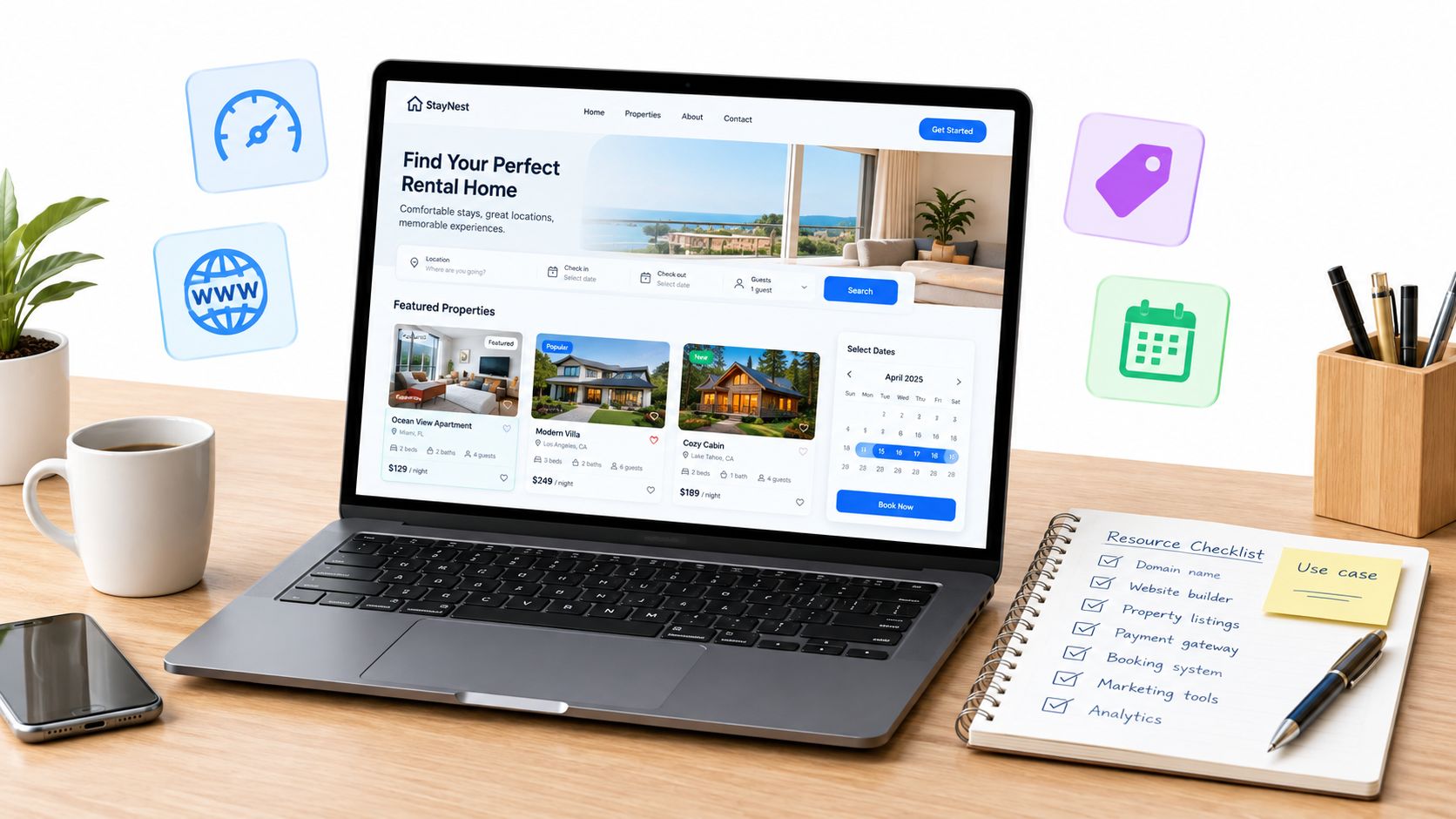
Start with the basics. Choose a hosted platform, connect your branding, and point your domain to it. Then build one clear property page for each unit or room type, with honest photos, a short description, and the amenities guests ask about first.
The booking setup comes next. Add your seasonal pricing, minimum stays, and any check-in rules you already use. Connect calendar sync so your direct site and OTA listings stay aligned. That matters because a booking site does more than save commission, it helps you attract the right guests, earlier planners, and stays that fit your calendar better.
Launch rule: Do not publish until guests can check dates, see the total, and get a confirmation without you filling in anything by hand.
Test it like a guest. Try the flow on mobile, confirm the price calculation, and make sure notifications go to the right inbox. Check that blocked dates stay blocked and overlaps do not slip through. Then publish the site and submit your core pages for indexing.
A simple launch checklist looks like this:
- Branding checked. Logo, domain, and property name match everywhere.
- Pricing checked. Rates, seasonal rules, and minimum stays calculate correctly.
- Calendar checked. OTA sync is working and blocked dates stay blocked.
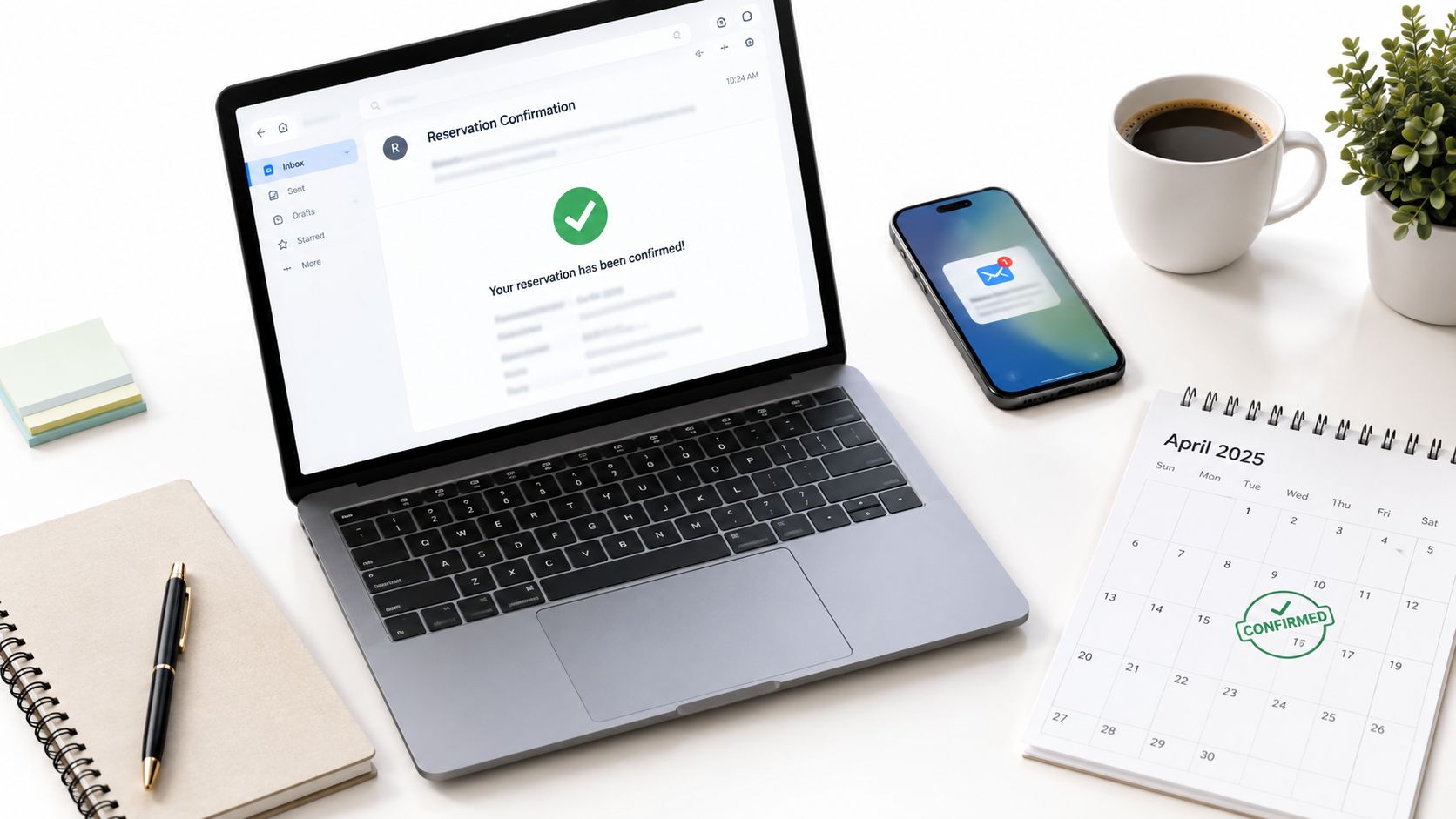
- Notifications checked. Booking requests and confirmations reach the right inbox.
- Search basics checked. Pages are indexed, and the site text is clear enough for search engines to read.
For owners who want a guided setup path, Rentabble's website builder guide explains the hosted approach in practical terms. The goal is simple. Go live quickly, then keep the site easy to maintain.
Your Next Steps to More Direct Bookings
A direct booking website works best when you treat it like an owned asset, not a side project. Start with one property, connect your calendars, and publish clear pricing before you worry about anything fancy. That alone puts you ahead of a lot of owners who still force guests to email for every detail.
The next move is trust. Make the site feel consistent, show the total price early, and give past guests a clean path to rebook without going back through an OTA. That's where direct booking starts to become more than a fee-saving tactic, it becomes a demand-shaping channel.
You also get a cleaner operating model. Predictable subscription pricing, hosted maintenance, and full control over your content and domain are much easier to manage than a custom build that needs constant attention. If you're trying to run a small operation well, simple wins.
If you want the search side to support the booking side, pair the site with basic content that matches what guests are looking for, then keep the pages technically clean. A useful starting point is vacation-rental SEO guidance, because a direct site only works when people can find it.
Rentabble provides a hosted direct-booking website for small vacation-rental owners who want live availability, automatic pricing, and calendar sync without custom development. If you're ready to own more of your bookings and make rebooking easier for past guests, visit Rentabble and see how a direct channel can fit your property.