Short Term Rental Direct Booking: A Practical Playbook
The reconciliation arrives before the coffee does. Your short term rental shows 22 booked nights and $4,200 in gross revenue, yet the OTA deduction is large enough to make a busy month feel strangely unprofitable. Cleaning may be passed through to the guest, but utilities, supplies, mortgage payments, repairs, and your own time still come out of what remains.
That's why direct booking deserves a more precise role. It isn't automatically a replacement for Airbnb or Booking.com, and it won't create demand where none exists. It's a margin and lead-time channel, particularly useful for repeat guests, branded properties, longer stays, and shoulder-season gaps. A 2022 Global Vacation Rental Report summary found that 27% of bookings came from direct sources, with direct share ranging from 23% among the smallest companies to 37% among the largest property managers. The same report said managers expected 31% of 2022 bookings to be direct.
The practical playbook is straightforward: build a small credible site, show the full price, synchronize every calendar, respond quickly, and create a repeat-guest path that OTAs can't own.
Table of Contents
- Why Direct Booking Is the Margin Lever Most Owners Miss
- Building a Hosted Direct Booking Website That Converts
- Modeling the Real Economics per Reservation
- Pricing for Yield Without Chasing the OTA Race to the Bottom
- Two-Way Calendar Sync and Overlap Prevention
- Turning OTA Guests Into Repeat Direct Bookers
- Your First 90 Days on a Direct Channel
Why Direct Booking Is the Margin Lever Most Owners Miss
An OTA can fill the same nights as your own website while leaving less cash and less control over the guest relationship. On a $4,200 month, a $504 host fee turns a full calendar into a weaker financial result. The actual deduction varies by platform, fee structure, promotions, and payment setup, so review each reconciliation instead of treating one fee as a universal rule.
Direct booking improves the margin only after you count its complete cost. OTA fees are often cited around 15% to 25%, while direct reservations still commonly incur 2% to 3% card processing, according to ProStay's analysis of direct-booking economics. Advertising, customer acquisition, refunds, chargebacks, software, and guest support can reduce the apparent saving.
For a one- to six-unit owner, the useful comparison is reservation by reservation. If the same $4,200 month moves from an OTA to your checkout, the avoided marketplace fee may outweigh processing and acquisition costs. It may not if paid traffic is expensive or the website converts poorly. Track payment fees, software, support time, and CAC beside gross booking value before claiming a saving.
A direct channel also tends to work better as a lead-time and margin channel than a volume channel. Use it for repeat guests, referrals, branded searches, and stays where you can contact a qualified audience without buying every click. OTAs remain useful for discovery and demand you could not reach alone.
Practical rule: Keep a reservation direct when its acquisition and service cost is lower than the comparable OTA cost, not simply because the guest checked out on your website.
Scale changes the calculation. A larger operator can spread content, software, and advertising across more units, while a one-unit owner must protect every marketing dollar or euro. 2026 channel-mix coverage from RedAwning reported direct bookings at 21% of reservations and 29% of revenue in Q2 2026, compared with 25% and 36% a year earlier. Use that shift as a reason to target the right bookings, not to force every reservation away from OTAs.
Building a Hosted Direct Booking Website That Converts
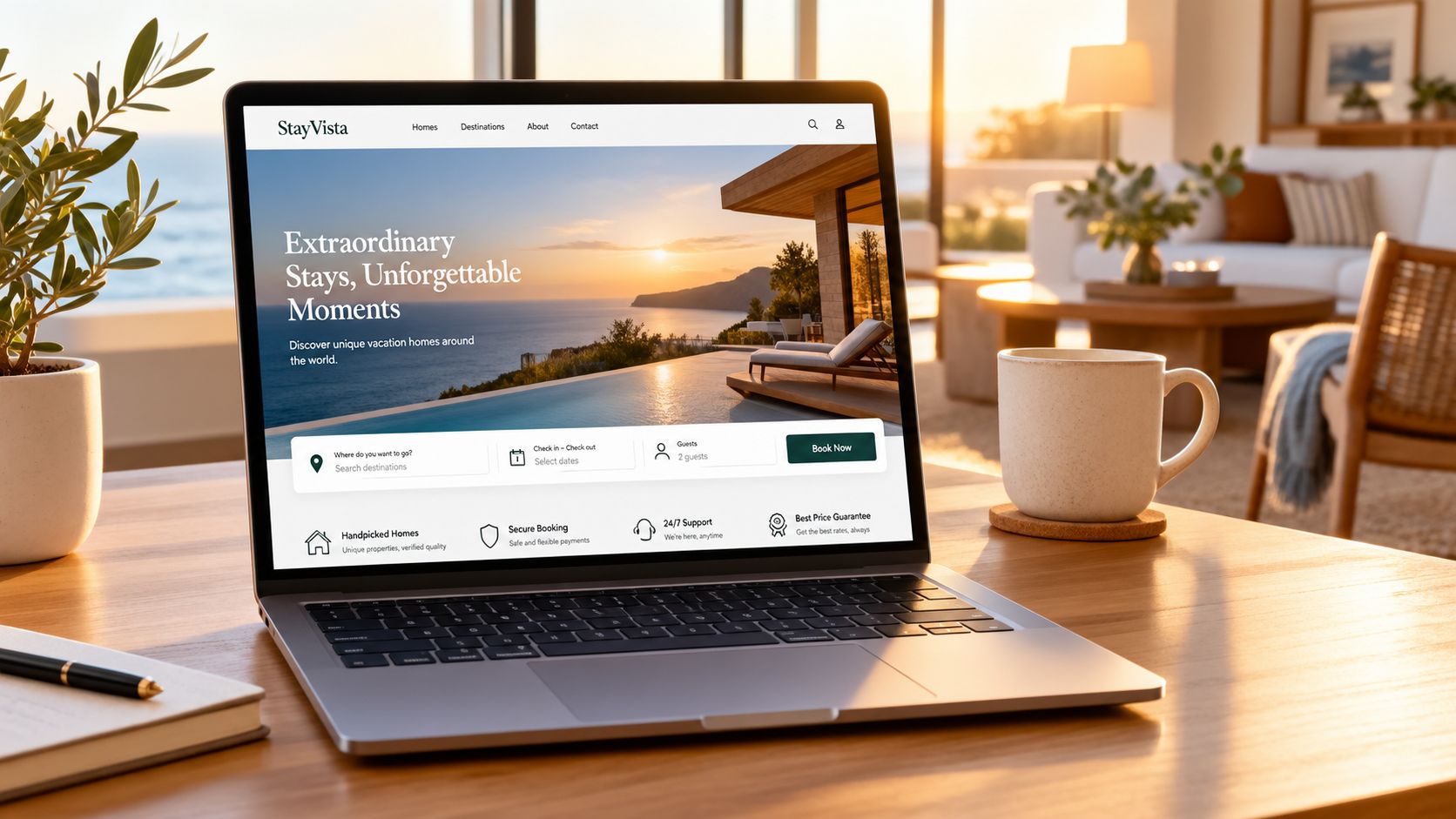
Your site doesn't need to resemble a hotel chain. It needs to answer the guest's objections before they leave for an OTA comparison page.
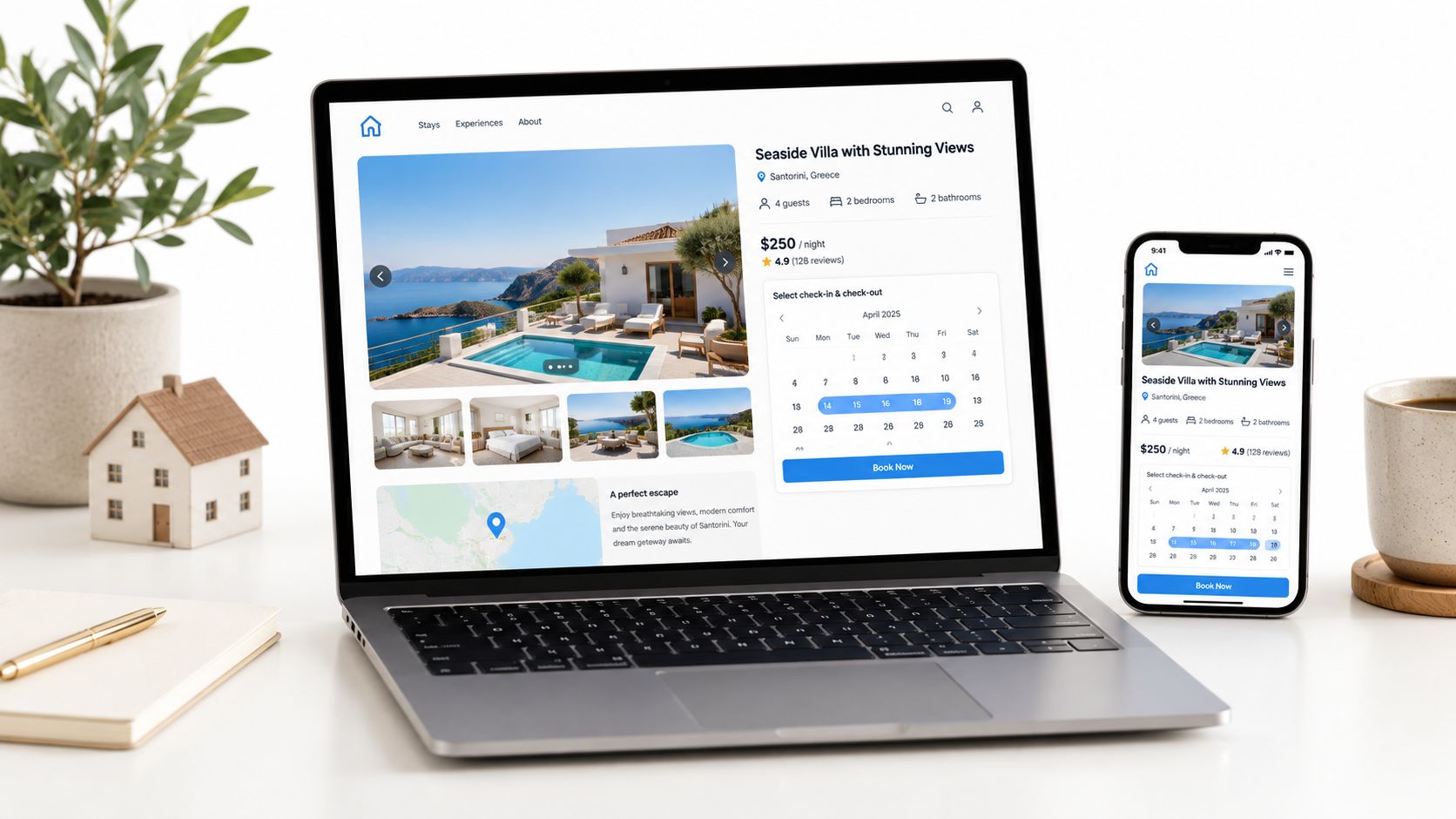
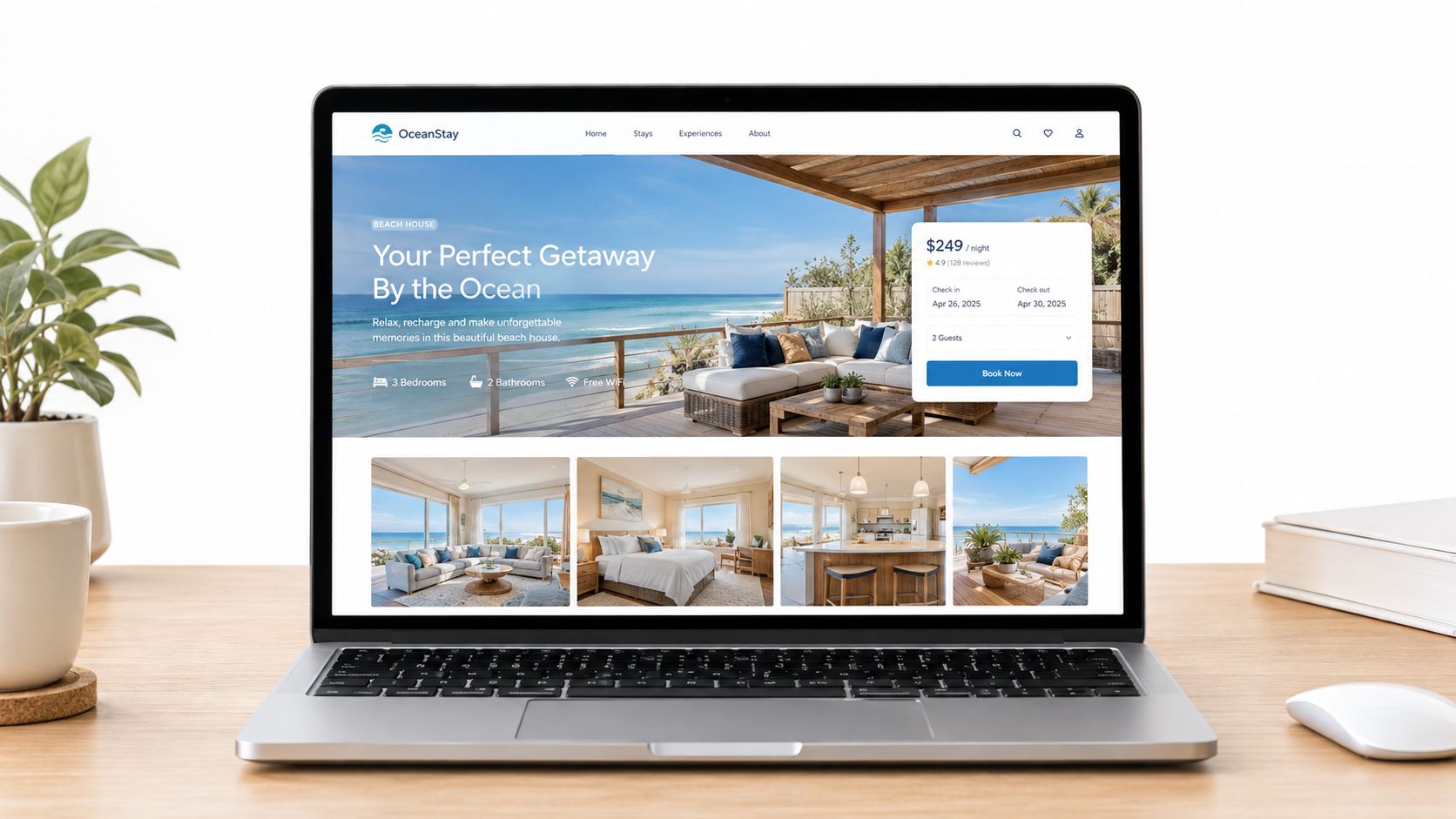
Start with one focused page per property. Include five to ten genuine photos, a room layout or floor plan, amenities, location context, house rules, cancellation terms, guest reviews, and any relevant license or registration information. A visitor should understand who operates the property, what they'll receive, and what the reservation costs without sending an inquiry.
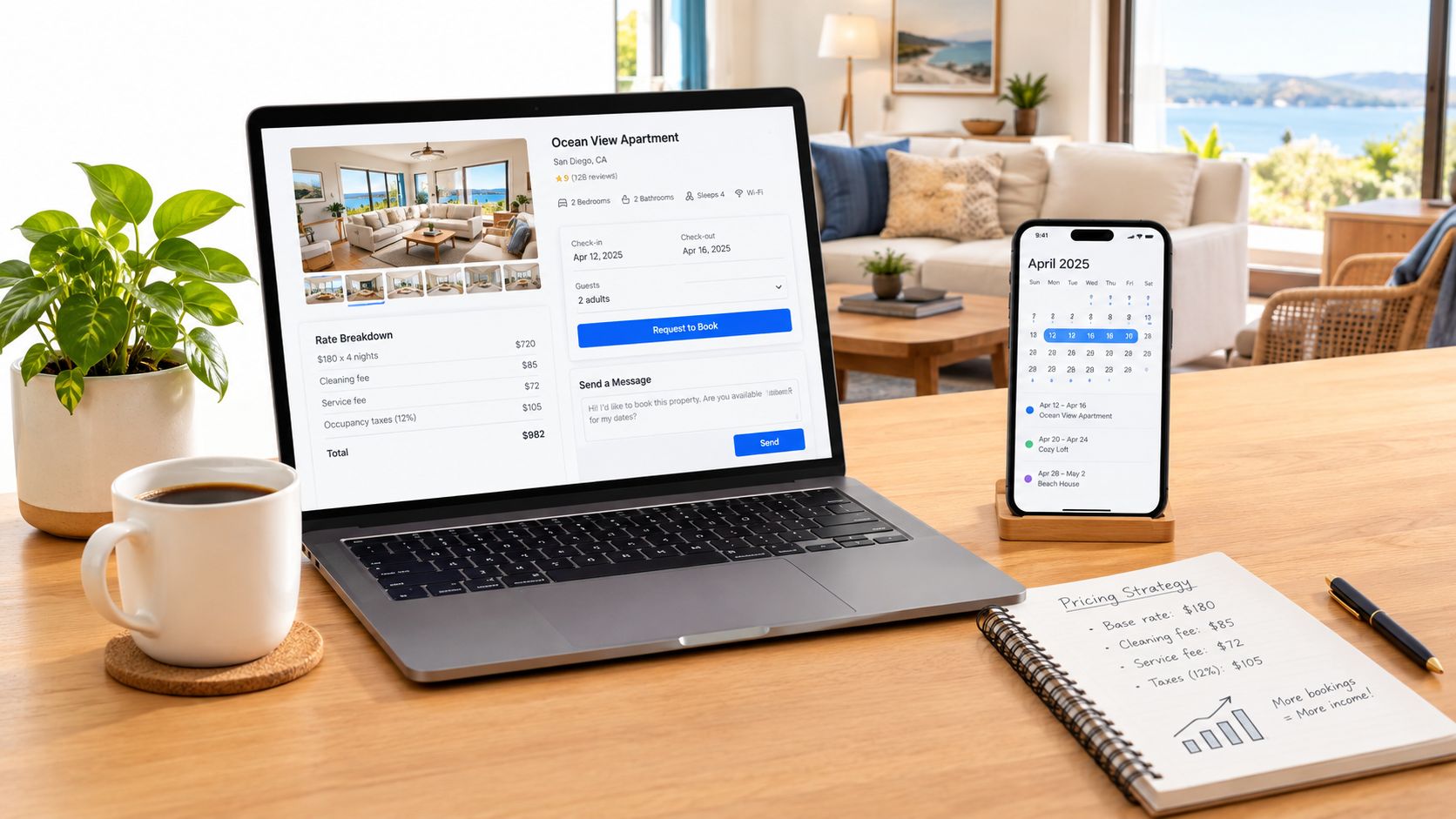
The booking path should show a nightly rate, cleaning fee, taxes, discounts, and the full total before checkout. Keep the price summary visible on mobile, place a clear booking button near the property description, and use one request form rather than several competing calls to action. Your domain should match the property or brand name, not the name of a website builder.
Choose hosting over unnecessary complexity
For one to six units, a hosted vacation-rental platform is usually more practical than self-hosted WordPress. Hosting, SSL, backups, uptime, payment integrations, and much of the mobile performance work are handled in one environment. You also avoid assembling separate plugins for availability, pricing, forms, and checkout.
A hosted system such as Rentabble's short-term rental website guidance can combine branded property pages, booking requests, live availability, and pricing tools without requiring a custom development project. The important test isn't the brand name. It's whether the system keeps your content, calendar, rates, policies, and reservations in one workable dashboard.
Before launch, check four things:
- Domain: Connect the property's domain and verify every public page.
- Analytics: Confirm that visits, form starts, and completed requests are recorded.
- Payments: Verify the processor, refund settings, taxes, and payout destination.
- Test booking: Walk through a booking from date selection to confirmation email on both mobile and desktop.
Aim for a fast mobile experience on a normal 4G connection. You don't need to make an unsupported performance promise, but slow pages and unclear totals create friction before the guest even reaches checkout.
Modeling the Real Economics per Reservation
Use one reservation as your basic decision unit. A three-night stay at $250 per night produces $750 in room revenue before cleaning and other pass-through items. The comparison below uses the planning assumptions in this example, not a universal fee schedule.
| Line Item | OTA Booking | Direct Booking |
|---|---|---|
| Room revenue | $750 | $750 |
| Host or channel fee | $112 | $0 |
| Payment processing | $19 | $18 |
| Promotion or acquisition cost | $25 | $25 |
| Channel or booking software | Included or variable | $4 to $6 |
| Approximate channel cost | Near $156 | Near $47 to $49 |
| Approximate net before cleaning pass-through | Near $594 | Near $656 |
The direct result is better in this scenario because the acquisition cost remains controlled and the platform cost is lower. If you pay heavily for Google Ads, absorb refunds, or spend hours answering low-intent inquiries, that advantage narrows. Track net contribution per reservation, not the headline commission avoided.
Portfolio planning
A 55% occupancy assumption produces a useful planning comparison, but it isn't a forecast. Your unit count affects how much software, content, and response coverage each reservation can carry.
| Portfolio | Operational implication | Break-even question |
|---|---|---|
| 1 unit | Keep the site simple and prioritize repeat guests | Does the direct reservation cover processing, software, and acquisition without adding vacancy? |
| 3 units | Centralize rates, forms, and calendars | Can shared marketing and automation lower the acquisition cost per reservation? |
| 6 units | Use stronger channel controls and reporting | Does the saved margin justify a channel manager and structured lead generation? |
Direct booking is a margin channel, not a volume channel. If annual occupancy is below roughly 30%, the first job is demand generation and property positioning, not a more elaborate checkout. That occupancy threshold is an operating rule for prioritization, not a market statistic. A polished site can't compensate for weak photos, poor reviews, an unattractive location, or pricing that misses local demand.
Pricing for Yield Without Chasing the OTA Race to the Bottom
A direct booking should earn its place by improving margin on the right dates, not by matching an OTA every morning. Rate decisions should reflect demand, lead time, stay length, and the cost of acquiring that guest.
Start with local demand signals. Build three or four seasons around school holidays, major events, weather patterns, shoulder weeks, and periods when nearby hotels or comparable rentals sell out. Pair each season with a base rate, a length-of-stay rule, and a controlled last-minute adjustment.
Set a floor before publishing discounts:
Floor price = variable costs × 1.4 + desired nightly margin
Variable costs may include consumables, occupancy-related utilities, payment processing, and per-stay service expenses. The multiplier leaves room for small costs that are easy to miss. Recalculate the floor when insurance, cleaning, taxes, or maintenance inputs change.
A practical rate structure
| Season / Window | Direct Nightly Rate | Length-of-Stay Rule | Last-Minute Rule |
|---|---|---|---|
| Soft shoulder | $145 to $170 | Discount from 4 nights | Reduce only inside 14 days |
| Normal shoulder | $175 to $205 | Moderate discount from 4 nights | Test small reductions inside 14 days |
| High season | $220 to $240 | Protect peak dates | Avoid unnecessary discounts |
| Event or peak demand | $245 to $260 | Set a stronger minimum stay | Discount only if the date remains open close to arrival |
A two-bedroom unit that previously carried a flat $180 OTA rate could use a direct range of $145 to $260 to follow demand more closely. This is a worked example, not a market recommendation. Check the floor first, then adjust for season, lead time, minimum stay, and the quality of demand you want.
A direct rate below the OTA's visible price can still produce more margin. A 5% to 10% discount may make sense when OTA commission is 15% to 20%, provided the final reservation remains above the floor. The trade-off is acquisition cost. Payment processing, software, advertising, and time spent converting inquiries all reduce the saving from avoiding commission. Use the published direct-booking fee guidance as a planning reference, then calculate your own break-even.
For a structured approach to seasons, minimum stays, and discounts, follow this vacation rental pricing strategy guide. The costly habit is copying competitors daily. It turns the direct channel into another price-following feed instead of a margin and lead-time channel. Protect high-demand dates, use discounts only to solve a specific vacancy risk, and review net contribution after every adjustment.
Two-Way Calendar Sync and Overlap Prevention
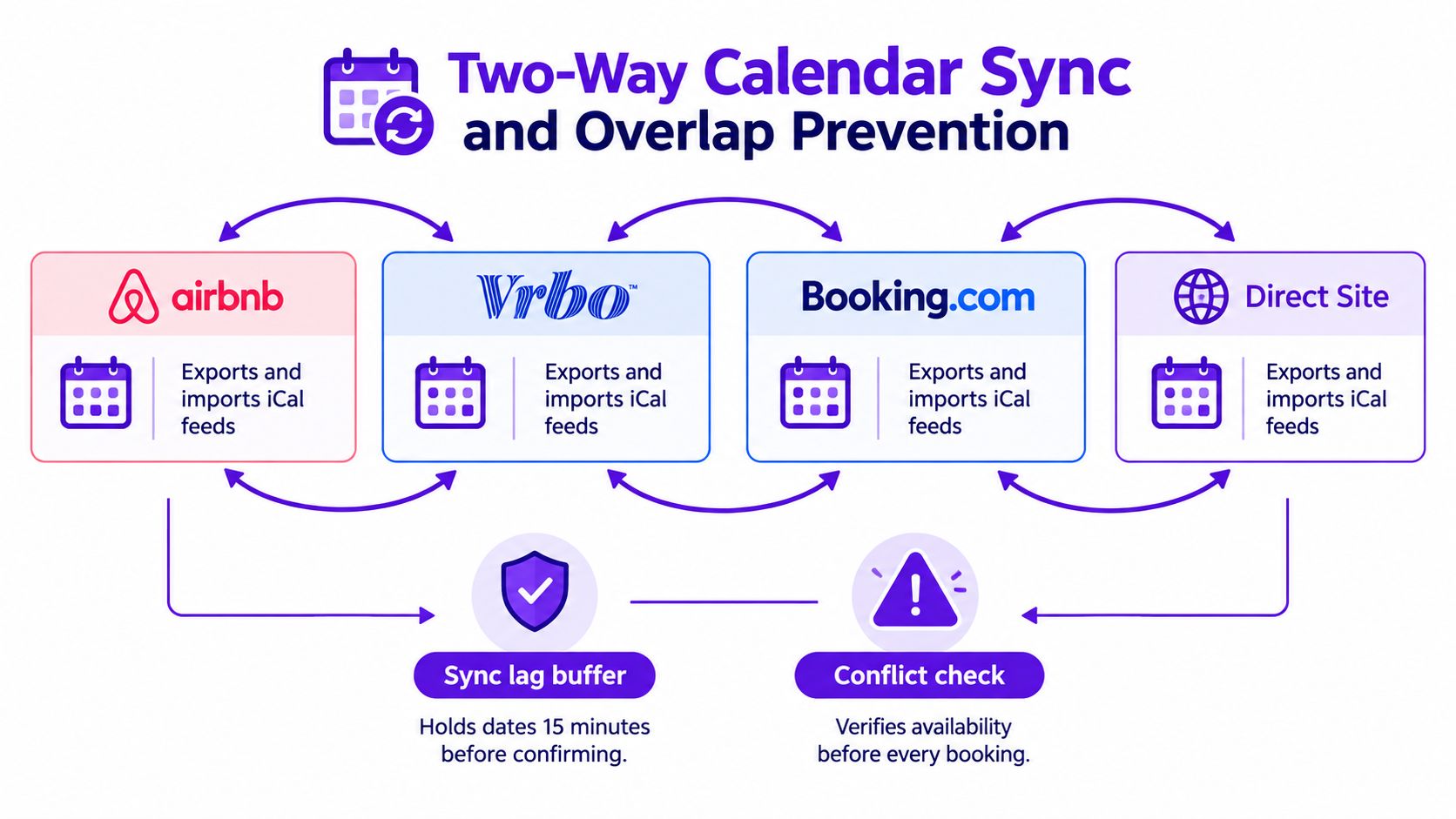
A direct booking site creates a serious operational risk when it shows dates already reserved on Airbnb, Vrbo, or Booking.com. Guests do not care which calendar feed failed. They see a confirmed reservation followed by a cancellation, which can damage trust and create refund, relocation, and review problems.
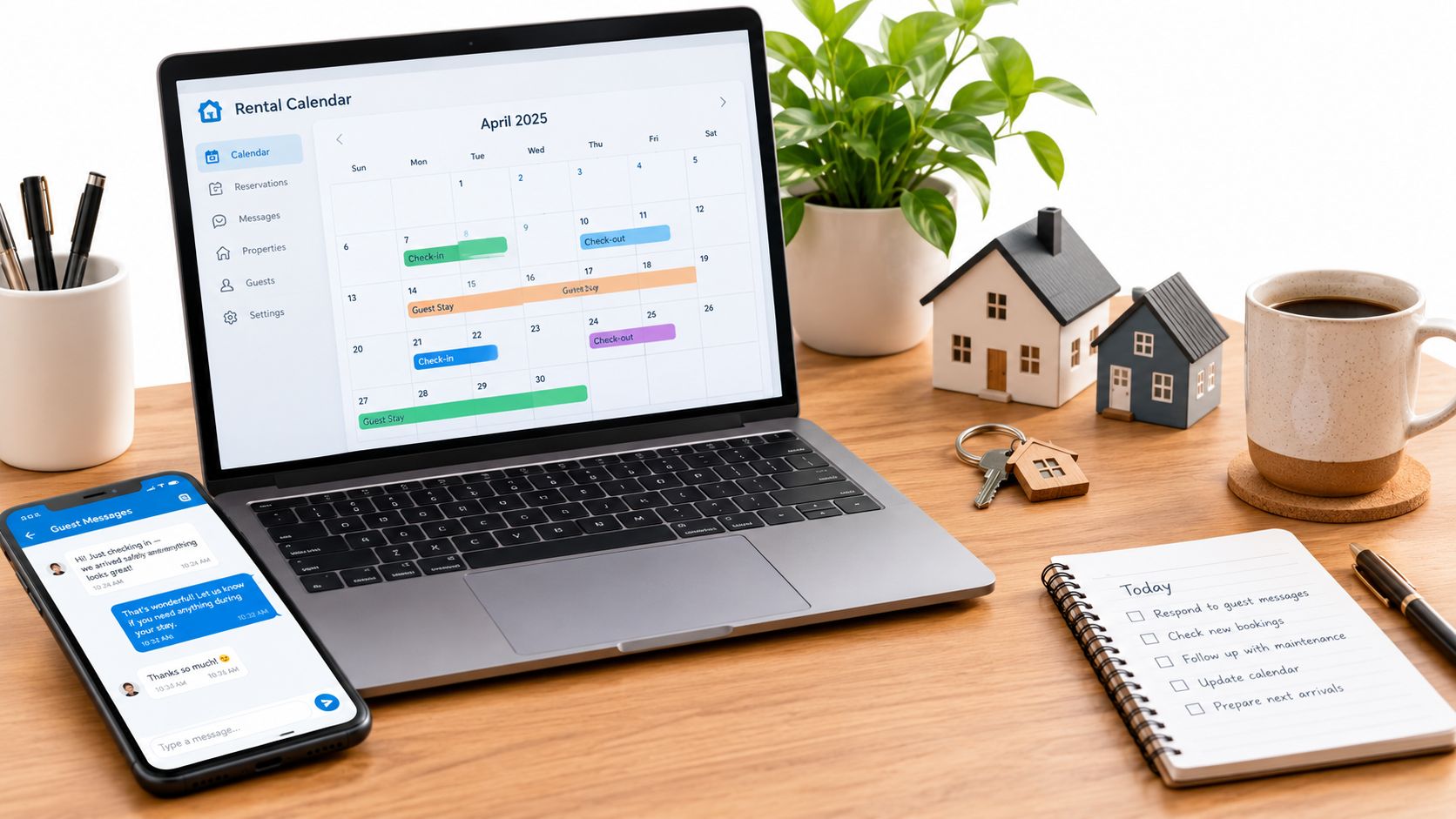
Two-way iCal synchronization reduces that risk by exporting blocked dates from each channel and importing updates into the others. Set it up in a controlled sequence:
- Export the feed: Open the PMS or channel manager and copy the property's iCal export link.
- Import it into each OTA: Paste the feed into Airbnb, Vrbo, Booking.com, and every other channel's calendar-import field.
- Add external feeds to the direct system: Import the OTA calendars into the hosted booking website.
- Set refresh expectations: Enable automatic refresh where available, ideally every 30 to 60 minutes. This remains a scheduled feed, not instant API synchronization.
- Test both directions: Block a test date on one channel, verify that it appears elsewhere, remove the block, and repeat the test in reverse.
Use this rental availability calendar guide as an operational reference when checking feed setup and blocked-date handling.
Add safeguards beyond iCal
iCal is useful for a small portfolio, but it can have 30 to 90 minute propagation delays, and a feed can stop updating without making the problem obvious. Owners with more than two units should use an API-connected channel manager where the added software cost is justified by the lower overlap risk. The right choice depends on booking volume, channel mix, and how quickly the owner can respond to a conflict.
Use several layers of protection:
- Control direct instant booking: If OTAs accept instant reservations, make the direct channel a request flow or require an availability check before confirmation.
- Hold pending requests: Place a new direct request on hold for 2 to 4 hours while you verify the latest external calendar.
- Create a buffer: Add a buffer night between back-to-back reservations when cleaning constraints or synchronization risk justify the lost night.
- Review alerts daily: Check for stale feeds, failed imports, blocked dates, and reservations without matching guest details.
A calendar system only works if the booking path remains easy to operate. Keep the process short:
- The guest opens the property page.
- They select dates and guest count.
- The site calculates the total.
- They submit a request or continue to hosted checkout.
- You verify availability and confirm.
- The guest receives payment and stay instructions.
The request form should ask for dates, guest count, full name, email, phone number, and an optional short message. Do not request identity documents before the guest understands the price and has chosen to book. Collect verification after booking if your policy requires it.
Display the total price, taxes, and cleaning fee beside the request button. Clear totals reduce clarification messages and give the guest enough information to decide without leaving the site.
Set a response service level of under 30 minutes during waking hours. An automatic reply should confirm receipt and state when you will respond. The confirmation template should include dates, guest count, total price, cancellation terms, arrival instructions, and either the security-deposit process or damage-waiver choice. Send payment through hosted checkout instead of asking guests to arrange an improvised transfer.
The operating test is simple: can you confirm accurately and quickly every time? If not, keep direct requests manual until the calendar checks, payment steps, and confirmation workflow are reliable.
Turning OTA Guests Into Repeat Direct Bookers
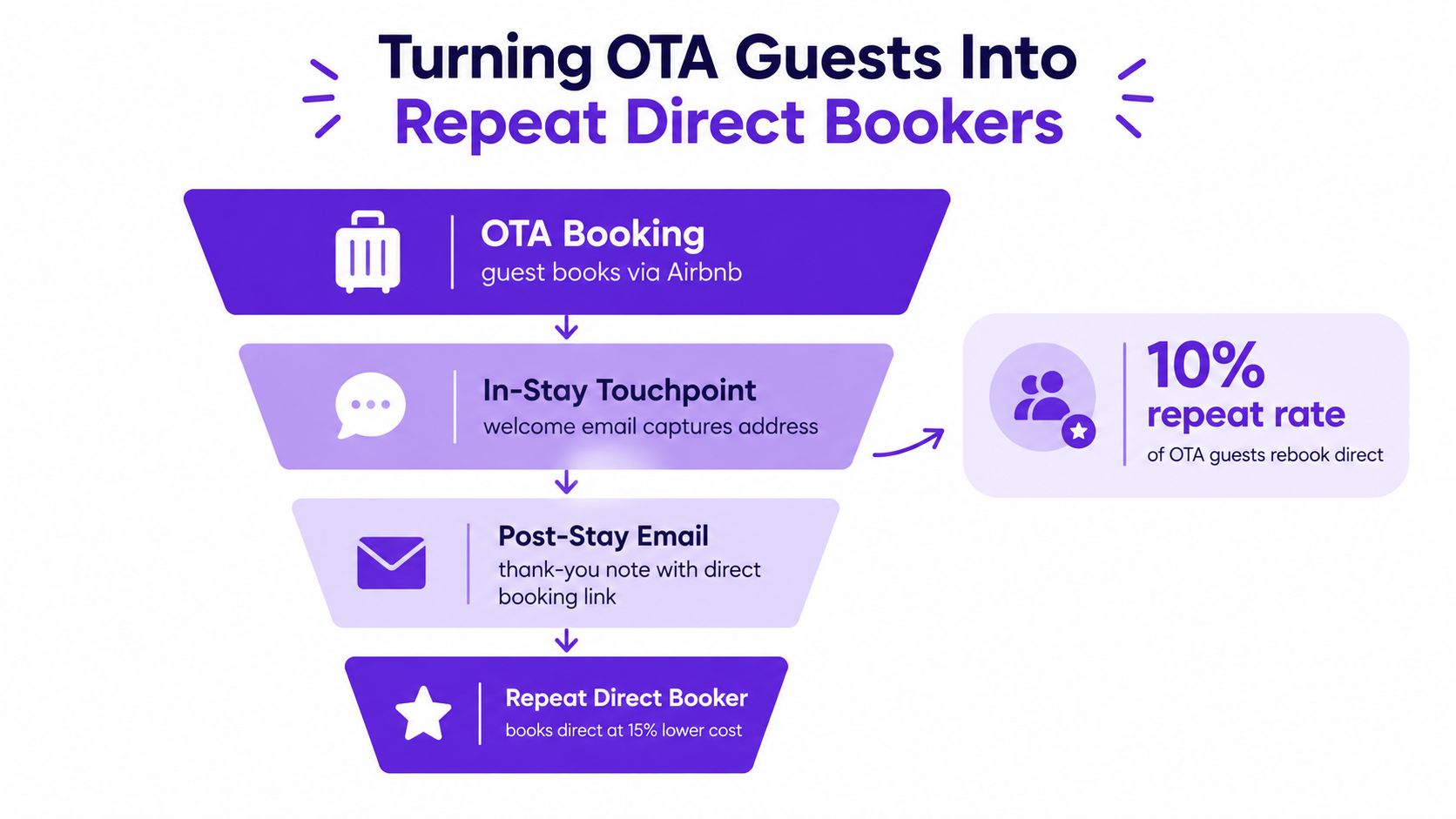
A guest who has already stayed at your property has cleared the hardest trust barrier. They know the location, bed, check-in process, and actual experience. The next booking can therefore become a margin and lead-time channel, provided you make rebooking easy without breaching OTA communication rules or using guest data without permission.
Start the handoff during the stay. Add the direct website to the welcome guide, house manual, or a small tent card. Explain that returning guests can find direct rates or returning-guest benefits there. Do not pressure the guest or suggest changing the current reservation. The offer is for a future stay.
Build the follow-up sequence
Keep the sequence short and tied to the guest's travel pattern:
- During the stay: Put the property name and direct website in the digital guide, where the guest can find them later.
- After checkout: Send a thank-you email around day two, only with permission and in line with applicable privacy requirements.
- Before the prior travel period: Within a 90-day window, present a return option linked to the guest's previous dates or season.
- For inactive guests: Send a seasonal win-back message rather than every promotion to the entire list.
A returning-guest offer of 5% to 10% off the visible rate can work if it stays above your contribution floor. Late checkout may persuade a repeat guest more effectively than a deeper discount, but only when housekeeping and turnover timing can absorb it. The offer should give the guest a clear reason to book direct while protecting the reservation's net contribution.
Create a CRM segment called OTA-origin. Tag each guest by acquisition source, property, travel dates, and consent status. Those fields let you tailor seasonal messages, avoid contacting guests without permission, and separate repeat OTA guests from people who first discovered you through the direct channel.
Keep OTAs where they earn their commission
Direct booking should not carry every reservation. A new listing without reviews needs marketplace discovery and the trust that established platforms provide. A city property during a major event may depend on OTA search visibility. A one-unit owner may also lack enough demand cushion to tolerate a vacancy caused by a weaker direct funnel.
Trust affects conversion as much as price. Research summarized by Phocuswright's US short-term-rental guest-attitude coverage indicates that younger travelers under 35 can be more skeptical of short-term rentals and less convinced that they offer value, while guests are booking closer to check-in. A first-time visitor who wants familiar comparison tools and recognizable checkout may choose an OTA even if your direct price is lower.
Cold traffic also behaves differently from repeat traffic. Use 3% to 5% conversion as an operational benchmark for a well-built direct site, then measure your own results by source. Email subscribers, past guests, search visitors, and social visitors do not arrive with the same intent, so one blended conversion rate can hide where the funnel is working.
The practical channel mix is:
- Use OTAs for discovery: Marketplaces introduce the property to guests who do not know your name.
- Use direct for repeat stays: Give satisfied guests a clear rebooking route that preserves the relationship and improves margin.
- Use direct for longer lead times: The 2026 direct-booking analysis from Houfy reported direct stays with 45.2% longer average stays and 51.3% longer booking windows than OTA-originated stays, along with slightly higher ADR.
- Use both for shoulder dates: Compare lead time, conversion, and net contribution before assigning a promotion.
Lead time is the strategic advantage. More time between booking and arrival gives you room to test price, follow up with inquiries, plan staffing, and fill calendar gaps. Direct booking earns its place when it improves demand quality and economics, even if OTAs still deliver more reservations.
Your First 90 Days on a Direct Channel
Treat launch as an operating project, not a design task. A website that looks good but has stale calendars, incomplete totals, or slow replies creates another inbox rather than another channel.
The launch sequence
Week one is infrastructure. Publish the hosted site, connect the domain, load accurate rates, configure taxes and payment settings, connect calendar feeds, and submit a complete request form. Make one test reservation and verify every email, calendar block, and payment step.
Weeks two through four are about discoverability and capture. Set up a Google Business Profile where appropriate, add the property to relevant local and niche directories, and create an OTA-to-direct follow-up sequence for guests who have given permission to hear from you. Add the direct URL to guest-facing materials without interfering with current OTA reservations.
Weeks five through eight are for refinement. Review seasonal pricing, minimum-night rules, check-in restrictions, response times, and inquiries that didn't convert. Publish a useful local page targeting a specific search such as a neighborhood, attraction, event, or travel need that an OTA listing page is unlikely to own.
Track four numbers every week
- Direct conversion: Measure completed booking requests against qualified direct visitors, separated by source.
- Response time: Record the median time from inquiry to first useful reply.
- Repeat-guest share: Tag the reservation source and identify how many direct bookings come from previous guests.
- Blended savings: Compare direct contribution after processing, software, refunds, and acquisition costs with the OTA baseline.
A reasonable early milestone is a 5% to 8% direct share of total bookings within 90 days, used as a planning target rather than a guaranteed result. The next phase is compounding: improve local search pages, grow the permission-based guest list, and send fewer, more relevant seasonal campaigns.
The owners who succeed don't abandon OTAs. They stop asking one channel to perform every job. Marketplaces provide reach and reassurance. The owned site captures repeat demand, longer lead times, and reservations where commission costs would otherwise consume too much of the margin.
Rentabble provides a hosted direct-booking website with branded property pages, live availability, automatic total pricing, booking requests, seasonal rates, and two-way iCal synchronization. Visit Rentabble to see whether its workflow fits your one- to six-unit operation and start building a channel you can measure and improve.