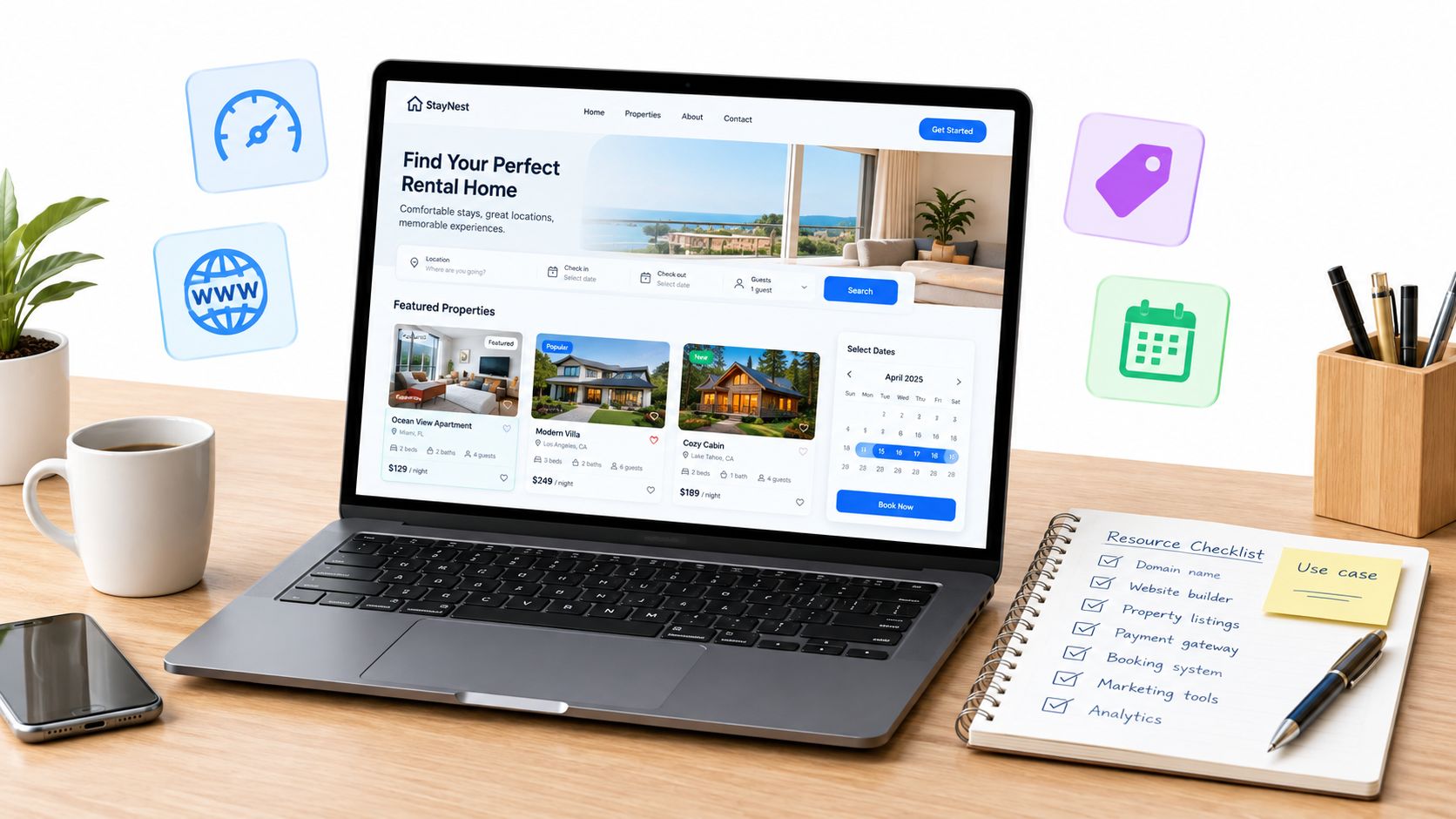
10 Short Term Rental Software Options for Small Hosts

The Right Software Depends on Your Operating Model
Most advice on short term rental software gets one thing wrong. It assumes the most feature-rich PMS is the safest choice, then treats every host like a mini hotel group. For small operators, that often creates the opposite result. You pay for depth you won't use, spend time configuring edge cases that rarely happen, and still need to solve the basic problem of getting a guest from search to confirmed booking.
The better starting point is narrower. Decide whether you primarily need a lightweight direct-booking site, stronger guest messaging and turnover automation, or a scale-ready PMS with deeper channel and team controls. Those are different jobs, and the best platform for one can feel bloated for another.
That distinction matters more now because the category itself is expanding fast. The short-term rental software market has been estimated at USD 2.75 billion in 2025, with projections of about USD 8.9 billion by 2034 and a 14.2% CAGR from 2026 to 2034. More software choice sounds good, but it also means small hosts face more pressure to buy "complete" systems when they may only need a direct channel plus reliable calendar sync.
A useful way to compare tools is by workflow, not feature count. Can the platform help you build an owned booking channel? Does it keep OTA calendars aligned? How much setup work is required before it becomes useful? Are pricing and payment flows obvious, or do they force awkward workarounds? And at what point does automation stop saving time and start adding admin?
Rentabble is a strong reference point for this lens because it focuses on a practical small-operator need: launching a hosted, owned booking channel quickly, without developers or marketplace commissions. It isn't the only good option here. But it makes the tradeoff clear. Sometimes the right software isn't the platform with the most modules. It's the one that solves the next operational bottleneck cleanly.
Table of Contents
- 1. Rentabble
- 2. OwnerRez
- 3. Lodgify
- 4. Uplisting
- 5. Hospitable
- 6. Hostaway
- 7. Hostfully
- 8. iGMS
- 9. Smoobu
- 10. Zeevou
- Top 10 Short-Term Rental Software Comparison
- Match the Platform to the Work You Actually Do
1. Rentabble
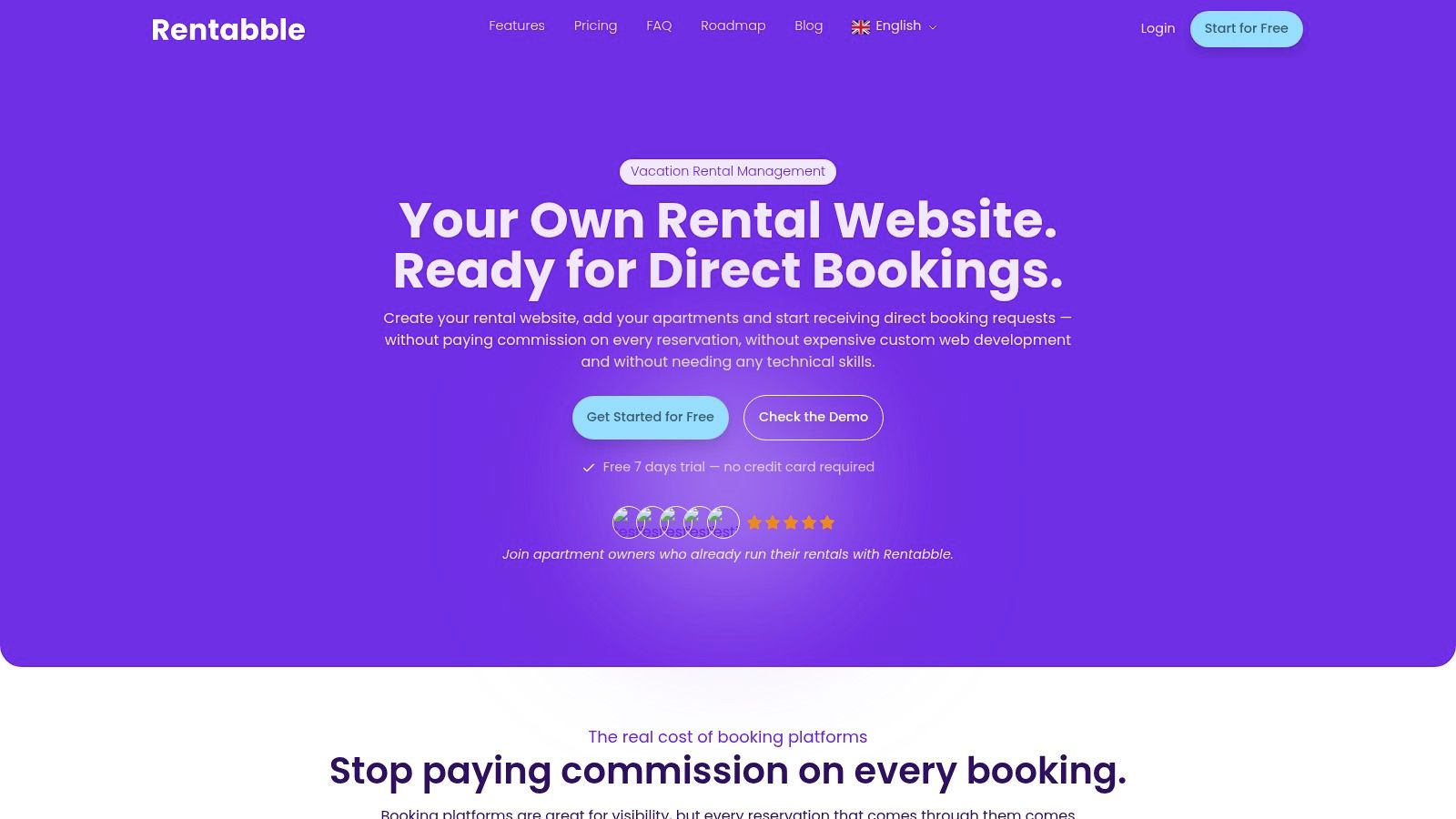
Rentabble is useful because it does less. For small operators trying to build a direct channel before they buy a full PMS, that narrower scope often fits the actual workflow better than a larger system with website tools added on later.
The product is centered on a specific sequence of work. First, publish a hosted booking site under your own brand. Next, show live availability and clear total pricing. Then sync calendars with the OTA channels that still drive most demand. For owners with one to six units, that order matters because the operational problem is usually not reporting depth or team permissions. It is getting an owned booking path live without adding another setup project.
Where Rentabble fits best
Rentabble is strongest for hosts who need a direct-booking site quickly and only need light operational software around it. You can build property pages, add photos and amenities, set seasonal pricing, minimum stays, discounts, and check-in rules, and start taking booking requests without custom development.
That makes it different from broader platforms in this list. Rentabble does not try to be the control center for a complex multi-user operation. It tries to replace the patchwork many small owners use first: a basic website builder, a separate availability display, manual quote calculation, and ad hoc calendar updates.
The direct practical gain is time to launch. Hosting, security, backups, and support are bundled, so the setup effort stays close to the booking workflow itself instead of expanding into web infrastructure. The dashboard also keeps the core small-operator tasks in one place: listings, bookings, pricing, availability, reviews, occupancy, and revenue snapshots.
Practical rule: If you still rely on marketplaces because your own site is unfinished or hard to manage, software that gets a direct channel live fast can create more value than software with deeper back-office options you may not use.
Rentabble also supports two-way iCal sync with Airbnb, Booking.com, Expedia, Vrbo, and other channels. For many independent hosts, that is enough. It keeps OTA calendars aligned without requiring the heavier setup that often comes with API-based channel management. The tradeoff is that iCal sync is usually adequate for calendar protection, but less capable than deeper integrations when you need more granular channel controls.
What stands out, and where the limits show
Pricing is one of Rentabble's clearest advantages. Basic costs €9 per month or €99 per year for up to 3 apartments. Pro costs €19 per month or €199 per year for up to 6 apartments. There is also a 7-day free trial without a card and a 14-day money-back period. Small operators should pay attention to that because pricing opacity is common in this category, especially once website tools, channel tools, or support tiers are separated into add-ons.
A few product choices line up well with owner-managed rentals:
- Fast setup: You can launch a hosted site in hours instead of planning a full website project.
- Owned presentation: Custom branding and an optional custom domain help the site feel like a real direct channel, not a generic booking form.
- Clear guest pricing: Automatic total-price calculation reduces manual quoting and repetitive message threads.
- Search visibility basics: SEO-ready pages and an auto-generated sitemap cover the basics for discoverability.
- Simple support model: Email and Discord support are included, with priority support on Pro.
The main constraint is payments. Guests currently pay by bank transfer or cash on arrival, while online card payments are listed as coming soon. That limitation matters if your direct channel depends on instant checkout or if your market expects card payment at booking. The platform also stays intentionally small in scope. Bilingual website support is currently limited to English and Croatian, and the plan structure is designed for smaller portfolios rather than larger management companies.
Viewed through the small-operator workflow, Rentabble is a good fit when the first bottleneck is building an owned booking channel and keeping OTA calendars synchronized without buying a heavier system too early. It becomes less compelling once your daily work shifts toward deeper guest communication automation, turnover coordination, or multi-user operational control.
2. OwnerRez
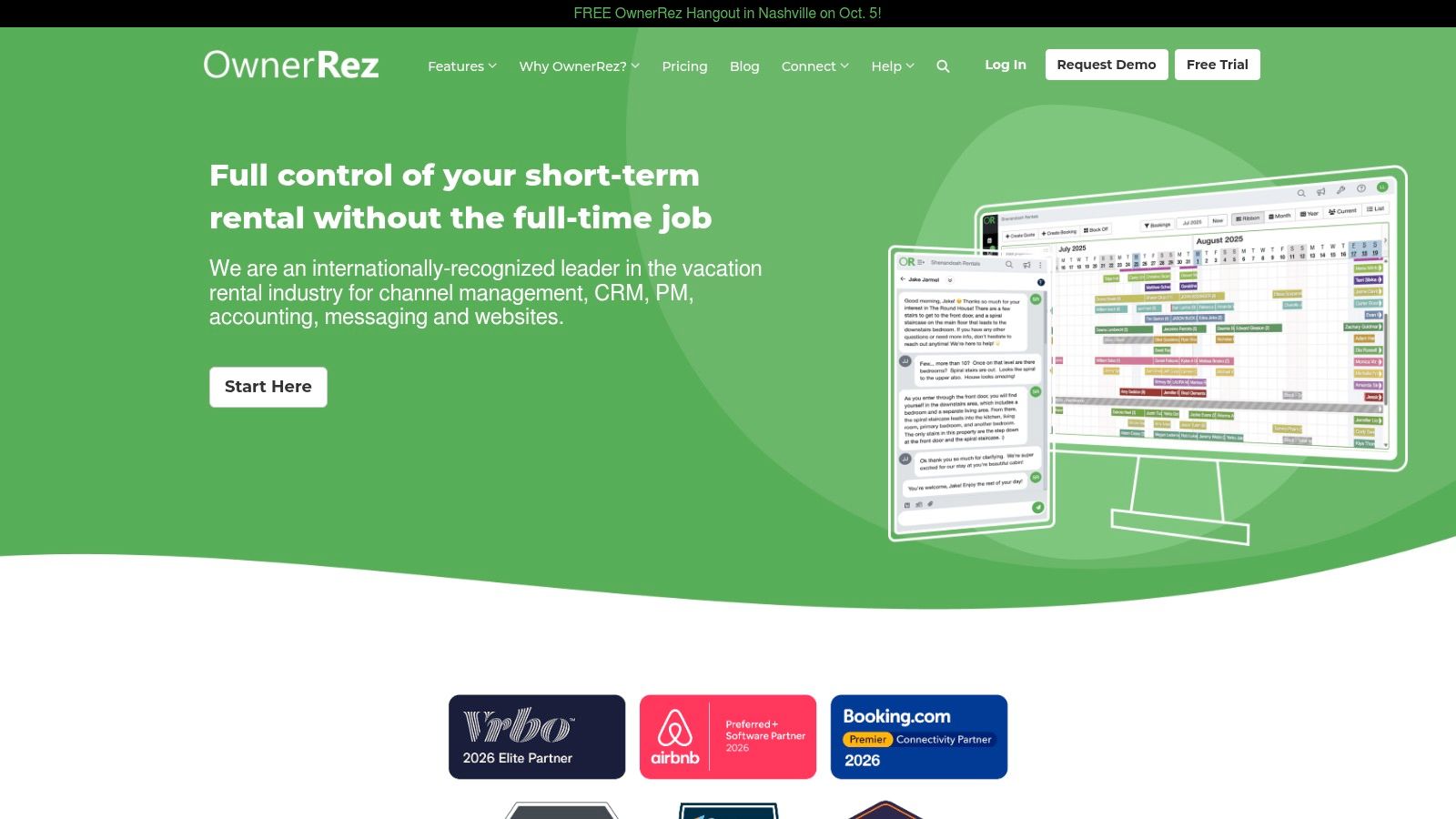
OwnerRez makes sense only after a small operator has already felt the limits of lighter tools. If your workflow now includes channel-specific fees, security deposits, taxes that change by jurisdiction, and signed rental terms, the extra setup starts to look less like overhead and more like structure.
That distinction matters. A host trying to stand up a first direct-booking path will usually move faster with a simpler system such as Rentabble. A host trying to stop patching together widgets, manual agreement emails, and workaround pricing rules is solving a different problem.
OwnerRez is strongest in the middle of the small-operator workflow, after the direct channel exists and before the business grows into a larger team PMS. It covers hosted websites, booking widgets, direct integrations with major OTAs, unified inbox functions, payment handling, rental agreements, and detailed rule-setting around charges and policies. The practical value is not breadth alone. It is the ability to make the booking flow match the way the property is sold.
A concrete example helps. If one property needs a pet fee, another requires a refundable damage deposit, and longer stays trigger different tax treatment, many lightweight tools push the operator back into manual corrections. OwnerRez is built for that kind of exception handling.
The tradeoff appears early. Setup takes work, and the work is front-loaded.
Small operators who like precision often appreciate OwnerRez more after configuration than during trial. The platform gives you many decisions to make about payment schedules, agreement timing, guest messaging, and booking rules. That can reduce repetitive admin later, but it also means the first week can feel more like implementation than onboarding.
The direct-booking tools are better than the product's reputation suggests. If you already have a WordPress site or another custom front end, the embeddable approach is often more useful than a forced rebuild. If you want an all-in-one hosted site, that path exists too. The key question is not whether OwnerRez can support direct bookings. It can. The question is whether you want to configure a fairly exact booking stack before demand on your own channel is proven.
OwnerRez is a strong fit if your daily work increasingly looks like this:
- You synchronize multiple OTA calendars and want tighter behavior than basic iCal sync.
- You spend too much time correcting fees, taxes, or payment schedules by hand.
- You require signed agreements as part of the reservation process.
- You want automation, but tied to operational rules rather than just scheduled guest messages.
It becomes harder to justify when the business is still simple. One or two properties, standard pricing, and minimal policy variation rarely need this much system logic. In that case, OwnerRez can add process before it removes labor.
For small operators, the best way to read OwnerRez is as a control-first platform. It earns its cost and complexity when your bottleneck is operational accuracy, not launch speed. Review current capabilities on the OwnerRez platform.
3. Lodgify
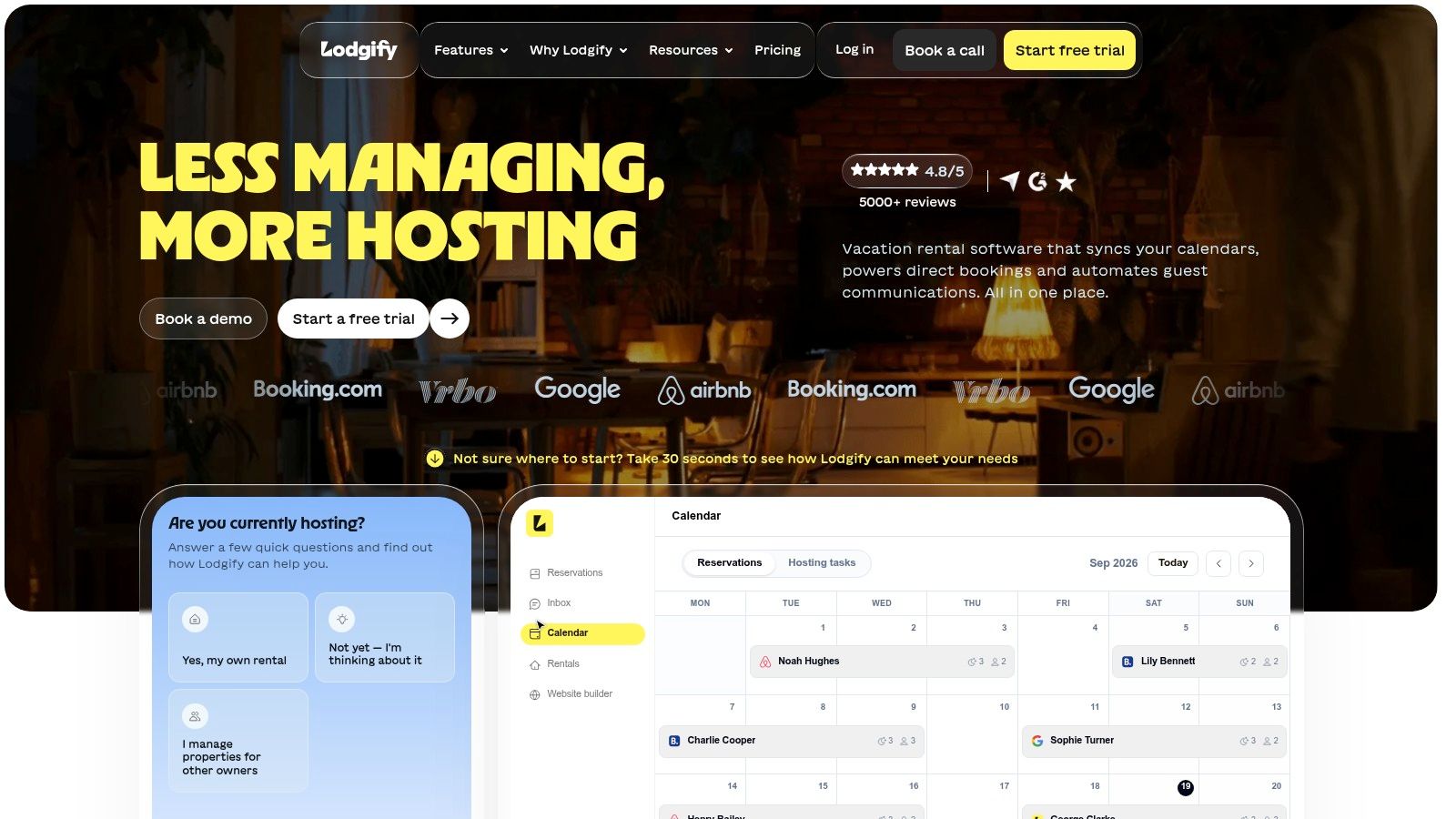
Lodgify makes the strongest case when the bottleneck is not calendar sync or cleaning coordination. It is getting a credible direct-booking channel live without hiring a developer. For a small operator working through the full workflow, that distinction matters. A polished site can raise conversion and trust, but it does not remove much back-office work unless the rest of the system fits too.
That is why Lodgify tends to appeal to a specific stage of business. You already want your own booking path, you want OTA connections in the same system, and you do not want the setup burden of a more configurable PMS. Lodgify covers those needs with a hosted website builder, booking engine, embeddable widgets, and channel distribution that includes Google Vacation Rentals. If you are still comparing what a booking stack should include before you commit, this overview of vacation rental booking software options is a useful checkpoint.
The tradeoff shows up after launch.
Lodgify is easier to justify on the guest-facing side than on the operations side. Small operators who mainly need synchronized calendars, a presentable website, and basic reservation flow often find it easier to get running than heavier systems. Operators whose daily work revolves around assigning turnovers, handling edge-case rules, or building layered automations may start to notice the limits sooner. In other words, Lodgify usually reduces friction at the top of the funnel before it reduces complexity in the middle of the workflow.
Pricing deserves more scrutiny than the homepage impression suggests. The core product can look straightforward, but add-ons such as dynamic pricing change the monthly cost. That matters more for a two-property host than for a larger manager, because each extra paid module has to replace manual work quickly to earn its place.
A practical way to read Lodgify is by asking where your current time goes:
If most of your effort goes into driving direct bookings and improving presentation, Lodgify is a sensible shortlist candidate.
If most of your effort goes into post-booking operations, it can feel lighter than the marketing surface implies.
If your portfolio is still small, check the total price after add-ons before assuming it is the simpler buy.
Lodgify fits best when the website is part of the business model, not just a checkout page attached to OTA traffic. Review current product details on the Lodgify website.
4. Uplisting
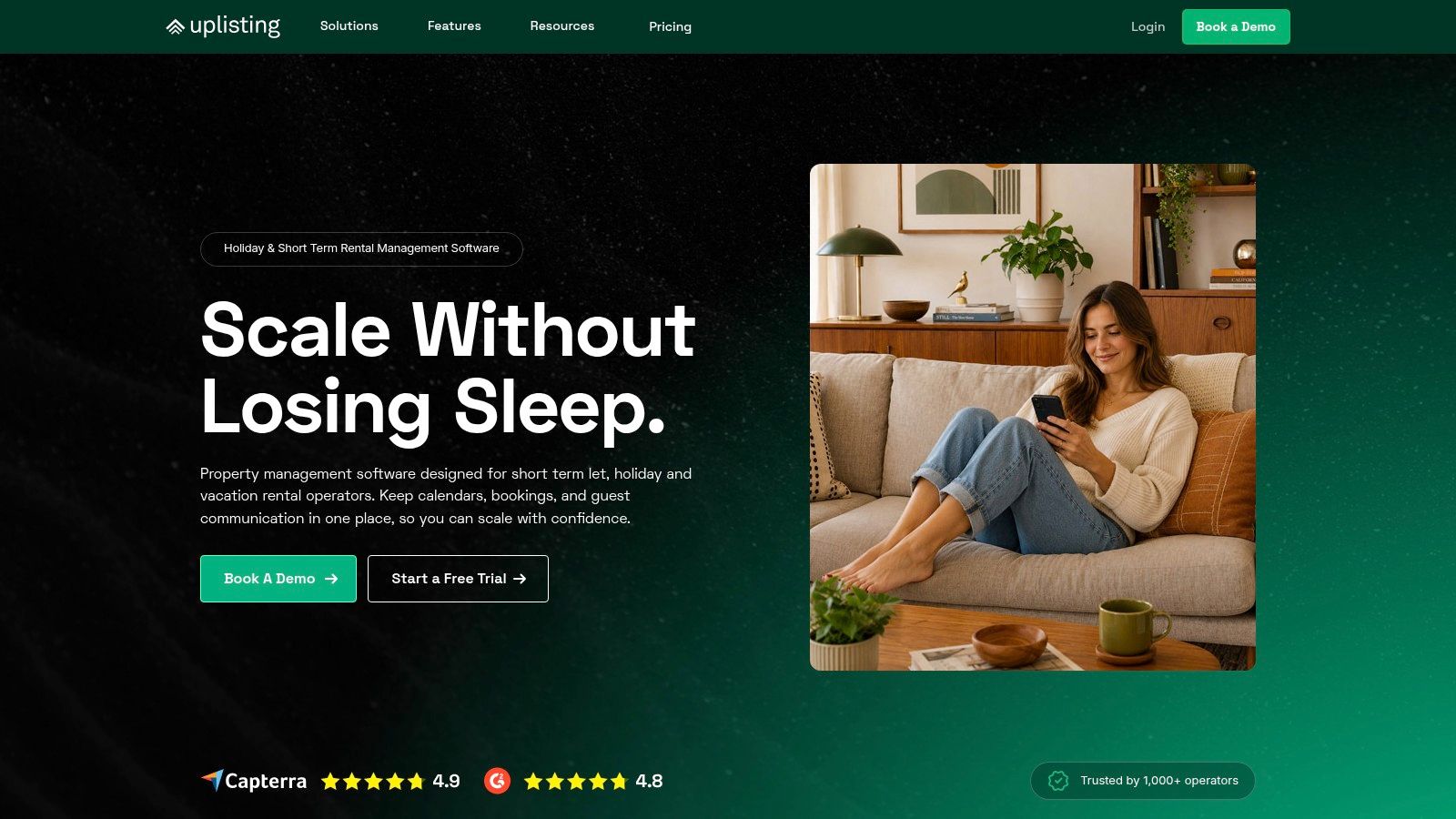
Uplisting suits a specific kind of small operator. The direct booking site matters, but the bottleneck sits after the reservation arrives. Calendar sync is already in place. The harder part is getting messages out on time, assigning cleans reliably, collecting deposits, checking IDs, and keeping arrival-day mistakes from turning into evening support work.
Viewed through that workflow, Uplisting is less a website-first tool and more an operations-first PMS with a direct channel attached. It combines OTA syncing, a unified inbox, automated guest communication, turnover scheduling, security deposits, e-sign rental agreements, ID verification, and channel-specific pricing controls. For owners managing a small but active portfolio, that mix often fits better than platforms that spend more of their product effort on storefront design.
The practical advantage is not feature count. It is how closely the features map to recurring failure points. A small operator usually feels operational drag in a few predictable places: a cleaner misses an update after a booking change, a guest ignores house rules until too late, or a deposit process lives in a separate tool that has to be chased manually. Uplisting addresses those handoffs inside one system, which can reduce the number of workarounds needed to keep the week running.
Setup effort is the tradeoff.
Uplisting asks a buyer to think beyond listing presentation and into policy design. Deposits, agreements, guest screening steps, message timing, and cleaning workflows all create value only after they are configured properly. For a host with two straightforward listings, that can feel like more system than the job requires. For a host with several properties, frequent turnovers, and guest issues that repeat, the extra setup often pays back faster.
Pricing is harder to assess than with simpler self-serve tools. Public pricing detail is limited, so smaller operators may need a sales conversation before they know monthly cost and which features are included. That lack of transparency does not make the platform weak, but it does raise the buying risk for cost-sensitive hosts who need to compare software based on total operating cost, not just the headline package.
Uplisting is strongest when your main question is operational reliability. It is less convincing if your main question is how to launch a basic direct booking channel as cheaply as possible. In that sense, it sits between lightweight tools and heavier PMS products. It gives small operators more operational control than simpler website-led platforms, but it also asks them to accept more setup work and less pricing clarity in return. For current product information, visit Uplisting.
5. Hospitable
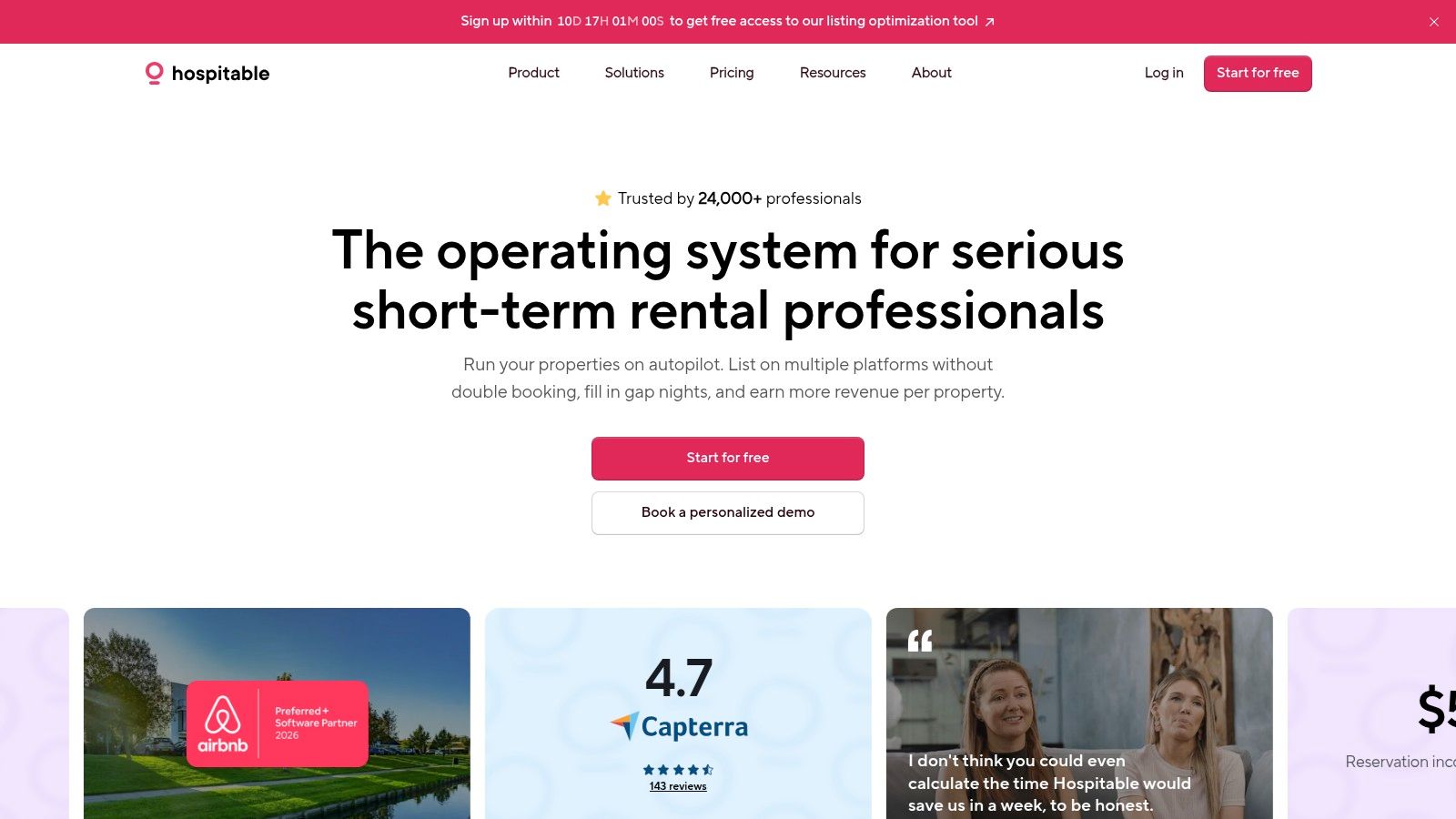
Hospitable fits a narrower job than some all-in-one platforms, and that is part of its appeal. Small operators usually feel the value first in the daily inbox, not in long-range system design. If your week is dominated by check-in questions, rule reminders, review requests, and guest edge cases across several channels, Hospitable solves a real labor problem early.
That focus matters in the small-operator workflow.
A host trying to build a direct channel, keep OTA calendars aligned, and manage turnover tasks does not always need a heavy PMS. Hospitable covers those three jobs unevenly, but often efficiently. Calendar and communication coordination are mature. Direct bookings are available through Hospitable Direct. Operations support exists, though the platform still feels centered on guest messaging rather than on deep back-office process control.
The practical question is setup burden versus payoff. Hospitable is usually easier to understand than software built for larger teams because its logic starts with communication flows that small hosts already recognize. You set up automated messages, connect channels, define booking triggers, and extend that into a simple direct booking path. That makes it easier to adopt than platforms that ask you to map every operational rule upfront.
Its Direct product changes the buying equation for owners who want more than OTA dependence but do not want to assemble a separate website, payment stack, and messaging system. The hosted site and booking widgets are less flexible than design-led builders, yet they reduce the number of tools a small operator has to configure and maintain. For many hosts, that tradeoff is rational. A direct site that converts adequately and stays tied to the inbox is often more useful than a prettier site that creates extra admin work.
There is also a specific reason some first-time direct-booking hosts shortlist Hospitable. The optional Merchant of Record model shifts part of the payment, fraud, chargeback, and liability handling into the platform. That does not remove operational risk, but it does reduce the number of payment decisions a small business has to make alone.
Where Hospitable becomes less convincing is at the edges. Brand-led operators may find the site experience too constrained. Hosts with more layered cleaning, maintenance, team permissions, or exception-heavy workflows may also reach a ceiling faster than they would with a more operations-first PMS. In other words, Hospitable is strongest when guest communication is the bottleneck. It is less persuasive when the bottleneck is multi-person coordination behind the scenes.
Pricing also needs close review before buying. The platform can look simple at first glance, but direct-booking features, payment handling choices, and coverage details affect the cost and risk profile. Small operators comparing it with tools like Lodgify, Smoobu, or Rentabble should look past the front-page feature list and ask a narrower question: does this reduce manual work in the exact parts of the workflow that currently consume hours each week?
For current plan details, visit the Hospitable website.
6. Hostaway
Hostaway is one of the platforms people mention when they mean "serious" short term rental software. That reputation is earned, but it can also mislead smaller operators. Serious isn't the same as suitable.
The platform is built for scale. It combines a direct-booking engine, multi-calendar controls, automation, a large integration marketplace, optional native dynamic pricing, and a broad partner ecosystem. If you're planning to grow a multi-property portfolio and expect your software stack to connect with specialized tools over time, Hostaway starts to look less like overkill and more like infrastructure.
Best when integration depth is the real requirement
A lot of content in this category focuses on all-in-one convenience. Hostaway points in the other direction. Its strength is connected systems. If you expect to mix pricing tools, operational software, analytics, and external services, its marketplace matters more than any single native feature.
For hosts weighing when a sync layer becomes a full operational platform, this overview of a vacation rental channel manager helps frame the jump from basic calendar coordination to multi-system control.
Why small hosts should hesitate before buying up
Hostaway can absolutely support direct bookings, but that's not why most small operators should choose it. The pricing is quote-based, portfolio-dependent, and may involve onboarding fees. Even when the software is excellent, sales-led pricing changes the evaluation. You aren't just comparing features. You're comparing commitment.
That matters because this category has deep roots and keeps moving upmarket. One industry timeline notes that 1995 marked the arrival of dial-up internet access that brought vacation rentals onto the World Wide Web, 2013 saw 14% of travelers book a private home, condo, or apartment rental for at least one trip, up 6 percentage points from three years earlier, and by 2015 the vacation rental industry was worth an estimated USD 85 billion. A separate academic source adds that Interhome was founded in 1965. Hostaway reflects that maturation. It's built for operators who already see themselves as running a system, not just a listing.
Choose Hostaway when scale and integrations are the purchase logic. If you're still validating a direct channel for a small portfolio, simpler tools are usually the better first step. Review the platform on the Hostaway website.
7. Hostfully
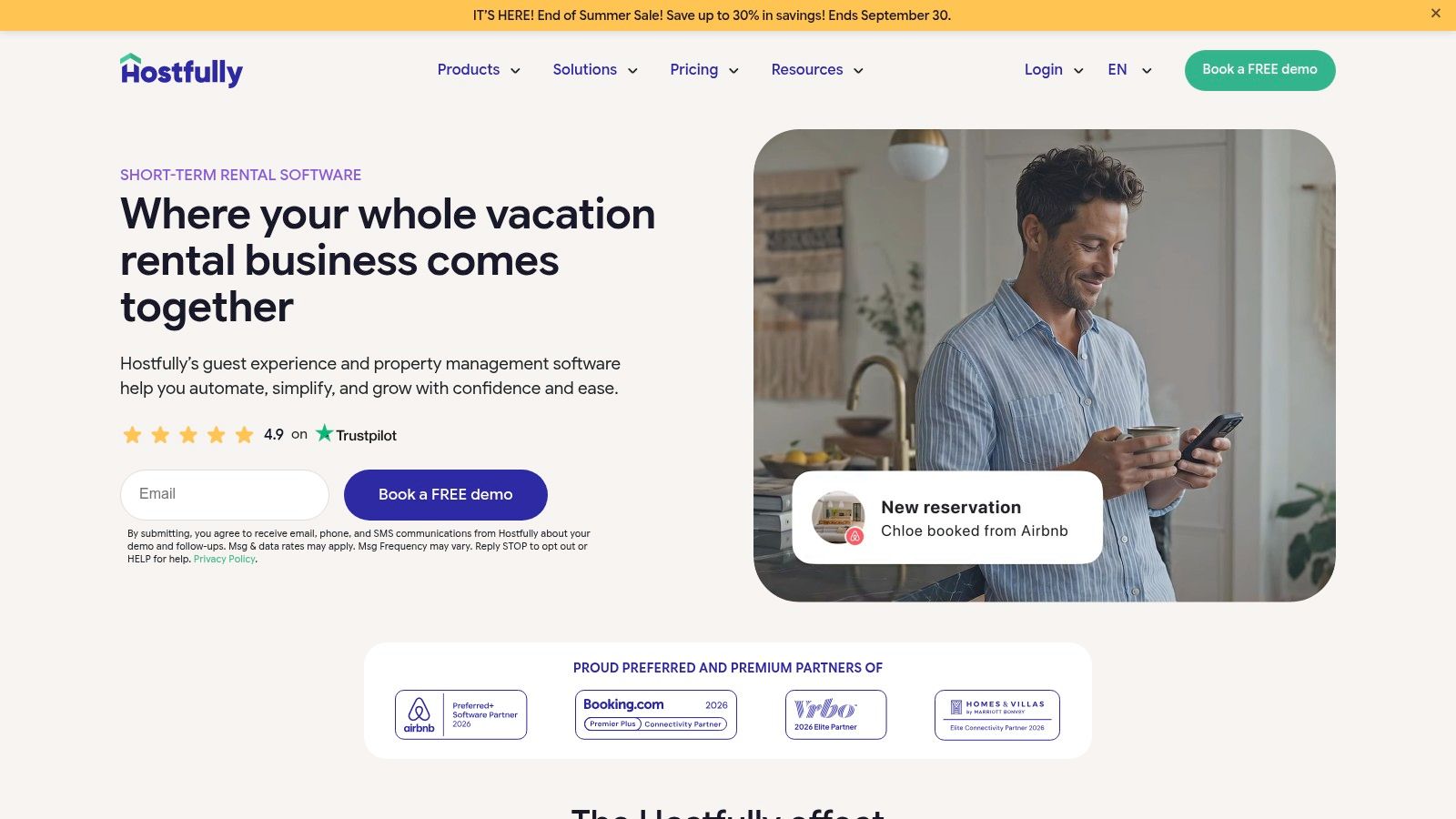
Hostfully makes the most sense for small operators who are tired of patching together separate tools for bookings, guest information, and field operations. Its appeal is not that it does one thing better than everyone else. Its appeal is that the direct-booking site, digital guidebooks, channel connections, and day-to-day management tools are already tied together.
That matters in the small-operator workflow. If your current setup involves one tool for OTA calendar sync, another for guest messaging, and a separate process for sending house manuals and assigning cleaners, Hostfully reduces handoffs. Fewer handoffs usually means fewer missed details during check-in and turnover.
The tradeoff shows up before you even migrate.
Hostfully can look simpler in use than some larger PMS platforms, but it still asks you to buy into a broader operating model. You are not just choosing a channel manager or a direct booking site. You are choosing a system that assumes you want your direct channel, guest experience, and operational coordination to live in one place. For owners comparing that decision against narrower tools, this overview of vacation rental management software helps frame the difference.
A practical way to judge Hostfully is to test it against four jobs:
First, building a direct channel. Hostfully is stronger here than tools that treat direct booking as a lightweight add-on. Second, synchronizing OTA calendars and reservations. It covers that baseline, but this is no longer a differentiator on its own. Third, managing guest and turnover tasks. The bundled guidebooks and operations features reduce the need for extra apps. Fourth, controlling software sprawl as you grow from a few listings to a more process-driven business. That is where Hostfully is often at its best.
The limitation is commercial clarity. Small operators should verify subscription structure, per-property pricing, implementation requirements, and any add-on costs before assuming the all-in-one framing will save money. A platform can reduce software sprawl and still raise total cost if key functions sit behind higher tiers or service fees.
So Hostfully is usually a fit for the host who already knows the next bottleneck is coordination, not just calendar sync. If you only need cleaner OTA synchronization and light automation, it may feel heavier than necessary. If you want one system to support direct bookings, guest guidance, and operations without stepping into a more enterprise-style product, it deserves a closer look.
See current product details on the Hostfully website.
8. iGMS
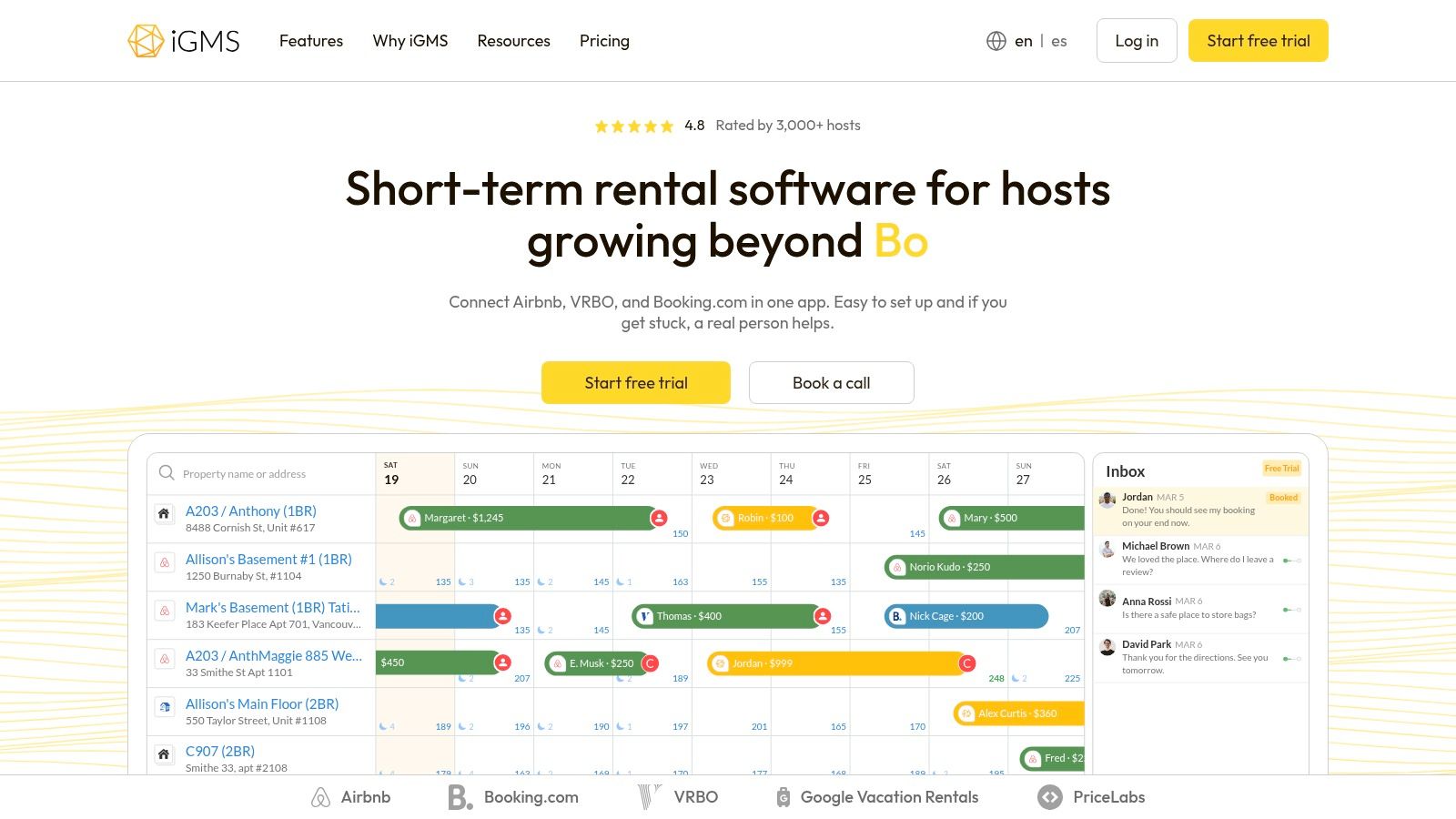
iGMS makes the most sense at a specific point in the small-operator workflow. You already rely on Airbnb or Booking.com, calendar mistakes are starting to cost time, guest messaging is repetitive, and you want a direct channel without buying a system built for a larger team.
Viewed through that lens, iGMS is less interesting as a feature checklist and more useful as a workflow upgrade. It covers the four jobs that matter to many smaller hosts: syncing OTA reservations, centralizing communication, assigning cleaning or turnover tasks, and adding a basic direct-booking path. The trade-off is that it appears designed to keep setup manageable, not to support every edge case a larger property manager might demand.
That distinction matters because small operators often overbuy. A platform can promise more sophistication than the business can realistically configure, maintain, or justify on cost.
For day-to-day operations, iGMS is strongest where the work is repetitive. The unified inbox and automated messaging reduce manual follow-up. Task tools help connect bookings to cleaning and maintenance coordination. For an owner handling a handful of listings, those gains usually matter more than advanced reporting modules that may never get used.
The direct-booking side is where expectations should stay measured. iGMS gives hosts a way to start building a channel they control, but the practical question is whether that channel is good enough for your booking mix and brand goals. If direct remains a secondary source behind OTAs, that may be sufficient. If your strategy depends on heavier website customization, tighter marketing integrations, or a more deliberate brand experience, you may reach the product's limits sooner.
Pricing and growth fit deserve a closer check before committing. Small operators should verify what is included at the base level, how costs change as listings increase, and whether the automations they need sit behind higher plans. Software that feels affordable at three properties can look different at ten.
iGMS is usually a sensible choice for hosts who want structure before sophistication. It is less compelling for operators who already know their next bottleneck is accounting depth, revenue management detail, or custom reporting across a larger portfolio.
Explore the current product on the iGMS website.
9. Smoobu
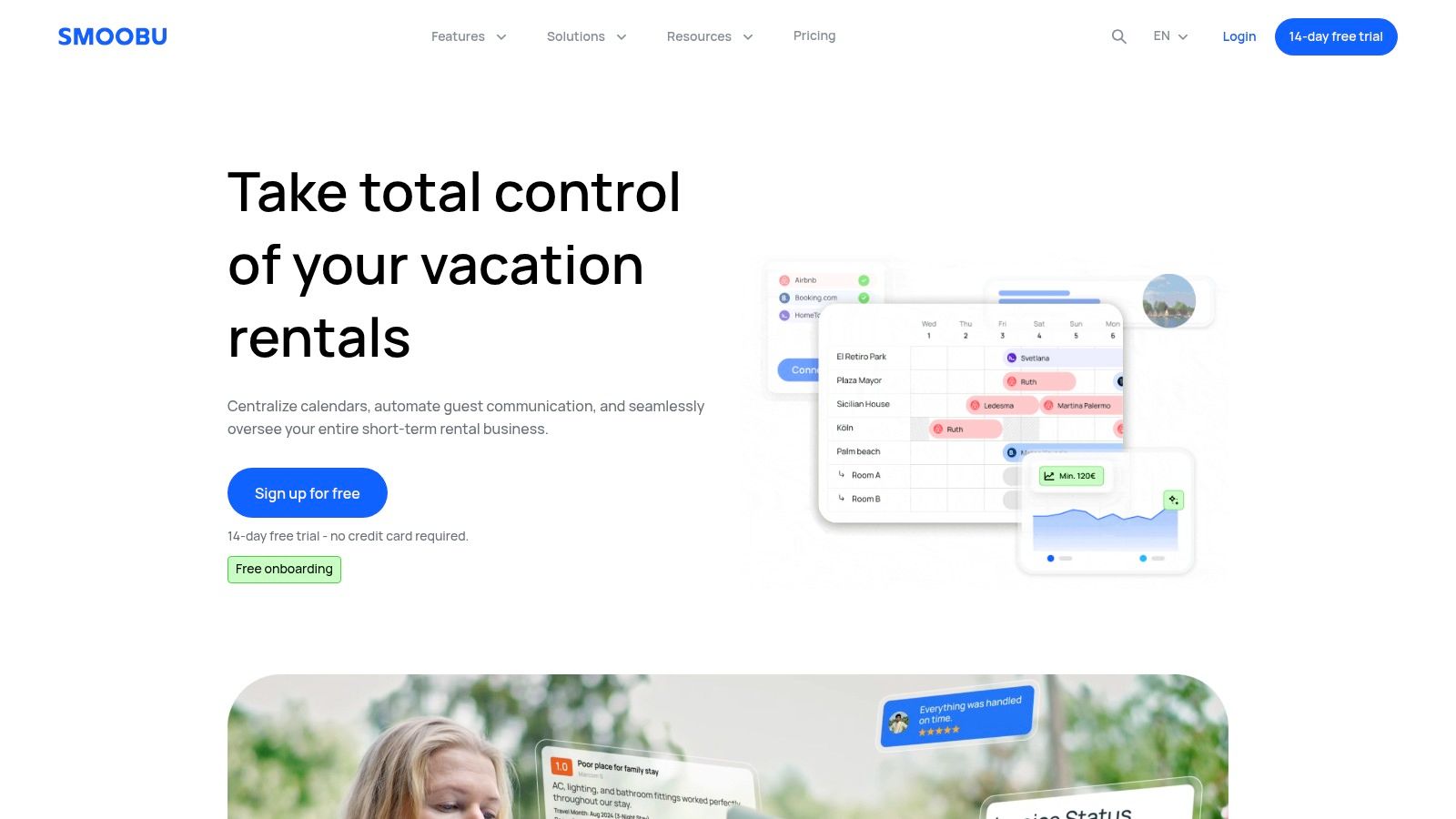
Small operators do not usually need another platform with more menus, more modules, and more setup debt. They need four things to work reliably: a direct-booking channel they can launch without hiring help, OTA calendar sync that reduces double-booking risk, guest communication that does not scatter across apps, and basic turnover coordination that stays readable on a phone. Smoobu fits that workflow better than many larger systems.
Its appeal is not feature breadth. It is the amount of operational ground it covers before complexity starts rising. Hosts can set up a direct-booking site, connect major channels, manage messages, and run day-to-day reservations from a product that is built for smaller portfolios rather than layered organizations.
Where Smoobu fits well
Smoobu makes the most sense when the bottleneck is execution, not system design. If you already get most bookings from Airbnb or Booking.com and want a direct channel that is good enough to capture repeat guests, the platform covers that need without forcing a larger rebuild of your business. The calendar and channel management tools address the first practical problem. The website and booking engine address the second.
That combination matters because these tasks are linked. A direct site has limited value if OTA availability is unreliable. Calendar synchronization matters less if guest messaging and reservation handling still live in separate tools. Smoobu's strength is that it keeps those core jobs close together.
Where the limits show up
The tradeoff appears once the operation becomes more process-heavy. Cleaning coordination, automation depth, and reporting are adequate for many hosts, but they are not the reason to buy the platform. Small operators who want light structure will likely see that as a benefit. Operators who already know they need more conditional automation, more granular reporting, or tighter control over multi-user workflows may outgrow it earlier than they expect.
Pricing also deserves a closer look than the product's simplicity might suggest. Dynamic pricing is not always included in the base product, so the cost depends on whether revenue optimization is part of your workflow from the start or something you plan to add later. For a host managing a few listings, that distinction changes whether Smoobu stays a low-friction operating layer or becomes another stack of add-ons.
Smoobu is a practical fit for owners who want to get a direct-booking site live, keep OTA calendars aligned, and run guest operations without much training overhead. It is less convincing for teams that are already building for higher process complexity. Review the current product lineup on the Smoobu website.
10. Zeevou
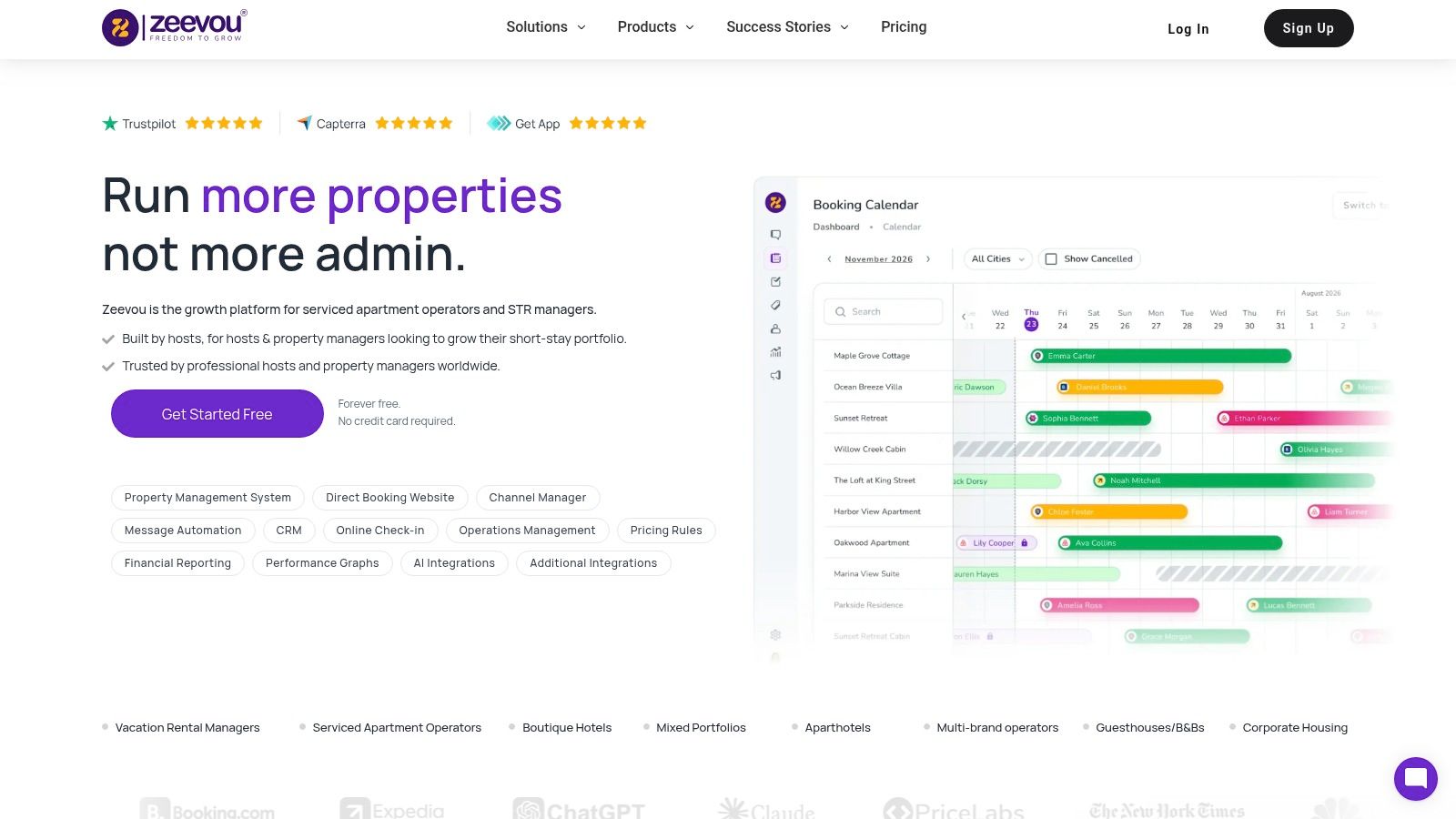
Free entry tiers often sound more useful than they are. Zeevou is one of the few cases where the entry point matters, because small operators can test a direct booking flow, basic PMS functions, and channel operations before paying for a heavier setup.
That makes Zeevou less a simple budget pick and more a low-risk way to map your workflow. If your immediate job is to launch a bookable site, keep OTA calendars aligned, and bring guest records into one system, the platform covers more ground than many entry-level tools. The product also reaches further into owner statements, commission handling, e-sign rental agreements, and CRM functions than a typical lightweight host tool, which is relevant for small managers handling properties on behalf of others.
The tradeoff is setup effort. Zeevou can support a wider operating model than tools built only for solo hosts, but broader scope usually means more configuration choices and a longer path to a clean day-to-day workflow. Small operators should assess whether they will use those owner and agreement features soon, or whether they are adding complexity before the business needs it.
Pricing transparency also needs a closer look than the free tier headline suggests. The free plan is useful for proving the basics, but the practical question is what happens once you need deeper automation, more operational controls, or stronger support. At that point, Zeevou starts to compete with more operations-focused systems, and the comparison shifts from "free vs paid" to "how much structure do I need, and how much setup am I willing to absorb?"
Zeevou fits best at the stage where a small operator is still assembling the full stack: direct channel, OTA sync, guest handling, and owner administration in one place. It is less persuasive for hosts who already know they want a simpler operating layer or for teams that need advanced automation immediately. Review the current product structure on the Zeevou website.
Top 10 Short-Term Rental Software Comparison
| Product | Core features | Quality ★ | Value & Price 💰 | Target audience 👥 | Unique selling points ✨ |
|---|---|---|---|---|---|
| 🏆 Rentabble | Hosted branded site, property pages, live price calc, seasonal rates, 2‑way iCal, owner dashboard, backups | ★★★★☆ | No commission; Basic €9/mo (≤3) / Pro €19/mo (≤6); 7‑day trial & 14‑day refund 💰 | Independent owners & small operators | ✨ Fast setup (hours), calendar integrity, owned direct channel, included hosting/support |
| OwnerRez | PMS with direct‑booking, deep first‑party OTA APIs, granular fees, automation | ★★★★☆ | No commissions; feature-rich (pricing varies by usage) 💰 | Hosts needing granular pricing, taxes & automation | ✨ Deep OTA API integrations, advanced fee/agreement controls |
| Lodgify | No‑code website builder, booking widget, channel manager, mobile app | ★★★★☆ | Polished templates; dynamic pricing is an add‑on (extra cost) 💰 | Owners wanting a polished branded site quickly | ✨ Fast template-driven sites + Google Vacation Rentals distribution |
| Uplisting | PMS + channel manager, automated messaging, cleaning scheduler, deposits, ID checks | ★★★★☆ | Strong ops automation; public pricing limited / quote-based 💰 | Professional hosts focused on operations reliability | ✨ Robust operational tools (cleaning, deposits, verification) |
| Hospitable (Smartbnb) | AI messaging automation, hosted/direct widgets, unified inbox, optional MoR payments | ★★★★☆ | Fast onboarding; MoR option simplifies payments/fraud (plan-dependent) 💰 | Hosts who prioritize messaging & easy onboarding | ✨ AI-driven messaging + optional Merchant‑of‑Record (fraud/damage cover) |
| Hostaway | Scale-ready PMS, multi-calendar, automation, large integration marketplace | ★★★★☆ | Enterprise features; quote-based pricing, onboarding fees possible 💰 | Managers scaling multi-property portfolios | ✨ Extensive partner ecosystem, data & benchmarking tools |
| Hostfully | PMS + direct site, digital guidebooks, 100+ integrations via open API | ★★★★☆ | Balanced all‑in‑one; pricing often requires sales conversation 💰 | Small teams & growing managers wanting integrations | ✨ Digital guidebooks + open API marketplace for add‑ons |
| iGMS | Unified inbox, OTA integrations, automated messaging, direct‑booking option | ★★★★☆ | Competitive public tiers for small portfolios; good value 💰 | Hosts with 1–10 listings starting direct bookings | ✨ Value-focused messaging automation and straightforward setup |
| Smoobu | Direct‑booking site, OTA sync, mobile apps, optional dynamic pricing add‑on | ★★★★☆ | Simple Europe‑focused pricing; dynamic pricing paid add‑on 💰 | Small portfolios / first‑time direct‑bookers (Europe) | ✨ Quick setup, strong Booking.com connectivity |
| Zeevou | Free entry PMS tier with SEO site, e-sign agreements, CRM, modular upgrades | ★★★★☆ | Free starter tier to test direct bookings; paid tiers for automation 💰 | Budget-conscious owners piloting direct channels | ✨ Free entry tier + decreasing per‑unit rates at scale |
Match the Platform to the Work You Actually Do
The easiest mistake in this category is buying for an imagined future instead of your present workload. Most small operators don't need every layer of a modern PMS on day one. They need the next bottleneck removed. That might mean getting a direct-booking site live, keeping OTA calendars synchronized, reducing repetitive guest messaging, or making turnover coordination less fragile.
Start with property count. One or two units usually create a different software problem than six or more, even if the listing quality is similar. Small portfolios often benefit more from fast setup and pricing clarity than from deep customization. Once the number of properties rises, the weight shifts toward automation depth, agreement workflows, staff coordination, and reporting.
Next, decide whether direct bookings or OTA operations are the immediate priority. If you're still heavily dependent on marketplaces and want an owned channel quickly, a hosted direct-booking tool is often the cleanest move. If your bookings already arrive consistently and the issue is message volume, cleaning logistics, deposits, or verification, an operations-first platform will produce more value than a prettier website alone.
Payment and agreement handling deserve a dedicated check before you migrate. Many short term rental software comparisons stay too abstract. Some platforms are built around requests and follow-up workflows. Others support more integrated payment structures or Merchant of Record models. Neither approach is automatically better. The right choice depends on how your guests expect to pay, how much liability handling you want inside the platform, and whether signed rental agreements are part of your standard process.
Then test calendar synchronization as if it were the product, because for many small hosts it effectively is. Calendar integrity doesn't sound glamorous, but a direct site loses credibility fast if availability is wrong or a channel sync fails at the wrong moment. Whether you're using iCal-based synchronization or deeper OTA connections, verify how the platform handles blocked dates, imports, exports, and overlap prevention before committing.
Cost needs the same discipline. Don't compare only headline subscription prices. Compare the full operating cost after add-ons, dynamic pricing modules, onboarding fees, payment handling, and sales-led packaging. A platform that looks affordable at the top line can become expensive once the features you need move outside the base plan. On the other hand, a slightly higher flat subscription can be cheaper if it replaces separate hosting, website maintenance, and direct-booking infrastructure.
For small owners who mainly want a fast, hosted, commission-free direct channel with transparent pricing, Rentabble is the clearest recommendation in this list. It solves a specific problem well: launching an owned booking channel without custom development, while keeping calendars aligned across major OTAs and avoiding marketplace commissions on direct requests. The pricing is easy to understand, the setup effort is low, and the workflow is narrow in a good way.
If your operation is more automation-heavy, tools like Uplisting or Hospitable deserve closer attention. If you need granular controls, OwnerRez becomes more compelling. If you expect a large integration ecosystem or a scale-oriented PMS, Hostaway or Hostfully will likely fit better. If you want a simpler all-in-one entry, Lodgify, iGMS, Smoobu, and Zeevou each offer a different balance of website, sync, and operational structure.
Before you switch, confirm current pricing, payment availability, integrations, onboarding requirements, and portfolio limits directly with the vendor. In this category, those details shape the product more than the homepage summary does.
Rentabble gives small hosts a practical way to build an owned booking channel without paying marketplace commissions or hiring a developer. If you want a branded rental website, live availability, automatic pricing totals, and OTA calendar sync in one hosted tool, visit Rentabble and see whether its workflow fits your portfolio.