7 Apartment Review Examples for Property Owners
A guest lands on your apartment page, compares two similar listings, and hesitates. Both promise a comfortable stay. Both use phrases such as “great location” and “highly recommended.” Neither explains whether the final price is clear, the calendar is reliable, or the owner handles problems quickly. Generic praise creates a pleasant impression, but specific review details help a hesitant renter make a decision.
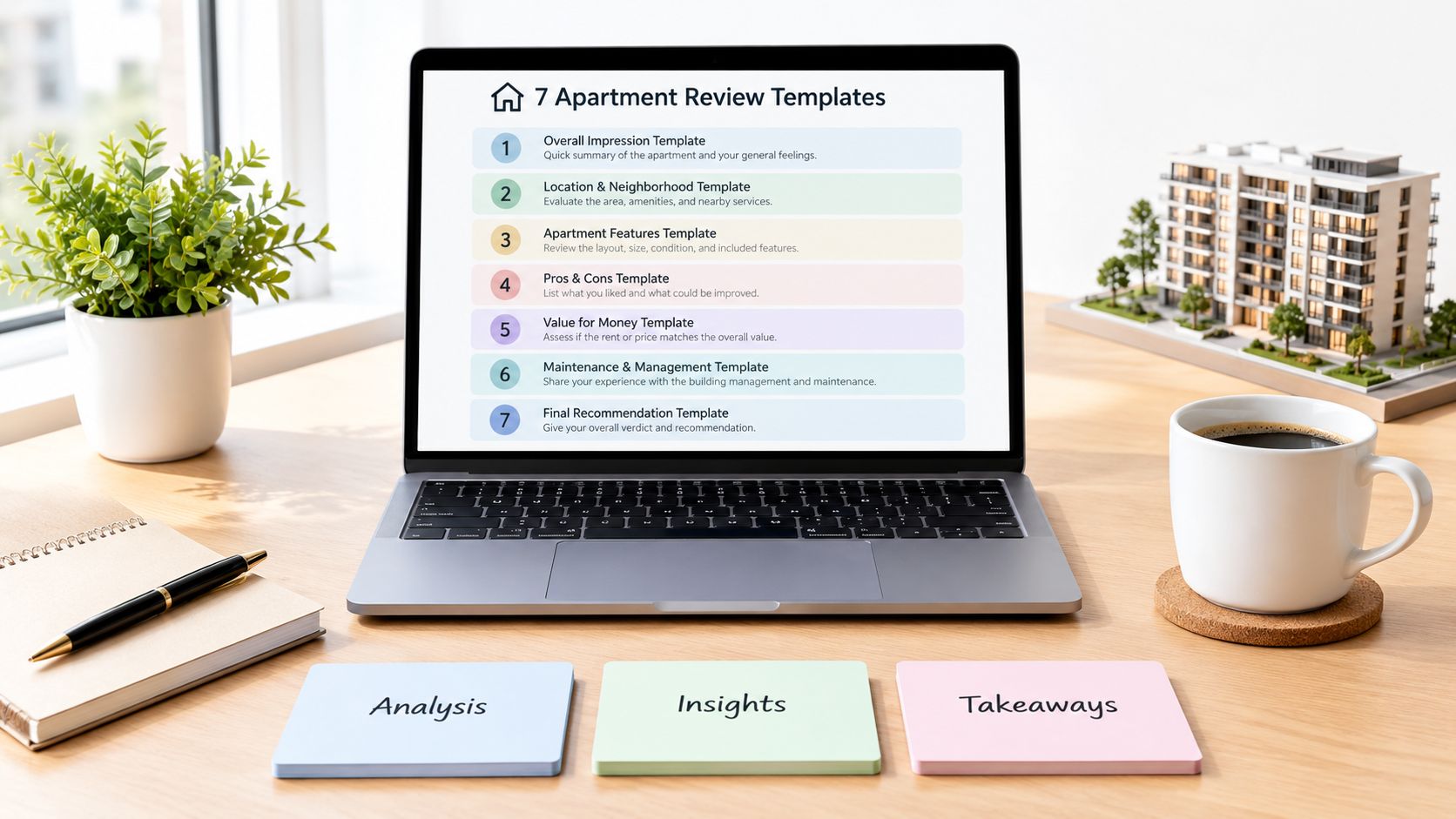
The best apartment review example isn't a script for manufactured praise. It's a practical format for identifying the details that made a real stay useful, then placing that evidence where future guests need it. The seven examples below connect each review signal to the relevant page content, owner workflow, and direct-booking experience. Use the prompts to request specific feedback, but adapt every example from genuine guest experiences.
Table of Contents
- 1. The Transparent Pricing Review
- 2. The Rapid Response and Direct Contact Review
- 3. The Calendar Reliability and No-Double-Booking Review
- 4. The Custom Branding and Owned Platform Review
- 5. The Seasonal and Local Knowledge Review
- 6. The Seamless Multilingual and International Guest Review
- 7. The Full-Control and Commission-Free Revenue Review
- 7-Point Apartment Review Comparison
- Choose the Review Signal Your Page Needs
1. The Transparent Pricing Review
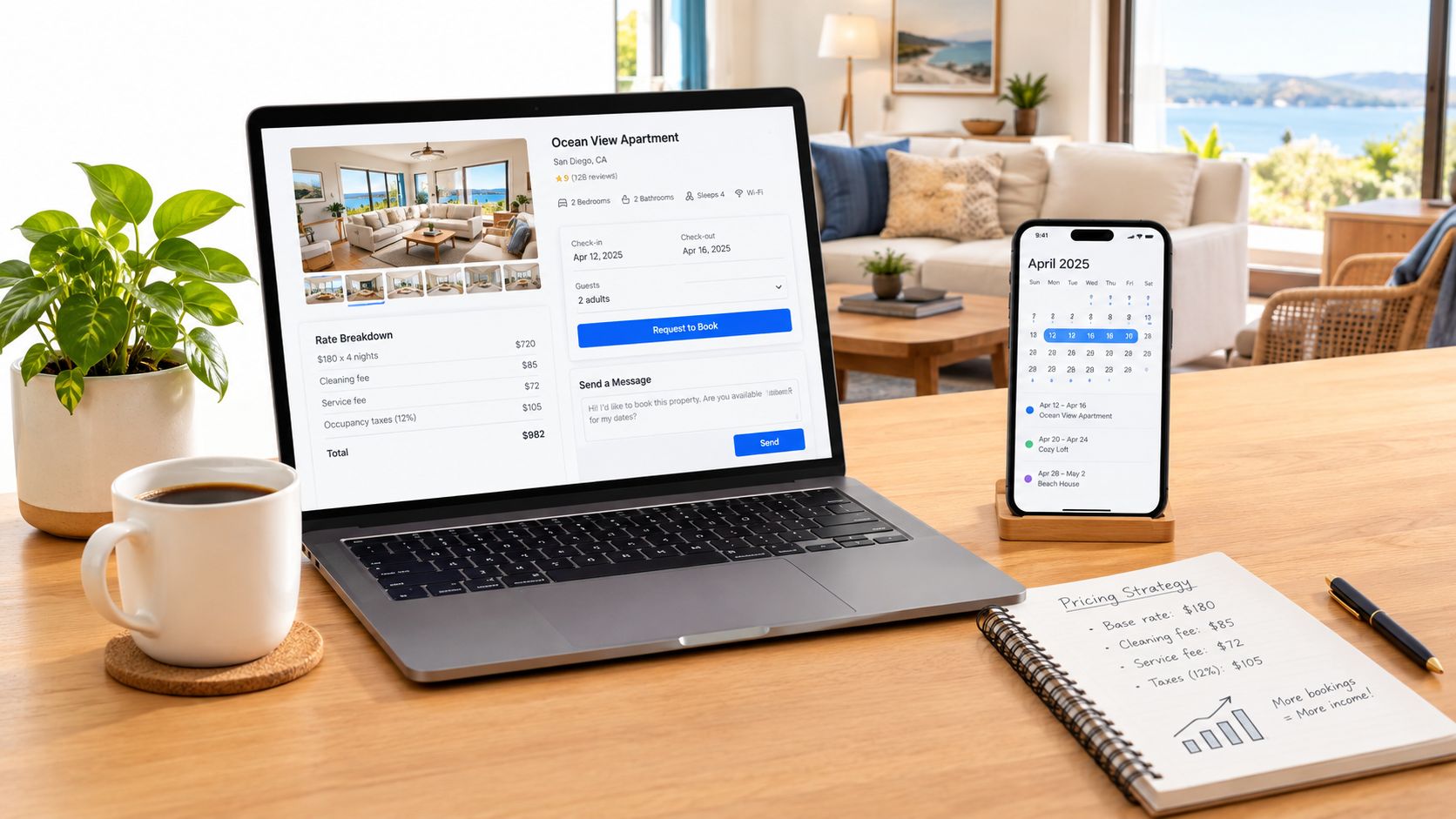
A clear price can remove one of the biggest sources of booking friction. Guests want to understand the nightly rate, cleaning fee, taxes, discounts, and total amount before they commit. A review that confirms this experience does more than praise the booking process. It reassures the next guest that the price shown on the page matches the amount requested.
Practical rule: Ask guests whether they understood the total cost before submitting a booking request, not simply whether they enjoyed the apartment.
A useful format might read:
“The booking process was smooth because I knew exactly what I'd pay before confirming. The nightly rate, cleaning fee, and total due were easy to understand, and I didn't need to send several messages to get a final quote.”
This belongs beside the property's pricing explanation, booking button, or request form. On a Rentabble direct-booking website, guests can see an automatically calculated total during the booking-request flow. Owners should still explain what the total includes in the property description and keep fee information consistent across every channel.
Make the review support the workflow
The review only remains credible if the workflow delivers the experience it describes. Set distinct rate periods for seasonal pricing, show applicable fees before the request is submitted, and confirm the final amount promptly when a guest asks a question.
Useful prompts include:
- Price clarity: “Was the total cost clear before you requested the booking?”
- Fee visibility: “Did you understand the cleaning fee and any applicable charges?”
- Decision support: “Was there any pricing detail you had to ask us to explain?”
Avoid asking guests to praise affordability unless the review describes what made the value convincing. “Good price” is weak evidence. “The total matched what we expected, including the cleaning fee” is decision-useful.
2. The Rapid Response and Direct Contact Review
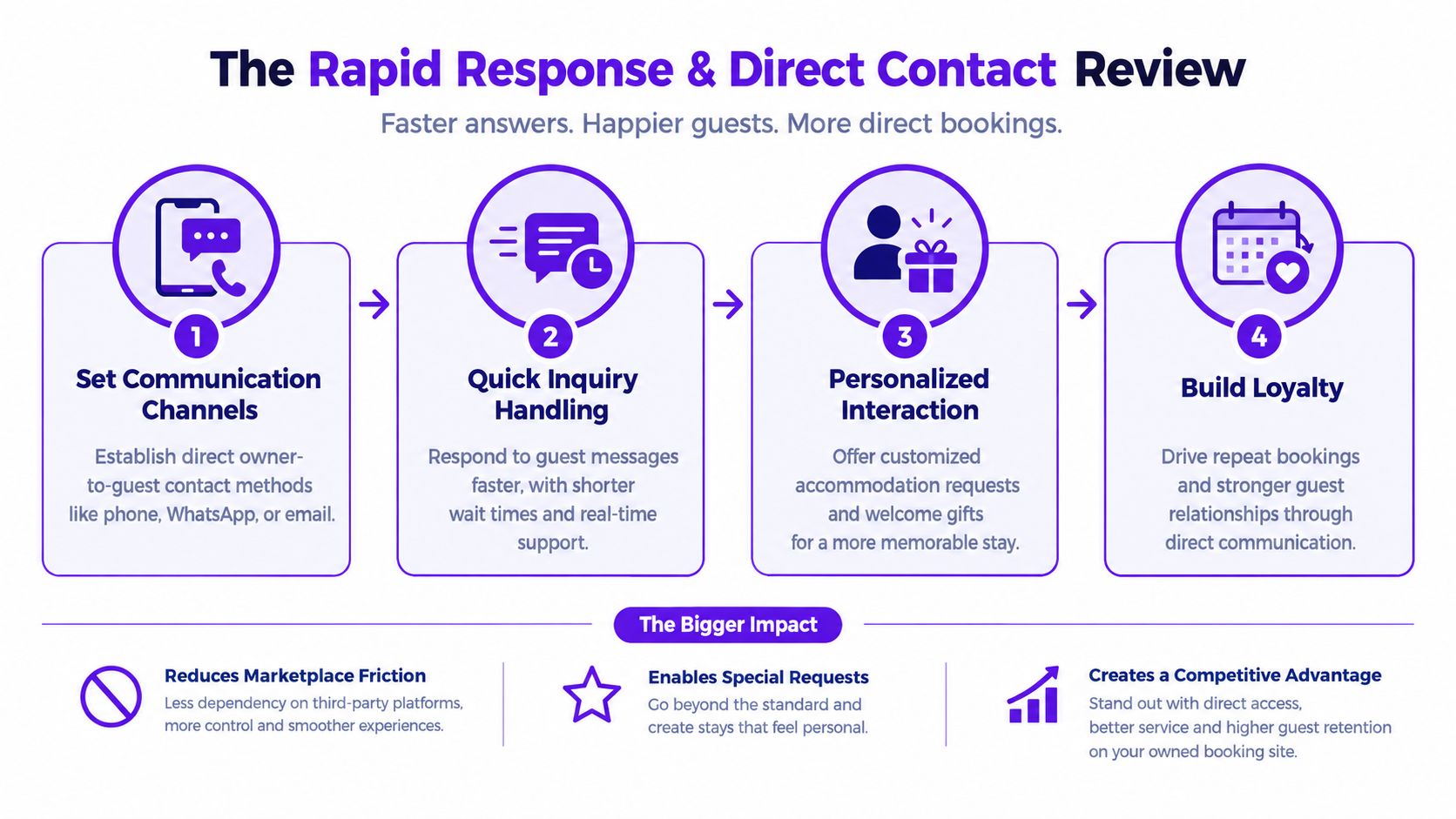
A guest with a question about late checkout, parking, accessibility, or a special setup doesn't want to search through a generic help center. Direct contact becomes valuable when the owner responds clearly and takes responsibility for the answer.
A strong review might say:
“I contacted the owner directly about late checkout and received an answer within the same afternoon. They also arranged the setup we needed, so communication felt personal rather than automated.”
The exact response time should only appear if the guest offers it and it reflects what really happened. Otherwise, ask about whether the owner responded promptly and resolved the question without unnecessary back-and-forth.
Put the proof near the contact path
Place this kind of review near the inquiry button, contact details, or booking instructions. The page should make the communication promise easy to test. State who handles questions, which channel guests should use, and when they can expect a response. Rentabble's email notifications and owner dashboard can help operators monitor booking requests and maintain follow-up across multiple apartments.
A practical post-stay prompt can ask:
- Personal contact: “Did direct communication with the owner make your booking or stay easier?”
- Special requests: “Did we handle a request or adjustment that improved your experience?”
- Problem resolution: “How did we respond when you needed information?”
Personalization should be earned, not embellished. If the owner arranged a welcome gift, child equipment, or a specific arrival setup, the guest can mention that concrete action. If the interaction was entirely standard, a review shouldn't imply a bespoke service that future guests won't receive.
For property owners, this signal also has a trade-off. Direct contact builds trust, but it creates an operational obligation. A page that promises personal attention needs a dependable process for notifications, response ownership, and follow-up.
3. The Calendar Reliability and No-Double-Booking Review
A confirmed reservation should remain confirmed. Guests rarely celebrate a calendar that works correctly, yet reliability becomes highly visible when dates change, a booking disappears, or an owner cancels because another channel accepted the same stay.
One useful review format is:
“Our reservation was confirmed and never changed. The dates stayed available from booking through check-in, and the reminders matched the original confirmation.”
This review fits close to availability information, booking instructions, and confirmation details. It gives prospective guests evidence that the property owner manages reservations carefully rather than treating calendar accuracy as an invisible back-office task.
Build the operational proof first
Rentabble's two-way iCal import and export can synchronize availability with channels such as Booking.com, Airbnb, Expedia, and VRBO. Owners should connect the relevant calendars, enable overlap prevention, and manually block dates for maintenance, personal use, or cleaning buffers. Calendar synchronization should also be tested regularly, because a connection that was never checked can create false confidence.
Ask guests questions that focus on the complete reservation journey:
- Confirmation consistency: “Did the booking confirmation match the dates you stayed?”
- Reminder accuracy: “Were the arrival details and reminders consistent with your reservation?”
- Check-in confidence: “Did you experience any unexpected change before arrival?”
Do not turn routine calendar management into an exaggerated claim such as “you'll never face a cancellation.” A review can confirm one reliable experience, while the page explains the process that supports it.
The same principle applies to direct booking. A branded site earns trust only when its live availability, request handling, and confirmation messages agree. The technical feature matters because it protects the guest promise, not because synchronization itself is persuasive copy.
Here's a short explanation of how direct communication and reliable booking processes can work together:
4. The Custom Branding and Owned Platform Review
Marketplace listings often compress many properties into the same visual and editorial format. An owned booking site gives the apartment a clearer identity, but polished branding alone won't persuade a guest if the content is vague or the navigation is difficult.
A review can capture the difference without attacking another platform:
“Booking through the property's own website felt professional and straightforward. The photos, apartment details, and arrival information were organized clearly, so I knew who I was booking with and what to expect.”
This belongs near the site's booking path, property gallery, or introduction to the owner. The review should support what the page visibly provides. If the site has a custom domain, consistent logo, clear navigation, and detailed apartment pages, the guest can refer to those elements. If it doesn't, asking for a review about “professional branding” will feel disconnected from the experience.
Let the page earn the wording
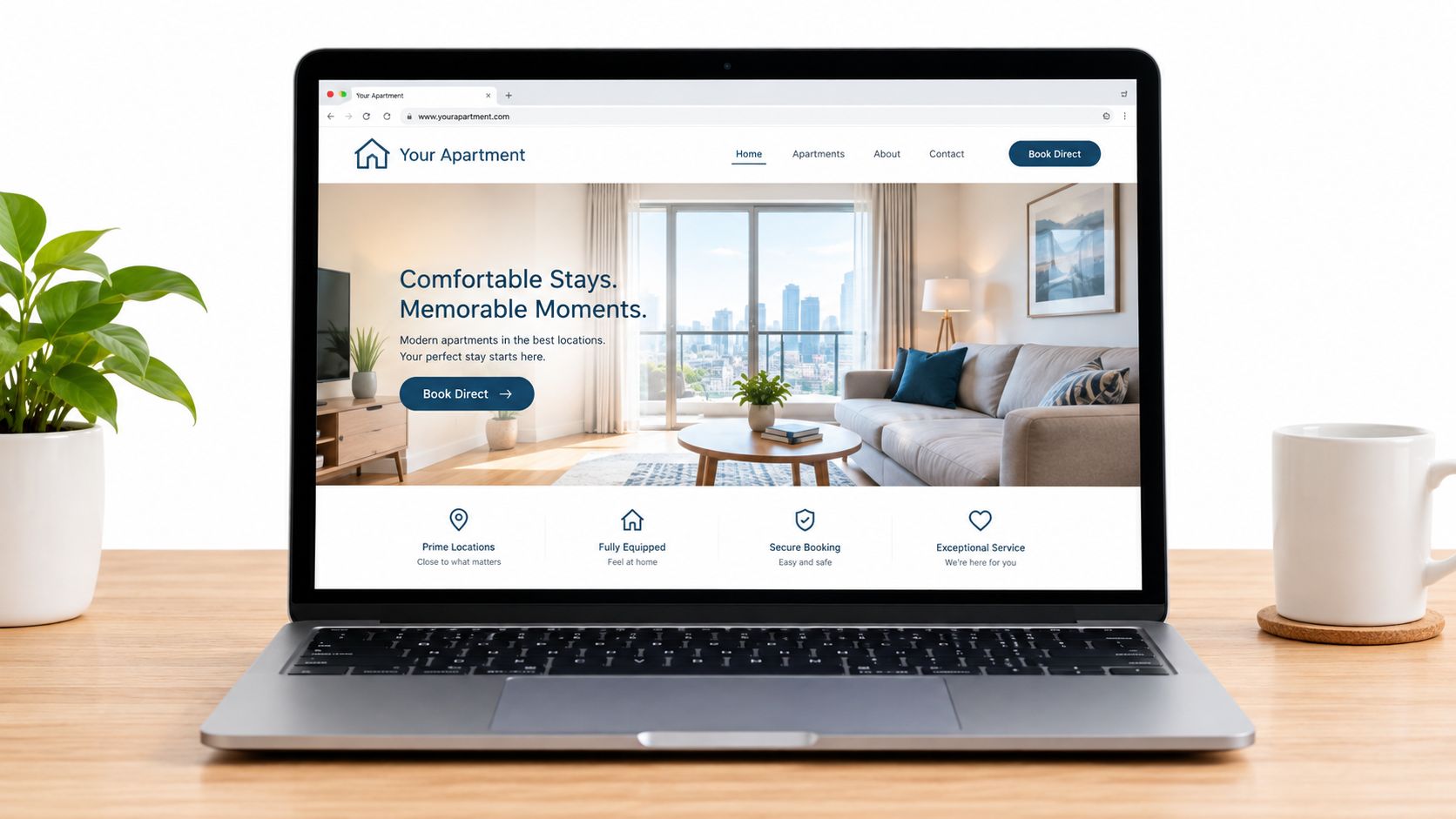
Rentabble supports a hosted rental website with custom branding, a logo, and an optional custom domain. Owners can use those controls to create a recognizable booking URL and carry the same visual identity into welcome emails and confirmations. Property pages can include multiple photos, amenities, distance information, and descriptions that sound like the owner rather than a generic listing template.
A practical review request might ask:
- First impression: “What did you understand about the apartment and owner from the website?”
- Navigation: “Was it easy to find availability, amenities, and booking information?”
- Confidence: “Did the site make you feel comfortable booking directly?”
The trade-off is maintenance. An owned platform gives control over content, but outdated photos, old house rules, or inconsistent design weaken the claim. Review the page whenever the apartment, arrival process, or pricing changes. Branding should clarify the experience, not distract from it.
5. The Seasonal and Local Knowledge Review
A local recommendation can turn a stay from functional to memorable. Guests value advice that matches their dates, travel style, and location, especially when it explains why one restaurant, beach, market, or transport option suits their plans.
A grounded review might read:
“The owner recommended restaurants and beaches that matched what we wanted to do. The suggestions were specific to the season and much more useful than a generic list.”
The review fits beside local-area content, seasonal pricing information, or a “things to know” section on the apartment page. It can also support the value of shoulder-season stays, but avoid claiming a particular discount unless the guest received it and the offer remains available.
Turn local knowledge into page content
Rentabble's property descriptions can include nearby attractions, transport guidance, amenities, and distance information. Owners can use rate periods to distinguish high, shoulder, and low seasons, then explain what guests can expect in each period. A useful description might pair seasonal conditions with practical context, such as quieter local attractions, restaurant availability, or transport considerations.
Prompt guests with questions that invite detail:
- Recommendation quality: “Which local recommendation helped you most?”
- Location context: “Was the information about transport or nearby places accurate?”
- Seasonal value: “Did the timing of your stay affect how useful the apartment and area felt?”
Keep recommendations current. A restaurant may close, a bus route may change, or a seasonal attraction may operate on different dates. Update the local section regularly and provide a short welcome guide that reflects the current experience.
This type of review works best when it stays specific. “The owner knows the area” is pleasant but broad. “The owner suggested a quiet beach that was easy to reach without a car” tells a future guest what kind of help they might receive.
6. The Seamless Multilingual and International Guest Review
Language access affects confidence before a guest submits a request. A visitor may understand enough English to browse a listing but still hesitate if house rules, cancellation terms, amenities, and arrival instructions aren't clear in the language they prefer.
A translated review could say:
“Being able to browse the apartment details and booking information in Croatian made me feel comfortable. I understood what was included and knew how to ask questions before arrival.”
The review should appear near language options, key property information, or the direct-booking form. It shouldn't promise fluency that the owner can't provide. Instead, it can explain which parts of the experience were available in another language and how communication was handled.
Translate the decision-critical details
Rentabble currently supports multilingual websites in English and Croatian. Owners serving international guests should translate property descriptions, amenities, house rules, arrival instructions, and frequently asked questions with professional review rather than relying on unchecked machine translation.
Use prompts that reveal whether the language support helped:
- Comprehension: “Were the apartment details and house rules clear in your preferred language?”
- Booking confidence: “Did translated information help you decide to request the stay?”
- Communication: “Was it easy to exchange messages before arrival?”
Email notifications and auto-responders can support the first response, but they shouldn't replace human judgment for complex requests. A bilingual assistant or translation service may be appropriate for high-value inquiries, while a simple language preference field can help the owner route communication correctly.
The trade-off is consistency. A translated page that omits a fee, amenity limitation, or check-in condition creates more confusion than an honest, clearly labeled partial translation. Keep every language version aligned with the current property details.
7. The Full-Control and Commission-Free Revenue Review
Not every valuable review comes from a guest. Owners also need evidence that a direct channel improves control over pricing, availability, repeat bookings, and revenue visibility. This is better framed as an operator testimonial than as an apartment review example.
A responsible format might read:
“Moving more reservations through our own booking site made the revenue calculation easier to follow. We could manage the price and availability directly, and the subscription cost was more predictable than paying a commission on every direct request.”
That statement should only be published if it reflects the owner's actual records. Don't insert a savings percentage, revenue lift, or profit comparison unless the operator has documented the figures and can explain the comparison period and costs.
Connect the testimonial to measurable work
Rentabble uses subscription pricing for its hosted direct-booking platform and doesn't charge a commission on direct booking requests. Its dashboard includes booking, occupancy, and revenue snapshots, which owners can use to compare direct-channel performance with their previous marketplace activity.
A useful internal review process includes:
- Baseline comparison: Compare costs: Review historical marketplace commission payments against the relevant Rentabble subscription.
- Channel tracking: Identify sources: Record whether bookings came from email, referrals, repeat guests, or external advertising.
- Margin decisions: Protect value: Test whether a direct-booking incentive still leaves the owner with an acceptable return.
- Retention planning: Encourage rebooking: Give previous guests a clear path to return through the owned site.
The guest-facing benefit is usually indirect. A healthier direct channel may give an owner more control over pricing, content, and repeat contact, but the page shouldn't present internal margin improvement as a guest guarantee. The strongest testimonial explains what changed operationally and why that made the booking experience clearer.
7-Point Apartment Review Comparison
| Review Type | Implementation Complexity 🔄 | Resource Requirements ⚡ | Expected Outcomes ⭐📊 | Ideal Use Cases | Key Advantages 💡 |
|---|---|---|---|---|---|
| The Transparent Pricing Review | 🔄 Low, itemize fees and display totals | ⚡ Low, configure seasonal rates & fees | ⭐ High; 📊 Higher conversion, fewer inquiries | Direct-booking sites; price-sensitive guests | 💡 Builds trust, reduces negotiation, clarifies margins |
| The Rapid Response & Direct Contact Review | 🔄 Low–Moderate, set contact channels & workflows | ⚡ Medium, owner time and responsiveness | ⭐ High; 📊 Faster issue resolution, more repeat bookings | Boutique hosts; repeat-guest strategies | 💡 Personalization, faster approvals, loyalty building |
| The Calendar Reliability & No-Double-Booking Review | 🔄 Moderate, implement two-way iCal & overlap rules | ⚡ Medium, ongoing sync monitoring & manual blocks | ⭐ High; 📊 Eliminates double-bookings, protects reputation | Multi-channel operators; property managers | 💡 Operational reliability, reduced revenue loss |
| The Custom Branding & Owned Platform Review | 🔄 Moderate–High, custom domain, design and content work | ⚡ Medium, initial setup and ongoing brand upkeep | ⭐ High; 📊 Strong brand recognition, higher perceived value | Boutique brands; owners seeking differentiation | 💡 Differentiation, brand equity, professional guest experience |
| The Seasonal & Local Knowledge Review | 🔄 Moderate, create rate periods and local content | ⚡ Medium, research, seasonal updates, content editing | ⭐ High; 📊 Better yield in peak seasons, improved guest satisfaction | Tourism-driven properties; local-expert owners | 💡 Dynamic pricing, upsell opportunities, authentic recommendations |
| The Seamless Multilingual & International Guest Review | 🔄 Moderate, translate site, enable currency/payment support | ⚡ Medium, professional translation and multilingual support | ⭐ Medium–High; 📊 Increased international conversions | Bilingual regions; owners targeting international guests | 💡 Market expansion, reduced language friction, higher trust |
| The Full-Control & Commission-Free Revenue Review | 🔄 Moderate, subscription setup plus marketing strategy | ⚡ Medium, marketing effort to drive direct traffic | ⭐ High; 📊 Higher margins and predictable costs | Operators focused on margin optimization | 💡 No per-booking commissions, transparent revenue, reinvestable savings |
Choose the Review Signal Your Page Needs
Start with the barrier that is stopping guests from booking. If visitors abandon the request form after asking for a total, prioritize transparent pricing. If they ask repeated questions about arrival, late checkout, or special arrangements, collect feedback about direct communication. If your apartments appear on several channels, a calendar-reliability review can address concerns that guests may not express until a reservation changes.
Adapt one truthful template from actual feedback. Don't copy a polished sentence and place it on the page as if it came from a guest. Contact a recent guest with a focused question, explain that specific details help future renters, and give them room to mention a limitation as well as a strength. A review about a short walk to transit is more useful than a broad claim about a “perfect location,” especially when the page also states the approximate distance accurately.
Place each review beside the content it proves. Pricing feedback belongs near the total and fees. Communication feedback belongs near contact instructions. Calendar feedback belongs near availability and confirmation information. Branding feedback belongs near the owned booking path, while local and multilingual reviews should sit beside the relevant area or language content. The owner-economics testimonial is usually better placed on an operator page or direct-booking explanation than inside a guest testimonial carousel.
The seven signals serve different audiences. A business traveler may care about predictable pricing and fast answers. An international guest may focus on language clarity. A family may value local recommendations and reliable arrival details. Publish the strongest evidence first instead of filling the page with repetitive praise.
Keep every claim current. Review the property page, rates, calendar, translations, and booking flow whenever the operation changes. A guest review creates trust only when the live experience still matches it. A transparent direct-booking path, such as a Rentabble site, should make that promise easy to verify from the first click through confirmation.
Rentabble gives apartment owners a hosted direct-booking website with branded property pages, live availability, transparent totals, calendar synchronization, booking-request management, and guest reviews. Visit Rentabble to connect the review evidence you collect with a clearer booking path for future guests.